As an Amazon Associate, we earn from qualifying purchases. Some links on this site are affiliate links at no extra cost to you. Our recommendations are based on thorough research and editorial judgment.

How to Choose a Candle Holder: Match Size, Style & Wax Type

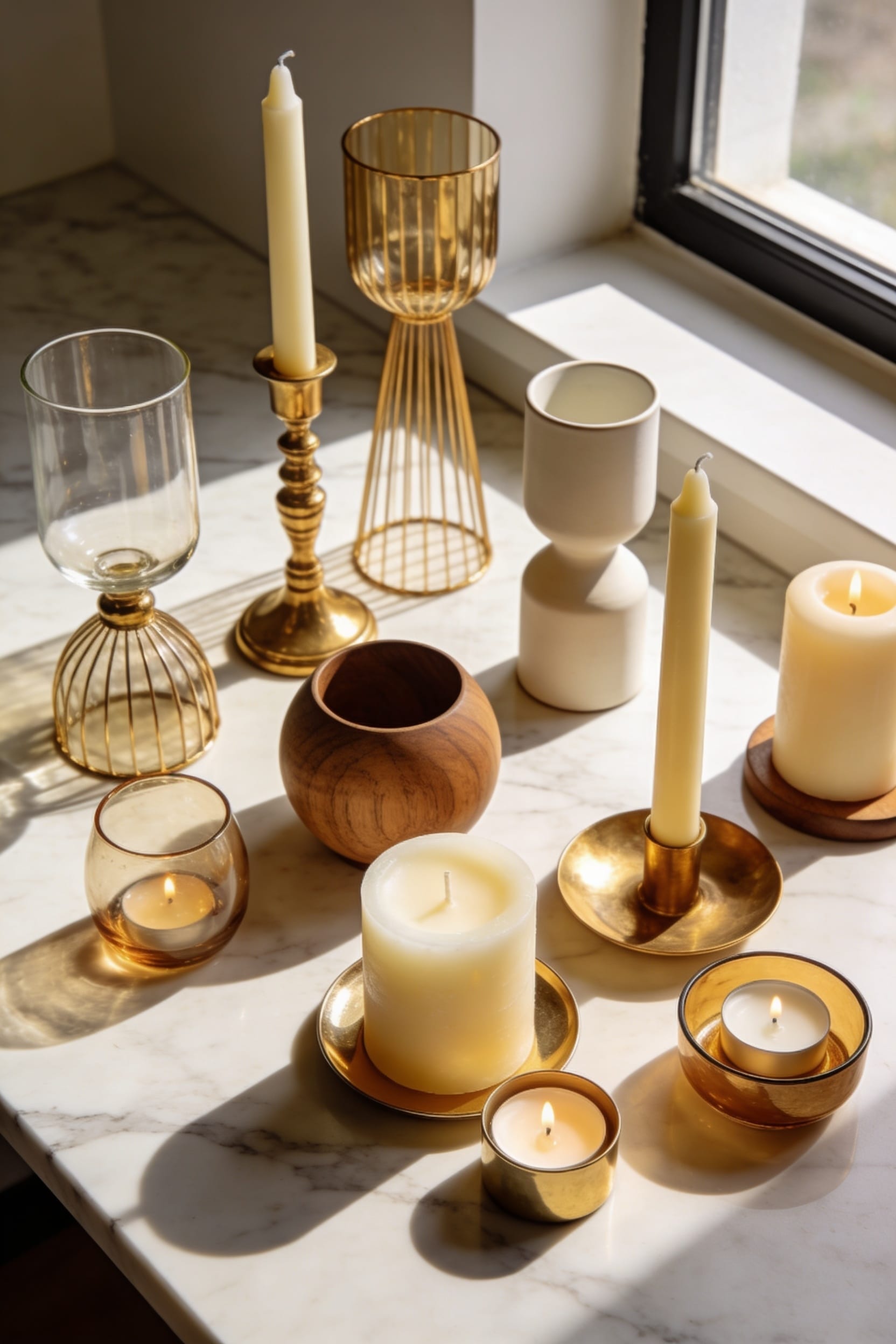
All right, here’s the thing: I see people buy gorgeous holders that don’t fit their candles, and it breaks my heart. Before you even think about style, identify what you’ve got—container, pillar, votive, or tealight. Then measure twice. Diameter’s your priority; it prevents wobble and guarantees even burn. Match that to your holder’s inner dimensions, consider your wax type’s heat profile, and you’re golden. Get this part right, and we can talk about making your candles actually work.
Key Takeaways
- Identify your candle type first—container, pillar, votive, or tealight—as each requires different holder specifications and support methods.
- Measure candle diameter twice and match it precisely to holder inner dimensions to prevent wobbling and ensure stability.
- Select holder materials based on wax type; glass distributes heat evenly while metal with weighted bases improves stability.
- Use appropriate wick sizing for pillar diameters: 2.0″–2.25″ uses 44-24-18, while 3.5″–4.0″ needs 60-44-18 for even burning.
- Place holders away from walls, curtains, and drafts with proper ventilation to prevent overheating, tunneling, and soot buildup.
Know Your Candle Type Before Choosing a Holder
Before you even think about which holder will look cute on your nightstand, you’ve got to know what’s actually *in* that holder—and I don’t just mean wax and a wick. Start with candle identification: check that label like it’s a treasure map. You’re looking for whether you’ve got a container candle (sits in a jar or tin), a pillar (freestanding), a votive (needs a holder), or a tealight (tiny but mighty). Label reading matters because container candles behave differently than pillars. A holder designed for votives won’t work for a pillar, and buying the wrong one is basically throwing money at a problem that didn’t need solving. Know what you’re working with first—the holder follows after.
Match Holder Diameter and Height to Your Candle
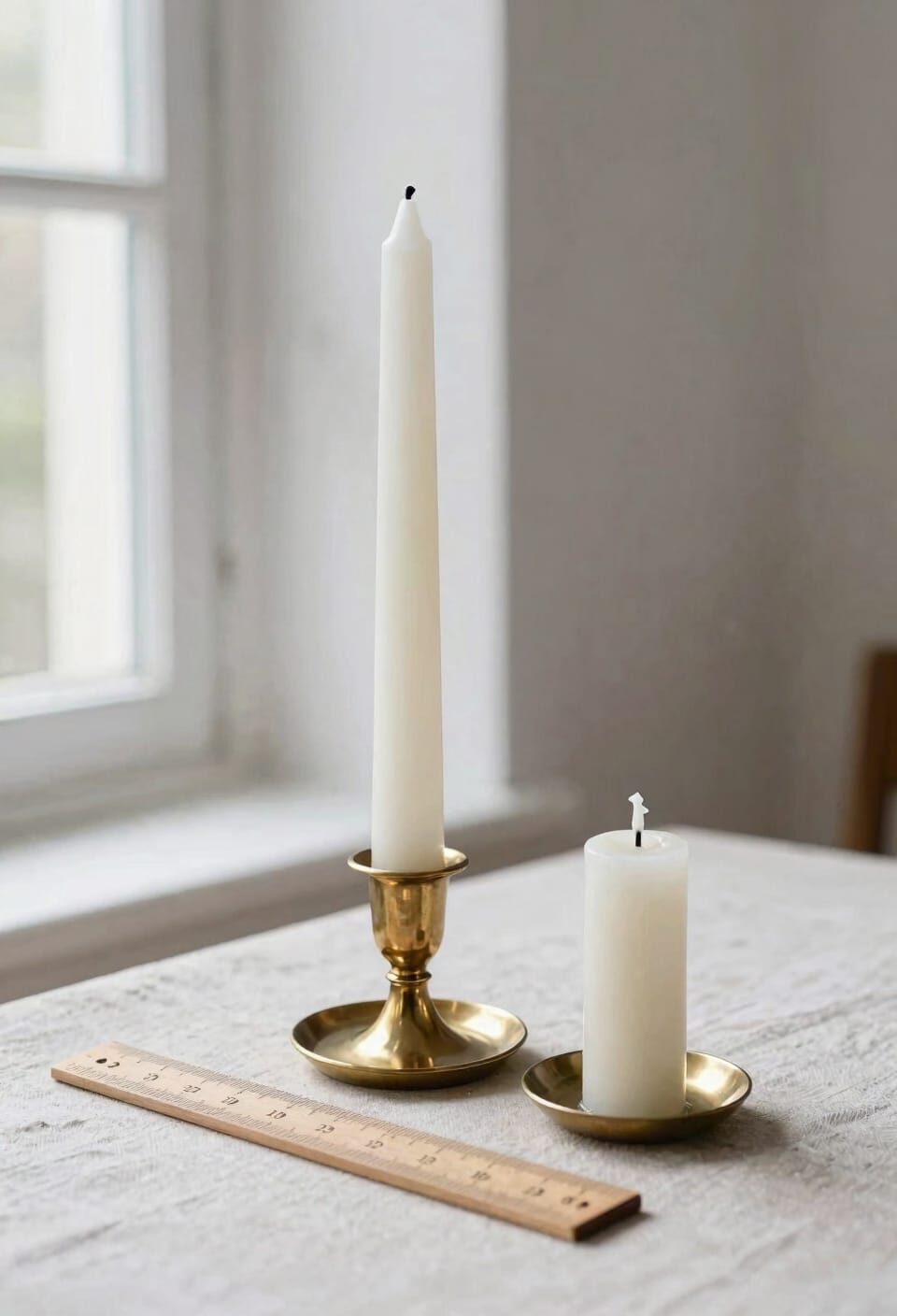
Now that you know what type of candle you’re holding, it’s time to match it with a holder that actually fits—and I mean that literally. Diameter matters most. A container candle that’s 2.5 to 3 inches wide needs a holder with proper rim clearance—that’s the space between your candle’s edge and the holder’s inner wall—so heat doesn’t accumulate dangerously. Height matters too. You want enough thermal insulation between the flame and whatever surface sits beneath your holder, so grab something that cradles your candle securely without crowding it. Votives need snug containers. Pillars? They’re pickier. Measure twice, buy once. Trust me, a candle flopping around in oversized holder is nobody’s idea of cozy.
Votive and Tealight Holders: Versatile Starter Options
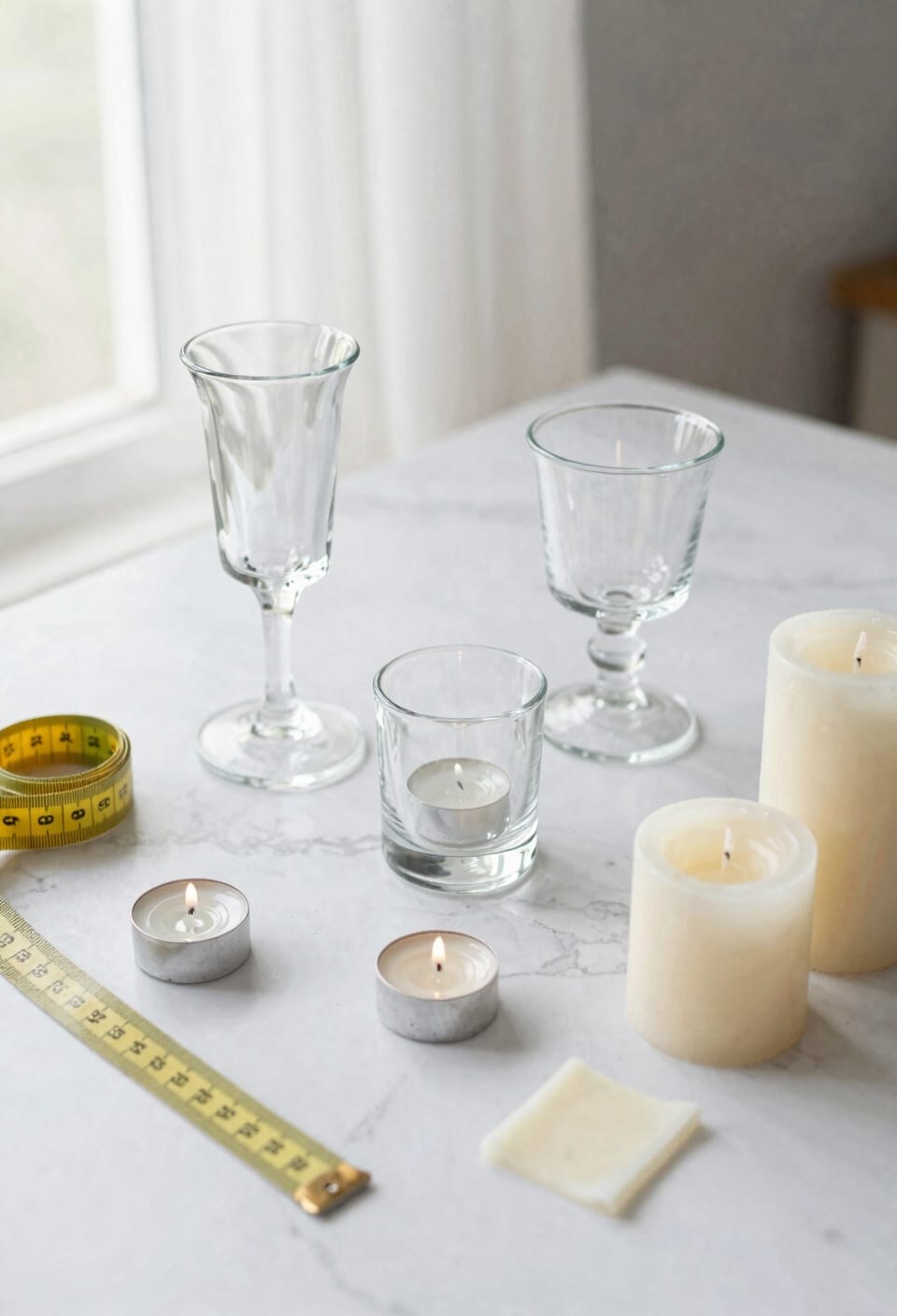
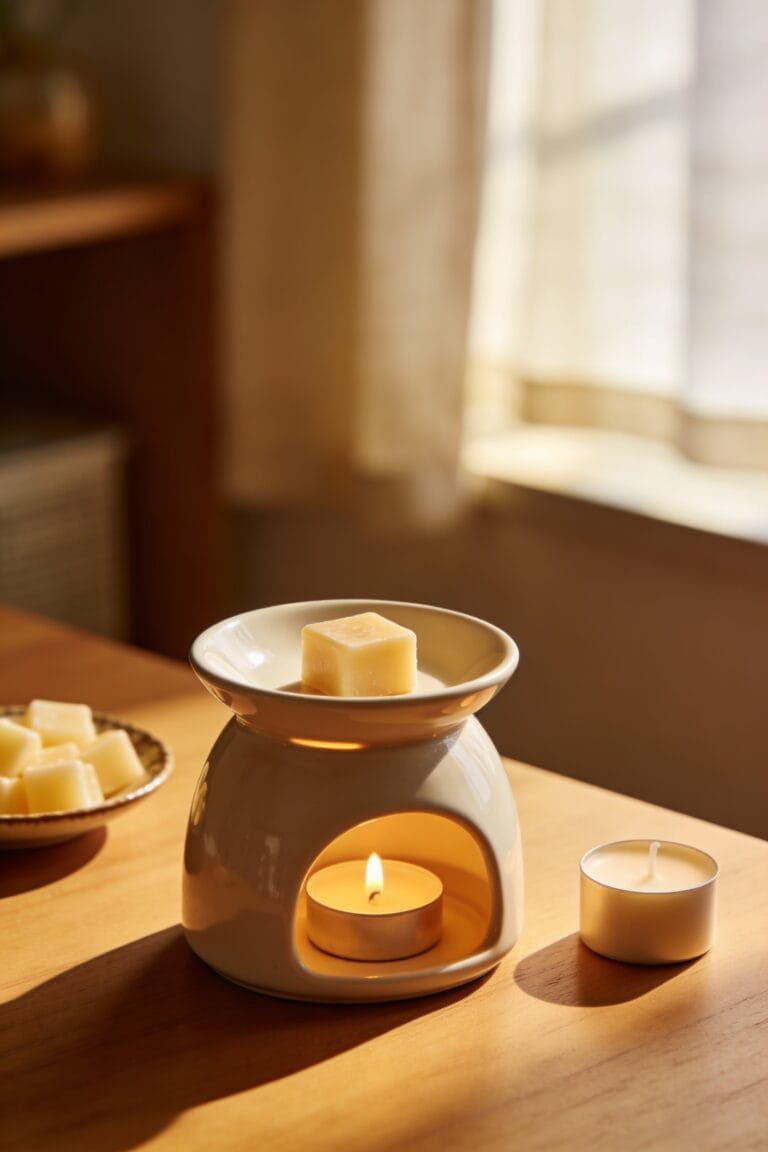
If you’re just diving into the candle holder world, votive and tealight holders are where you want to start—they’re forgiving, affordable, and honestly, they make everything look intentional even when you’re still figuring out what you’re doing. These tiny workhorses sit in small glass containers and don’t need freestanding support, which means you can’t really mess them up. They’re perfect for starter kits because they accommodate basically any wax type: soy, paraffin, palm, beeswax, blends—pick your favorite. Travel tins work the same way. Pair them with small container wicks like LX-8 or LX-10, and you’ve got a setup that actually burns properly. The best part? You’ll save money while learning exactly how your wax and wick behave before investing in larger projects.
Pillar Candle Holders for Freestanding Support
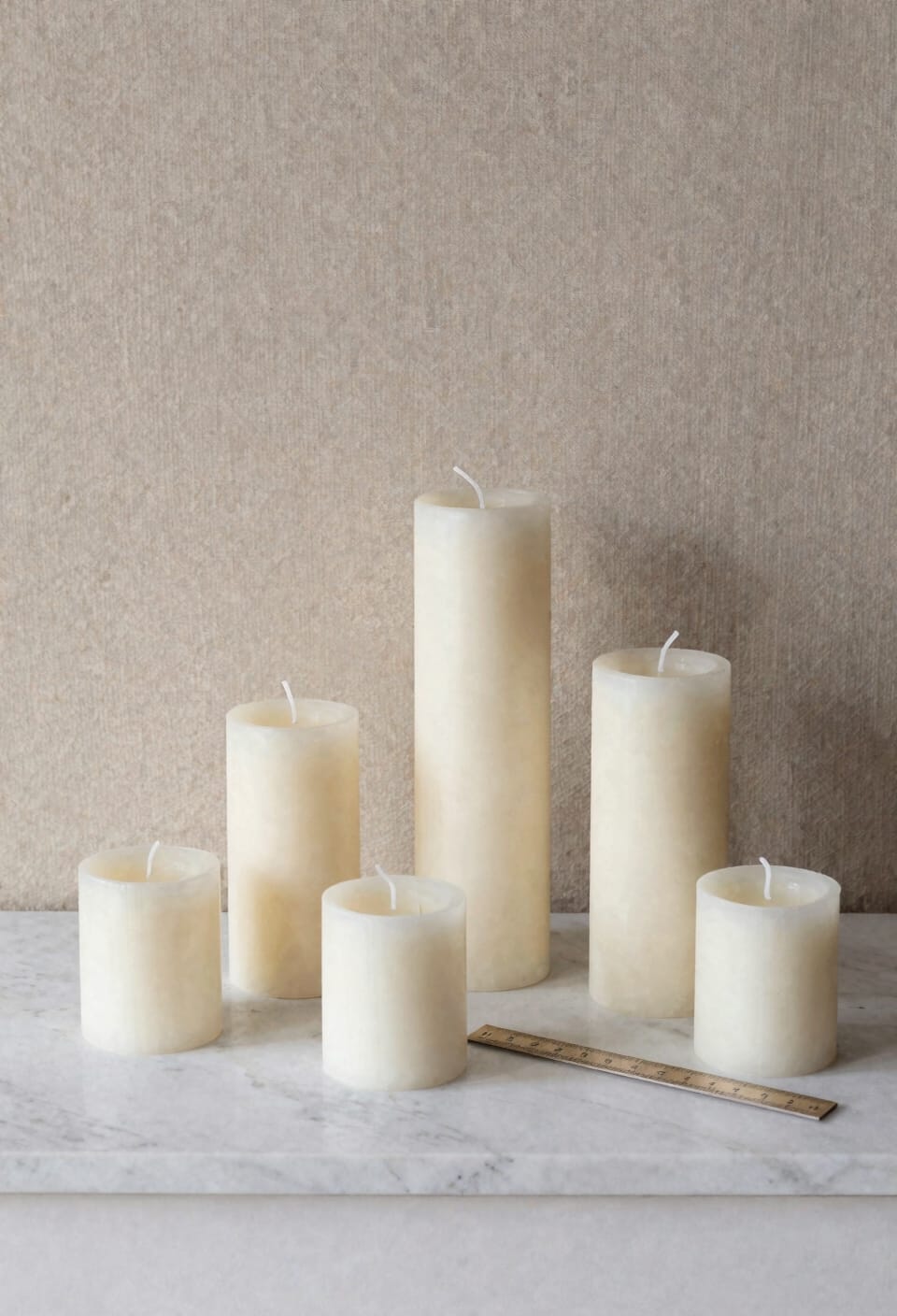
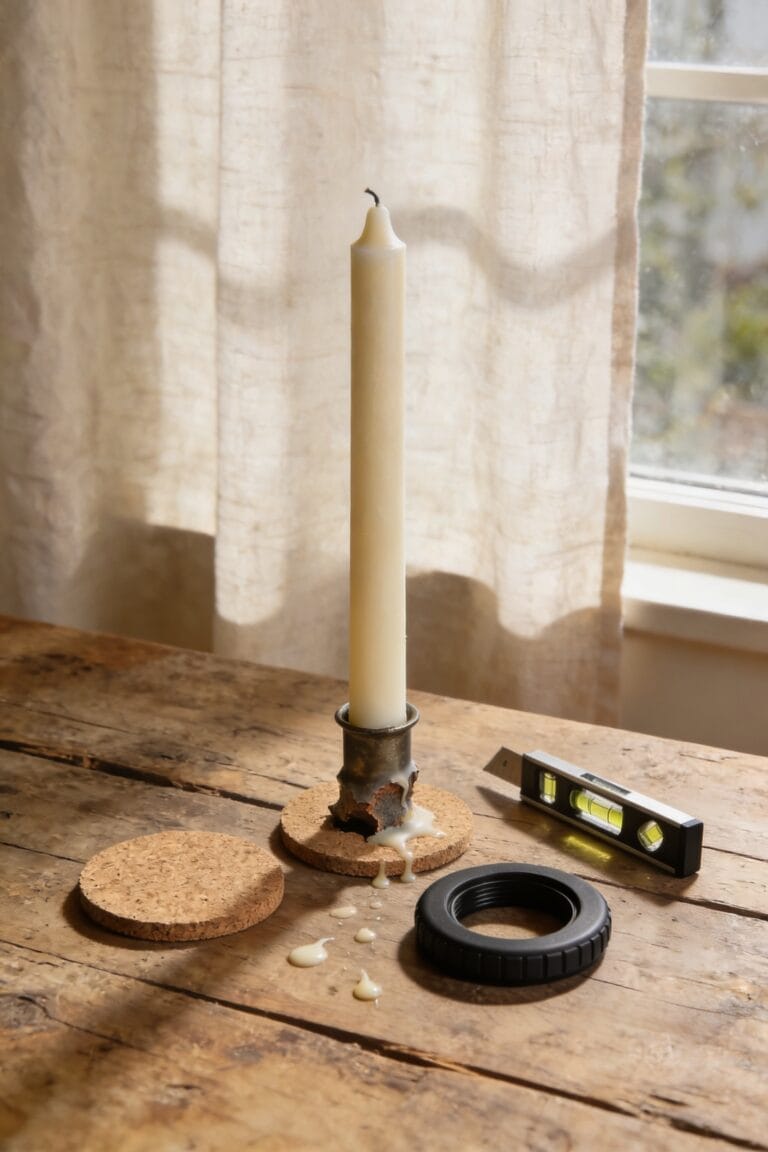
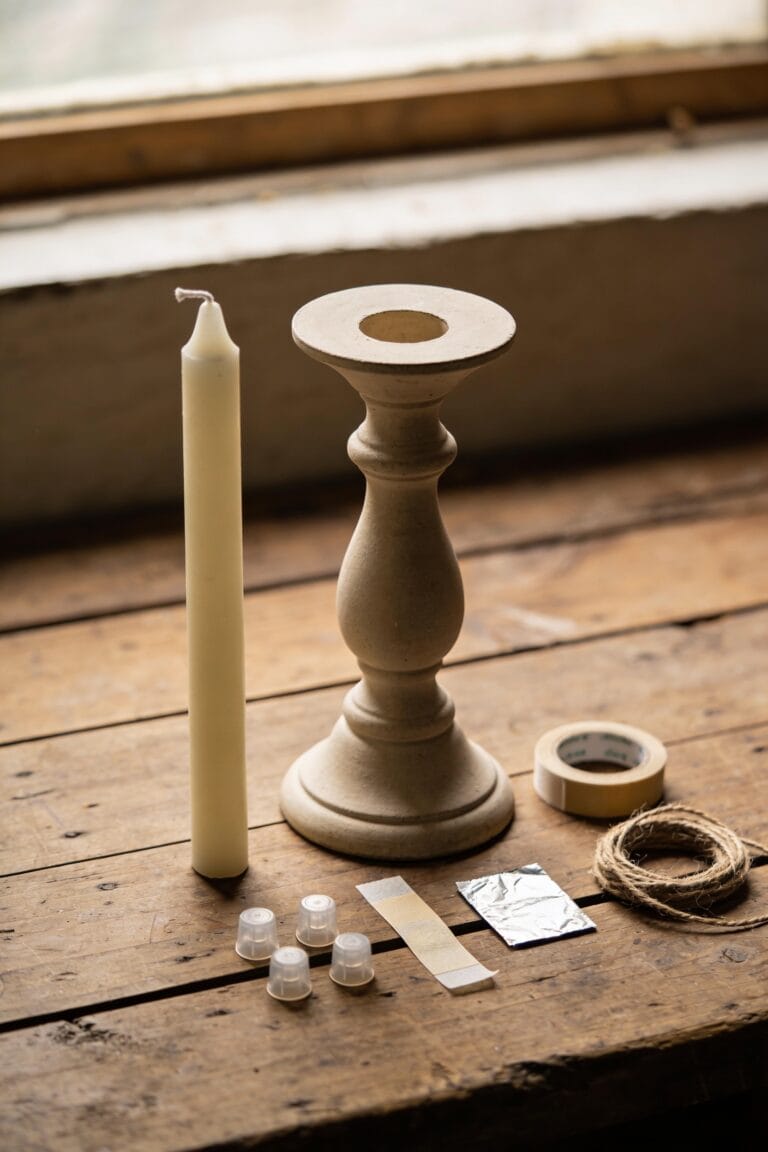
Once you’ve mastered votives and tealights, pillar candle holders represent your next logical leap—they’re the freestanding candles that sit directly on a surface without any container support, which means they need to be structurally sound enough not to collapse into a puddle of wax. That’s where pillar-specific wax formulations come in. Unlike container wax, pillar wax holds its shape during burning. You’ll want to match your candle’s diameter to the right wick size—2.0″ to 2.25″ diameters use 44-24-18 wicks, while larger 3.5″ to 4.0″ pillars need 60-44-18 sizing. A quality surface with good thermal insulation protects your furniture from heat damage. Proper surface texture prevents tipping. Get these details right, and you’ve got a genuinely impressive candle.
How Wax Type Affects Holder Heat and Stability
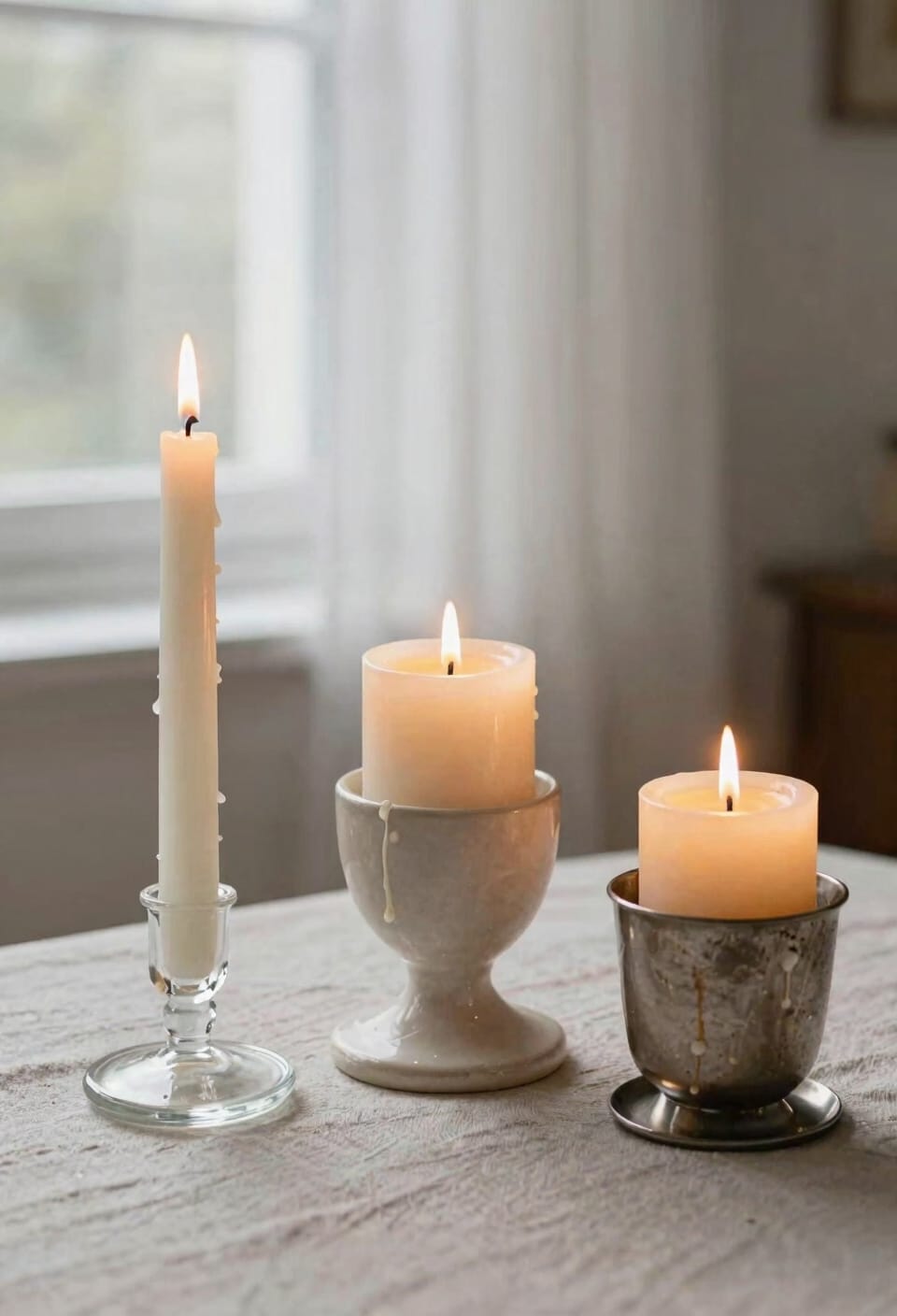
The wax you choose for your pillar candles isn’t just about aesthetics or scent throw—it fundamentally changes how heat spreads through the candle and whether your holder stays safe to touch. Paraffin wax, which is petroleum-based, conducts heat differently than soy wax, meaning your holder will warm up faster during burn time. This affects structural stability—a ceramic holder might crack under extreme temperature shifts, while metal handles become genuinely too hot to grip comfortably. Soy wax burns cooler overall, giving you more cushion before things get uncomfortable. I’ve learned the hard way that matching wax type to holder material matters. If you’re using paraffin, choose holders designed for higher heat transfer. With soy, you’ve got breathing room.
Sizing Wick to Holder Type for Optimal Burn
Getting the wick size right for your holder type is where a lot of candle makers stumble—you can nail everything else and still end up with a candle that burns like a sad campfire or tunnels down the middle like a sinkhole. Now, here’s the thing: wick spacing and flame control work together to determine how your candle actually performs. A container candle needs different wick sizing than a pillar does. For small containers around 1.25 inches, I’d grab an LX-8. Medium containers at 2.5 to 3 inches? That’s LX-16 territory. Get your diameter measured first, then match it to the right wick. This prevents tunneling and gives you that perfect, even melt pool you’re after.
Material and Style Choices That Support Function
Now that you’ve got your wick dialed in, here’s where your candle holder becomes just as important as the wick itself—because even a perfectly sized wick can’t do its job if you’re burning it in the wrong vessel or style of holder. Look, the material matters. Glass containers distribute heat evenly, while metal holders with weighted bases keep things stable and prevent tipping during burn time. You’ll also want decorative ventilation—small openings that let oxygen flow without creating drafts that mess with your flame. The right holder prevents tunneling by supporting consistent melting across the entire surface. Choose materials that complement your wax type and match your space. Function and style aren’t opponents; they’re teammates working toward a better burn.
Common Holder Mistakes and When to Use Specialty Options
Once you’ve nailed your wick size and picked a holder that looks good on your shelf, that’s when most people think they’re done—and that’s exactly when the mistakes start piling up. The biggest culprit? Ignoring overheating risks by placing holders too close to walls or curtains. Your candle needs breathing room—those ventilation needs aren’t optional, they’re survival equipment. I’ve watched beautiful soy containers get ruined because someone wedged them into a decorative nook without airflow. Container wax especially can overheat if trapped, causing uneven melting and soot buildup that’ll make you question your entire candle life. Give your holder space to breathe, keep it away from drafts and direct sunlight, and you’ll actually enjoy burning the thing instead of stressing about it.
Frequently Asked Questions
Can I Use a Container Candle Holder With Pillar Wax?
I wouldn’t recommend using pillar wax in a container candle holder. Pillar wax lacks the container compatibility needed for proper adhesion to jar walls, and wick placement becomes problematic without appropriate formulation support.
What’s the Difference Between Container and Pillar Wax Formulations?
Like oil and water, they’re fundamentally different. Container wax’s lower pour point lets it adhere to jars while cooling, creating even melt pools. Pillar wax’s higher pour point maintains structural integrity for freestanding candles.
How Do I Know if My Holder Accommodates Multi-Wick Candles?
I’d measure your holder’s diameter—if it’s over 3 inches, you’ve likely got room for multiple wicks. Check that you’ve got adequate wicket spacing for even heat distribution without crowding the container’s walls.
Does Soy Wax Require Different Holder Materials Than Paraffin?
I’ll tell you: not really. Soy wax burns 30% longer than paraffin, yet both work in standard holders. What matters is soy compatibility with your container’s breathability—ensure adequate airflow so your candle burns evenly regardless of wax type.
What Holder Specifications Work Best for Scent Throw Performance?
I’ve found that holder specifications enhancing scent throw depend on proper wick placement and airflow channels. You’ll want containers allowing adequate oxygen circulation around the flame, enabling peak fragrance release throughout your space.
Conclusion
Look, you’ve now got the knowledge to stop accidentally torching your candles into oblivion. Match your holder to your candle’s personality—they’re basically dating now—and respect the wax type you’re working with. Do this right, and you’ll finally burn through candles evenly instead of staring sadly at a tunnel of wasted wax. Your future self thanks you. You’re welcome.