As an Amazon Associate, we earn from qualifying purchases. Some links on this site are affiliate links at no extra cost to you. Our recommendations are based on thorough research and editorial judgment.

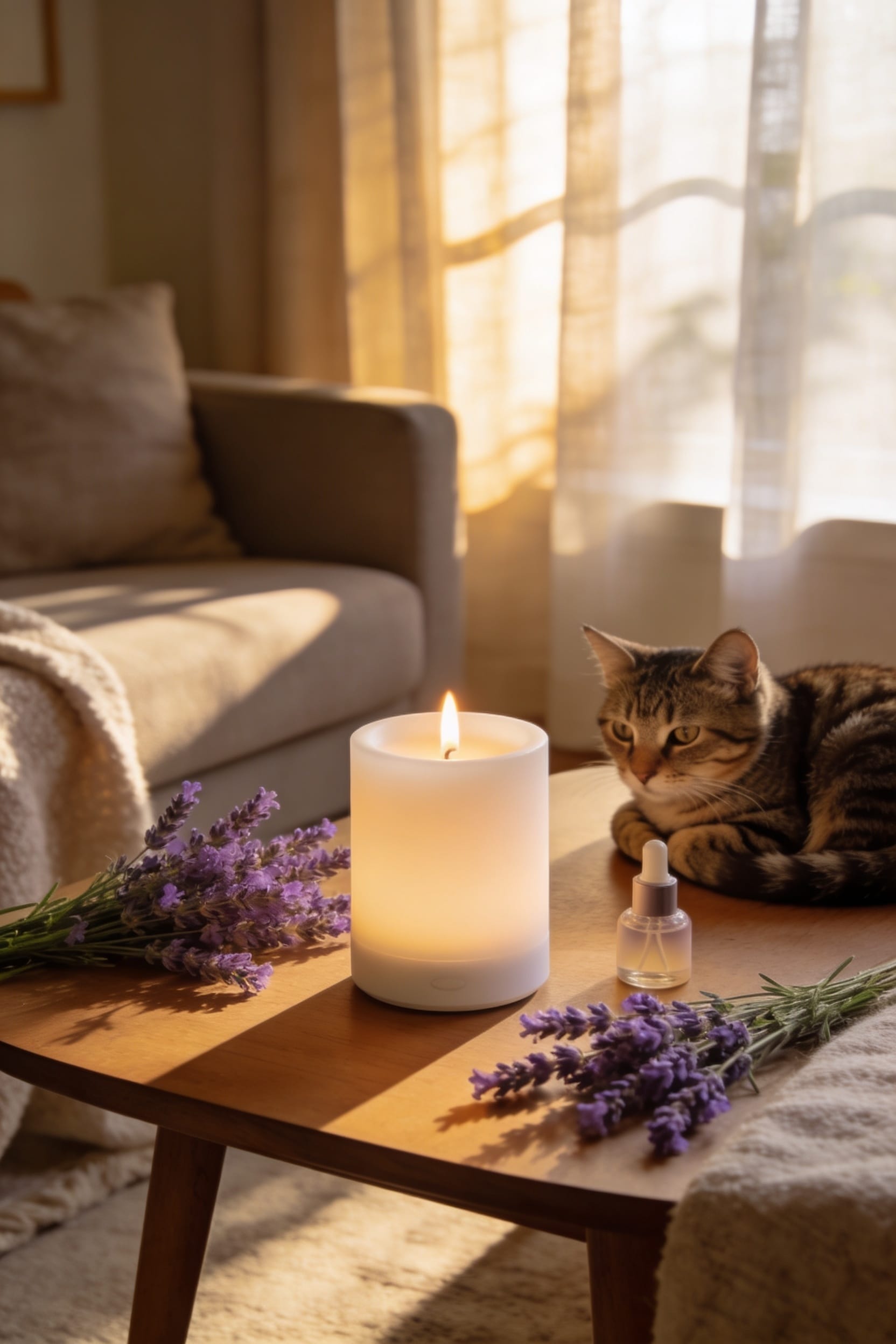
Are Flameless Candles Safe for Cats? Pet-Safe Home Fragrance Tips

Look, flameless candles are genuinely safe for cats because they produce zero heat, smoke, or soot—unlike traditional paraffin candles that release benzene and toluene into your cat’s lungs. If you want actual ambiance without the respiratory risk, LED flameless options are your move. Natural wax blends burn cleaner if you insist on real flames, but honestly, rechargeable flameless candles on high shelves eliminate the whole fire hazard and curiosity-knock problem. Scent-free options work best for sensitive feline noses, though pet-safe fragrances exist if you’re determined to add scent. Keep reading to discover exactly where to position them.
Key Takeaways
- Flameless LED candles are safe for cats as they produce zero heat, smoke, or soot unlike traditional paraffin candles.
- Natural wax blends like soy and phthalate-free fragrances reduce respiratory irritation compared to heavily perfumed paraffin options.
- Place candles on high shelves, wall-mounted holders, or enclosed lanterns to prevent curious cats from knocking them over.
- Watch for sneezing, coughing, watery eyes, or wheezing; remove candles immediately and ventilate if symptoms appear.
- Scent-free flameless options or pet-safe fragrances provide ambient lighting without overwhelming sensitive feline respiratory systems.
Why Traditional Candles Pose Real Risks to Cats
When you light a traditional paraffin candle—that’s the waxy stuff most cheap candles are made from—you’re not just creating ambiance in your home. You’re also releasing benzene and toluene into the air, toxic compounds that irritate your cat’s sensitive respiratory system. Those wax fumes? They’re irritating your pet’s lungs whether she shows it or not. Brightly colored or heavily perfumed candles make it worse, overwhelming her delicate nose and triggering sneezing, coughing, and watery eyes. Add the open flames themselves—your curious cat’s natural target for batting—and you’ve created a fire hazard nobody needs. Even unscented paraffin produces soot that accumulates in healthy lungs over time. Your cat can’t tell you she’s uncomfortable. That’s why ditching traditional candles entirely matters.
Flameless Candles: The Risk-Free Alternative
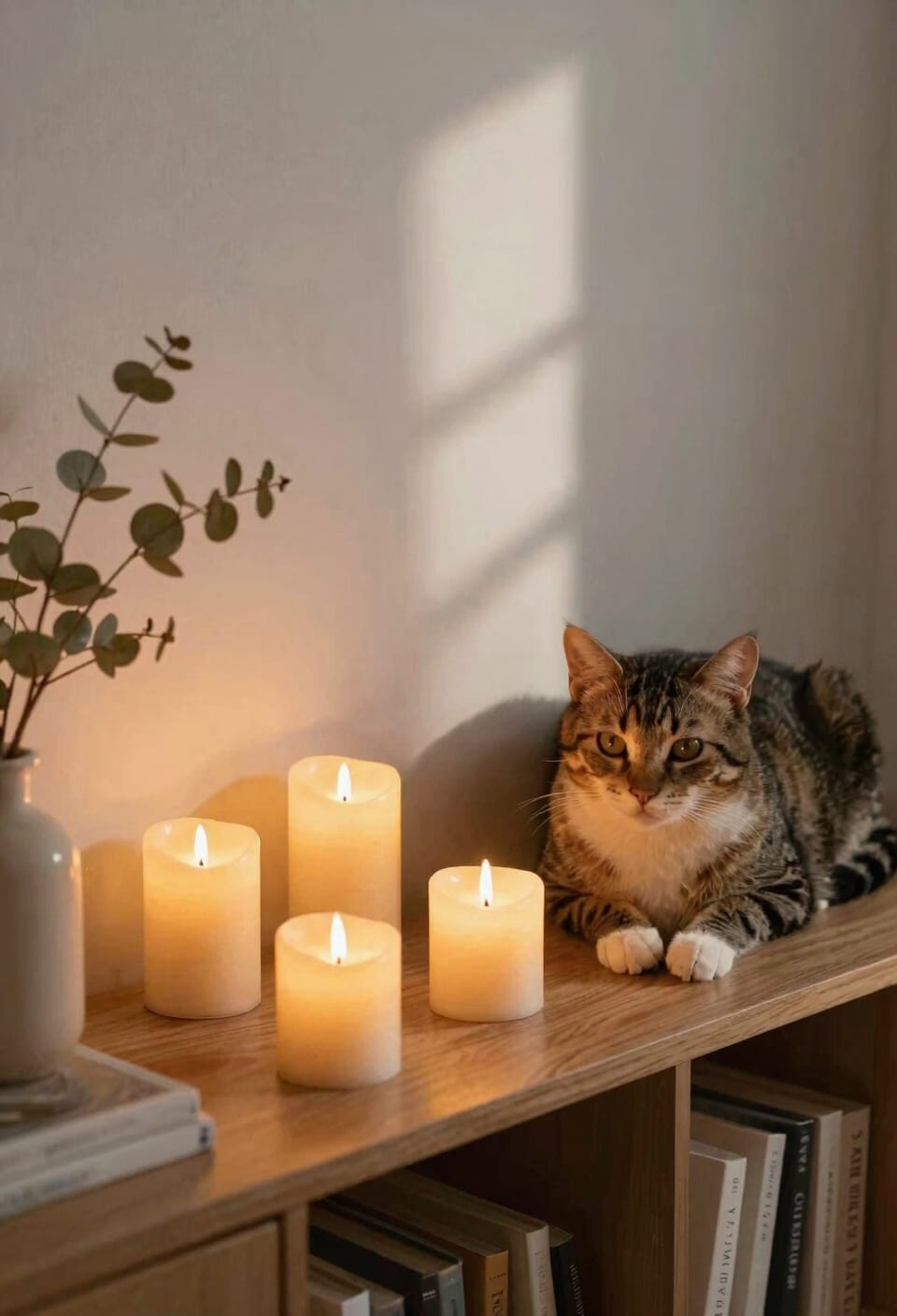
Now that you know what’s lurking in traditional candle smoke, here’s the good news: you don’t have to choose between a cozy home and a healthy cat. LED flameless candles deliver ambient realism without the toxins. They mimic real flames convincingly—seriously, I’ve fooled guests—while producing zero heat, smoke, or soot. Your cat won’t bat at a harmless light source, and you’ll dodge respiratory issues entirely. Battery longevity varies, but rechargeable models work great and keep you from buying replacements constantly. Position them on high shelves or in decorative lanterns for extra safety. Remote-controlled options let you adjust ambiance without moving around. All right, you get cozy evenings and a cat who breathes easy. That’s a win.
Which Flameless & Wax Options Are Safest for Cats
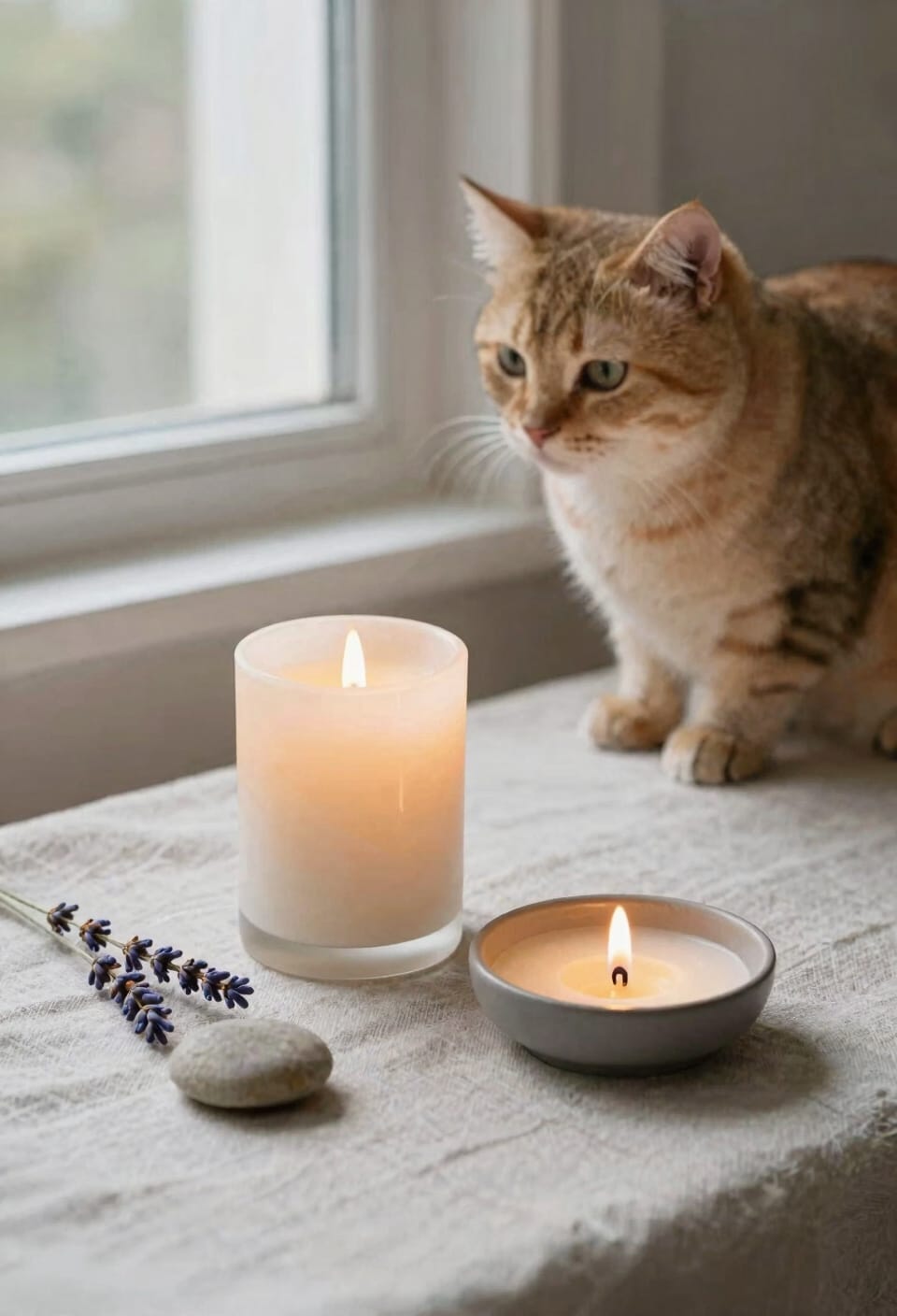
Choosing between flameless candles and traditional wax isn’t really an either-or situation—you’ve got options at every price point, and some are genuinely safer than others for your cat. LED flameless candles are your safest bet since they produce zero fumes, heat, or soot. If you prefer actual wax, natural wax blends like soy rank highest for clean burning without irritating your cat’s lungs. Skip paraffin entirely—it releases nasty benzene and toluene when lit. Check battery longevity on flameless models; rechargeable options save money and headaches. When shopping, hunt for phthalate-free scents if you want fragrance. Position any candle high up or inside a lantern your cat can’t access. Your cat’s respiratory system will thank you for the thoughtful swap.
How to Position Candles Where Cats Can’t Reach Them

So you’ve picked out the perfect flameless candle or a clean-burning soy option—but here’s where a lot of cat parents drop the ball: placement.
Now, I’m not saying your cat’s a ninja, but they’re definitely more athletic than you give them credit for. High shelves are your first line of defense—think furniture tops, bookcases, or windowsills your cat genuinely can’t leap to without dying trying. Wall mounted holders work brilliantly too; they keep candles completely out of pouncing range while creating that cozy vibe you’re after.
Skip the floor entirely. Skip the coffee table. Skip anywhere within tail-swipe distance. Look, I’ve seen curious cats knock things over for sport. Position your candles thoughtfully, and you’ll keep both your ambiance and your pet safe.
Pet-Safe Fragrances and Scent-Free Options
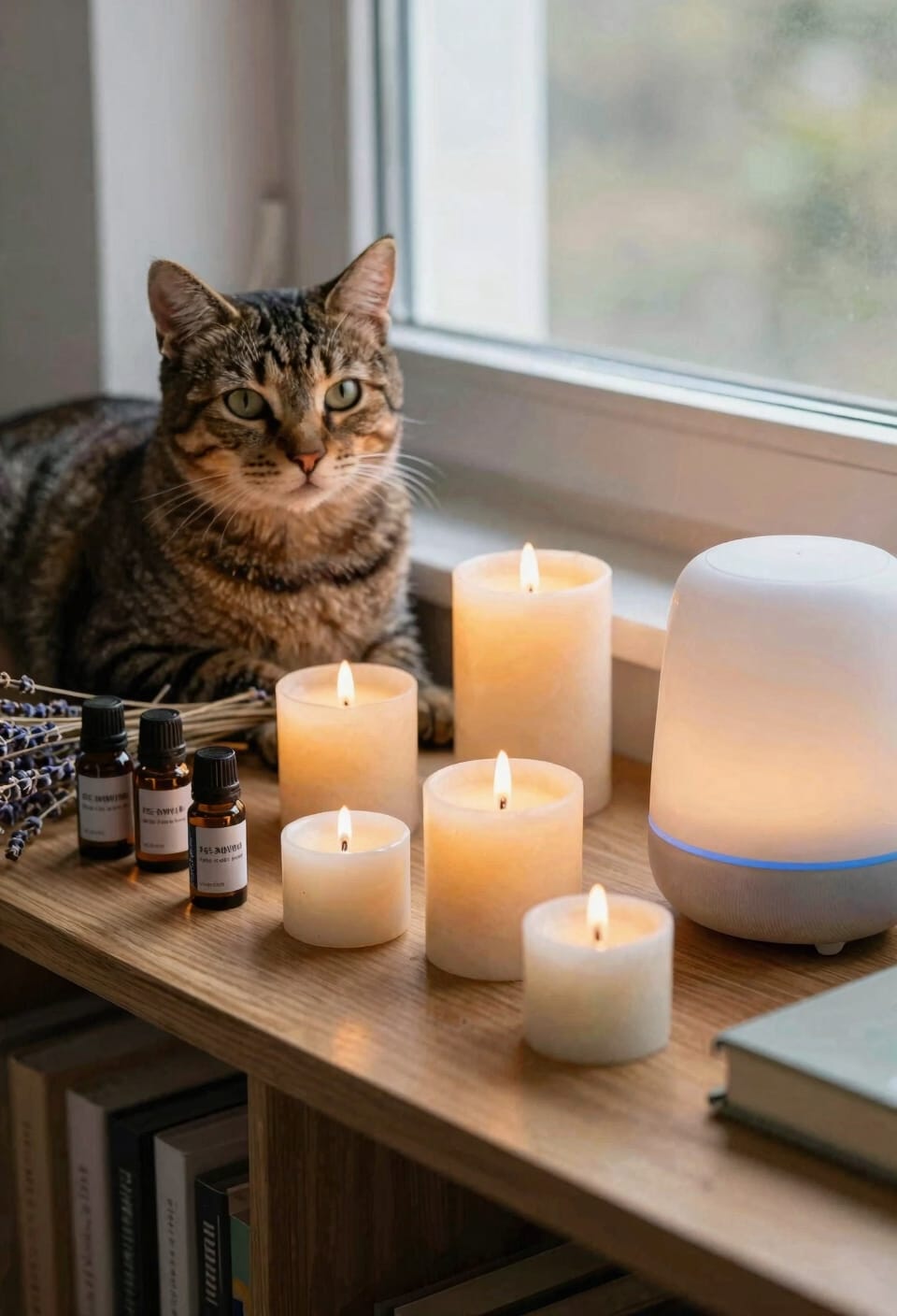
Just because you’ve nailed the placement doesn’t mean you’re out of the woods if you’re still burning traditional scented candles around your cat. Here’s the thing: fragrance labeling matters enormously. Look for candles labeled phthalate-free—those’re chemicals that amplify scent but wreak havoc on feline respiratory systems. Soy candles with clean fragrance blends are your safest bet; they release far fewer irritants than paraffin wax.
Now, scent-free flameless options exist too, and honestly? They’re underrated. You get ambient lighting without overwhelming your cat’s sensitive nose. If you want aromatherapy guidelines that won’t compromise your pet’s health, stick with pet-safe fragrances specifically formulated for households with animals. Your cat’s lungs will thank you.
Signs Your Cat Is Reacting to Candle Fumes
All right, so you’ve ditched the paraffin and grabbed those phthalate-free soy candles—smart move. But here’s the thing: even safer options can still bother your cat if you’re not watching for signs. Watch for behavioral changes like excessive grooming, hiding, or restlessness near your candle zone. Sneezing, watery eyes, and coughing are your cat’s way of saying the scent’s too much. Sore, red eyes? That’s irritation talking. Environmental monitoring matters here—if your cat’s suddenly avoiding rooms where you burn candles, that’s your cue to reassess. Trust me, your cat’s respiratory system isn’t equipped for concentrated fragrance like ours is. When symptoms pop up, remove the candle immediately and ventilate the space. Your cozy ambiance shouldn’t cost your pet’s comfort.
What to Do If Your Cat Shows Symptoms
When your cat starts showing signs of candle-related distress, the first thing you need to do is stay calm and act quickly—panic won’t help either of you. Remove all candles from your home immediately. Open windows to improve air quality testing and let fresh air circulate. If your cat’s symptoms persist beyond a few hours—persistent coughing, wheezing, or labored breathing—contact emergency veterinary care. Don’t wait. Your vet can rule out other respiratory issues and confirm candle-related irritation. Meanwhile, avoid scented products entirely. Switch to flameless LED candles if you want ambiance without risk. Honestly, it’s not worth watching your cat suffer. Those traditional candles aren’t going anywhere. Your cat’s lungs matter more.
Getting Started: Your Cat-Safe Candle Setup
Now that you’ve ditched the traditional candles for your cat’s sake, let’s talk about setting up your home so you can actually enjoy some ambiance without guilt or vet bills. Start with starter kits designed specifically for pet households—they’ll include flameless candles, holders, and often remote controls so you’re not fumbling around near curious paws. Your cat proofing tips should include placing candles on high shelves or inside enclosed lanterns where your feline friend can’t knock them over or bat at them. Opt for rechargeable LED models to save money long-term and reduce waste. Position them away from your cat’s favorite lounging spots, and definitely avoid anything scented that might overwhelm their sensitive nose. You’re basically creating a cozy zone that works for everyone involved.
Frequently Asked Questions
Can I Use Essential Oil Diffusers as an Alternative to Scented Candles Around Cats?
I’d caution you about essential oil diffusers around cats. While they’re flameless, essential oils concentrate toxins that irritate feline respiratory systems. For safer diffuser placement, keep them in rooms where your cat can’t access them regularly.
How Long Do Rechargeable Flameless Candles Typically Last per Charge?
Most rechargeable flameless candles last 8-12 hours per charge—studies show they’re used 40% more than traditional candles. I’d estimate their battery life supports 100+ charge cycles with minimal power consumption degradation over time.
Are There Specific Cat Breeds More Sensitive to Candle Smoke and Fumes?
I’d say certain breeds show greater breed sensitivity to candle smoke due to genetic predisposition. Flat-faced cats like Persians and Himalayans have narrower airways, making them more vulnerable to respiratory irritation from fumes.
Can I Safely Use Candles in Rooms Where My Cat Sleeps at Night?
I’d recommend avoiding traditional candles near your cat’s sleep area entirely. Instead, position flameless candles on high shelves away from bedding proximity. This location preference keeps your pet safe from fumes while they rest undisturbed.
Do Flameless Candles Produce Any Byproducts That Could Harm Cats Over Time?
No, flameless candles don’t produce harmful byproducts. They emit no smoke, soot, or nanoparticle exposure like traditional candles. I’d avoid scented residue buildup by choosing unscented LED options for your cat’s safety.
Conclusion
Think of your home as a castle and your cat as its curious knight-errant. You’re the wise keeper, placing flameless candles on high shelves like treasures in towers—out of reach, yet still filling rooms with warmth and scent. By choosing pet-safe options and positioning them thoughtfully, you’ve transformed potential danger into genuine comfort. Your cat roams freely. You sleep soundly. Everyone wins.