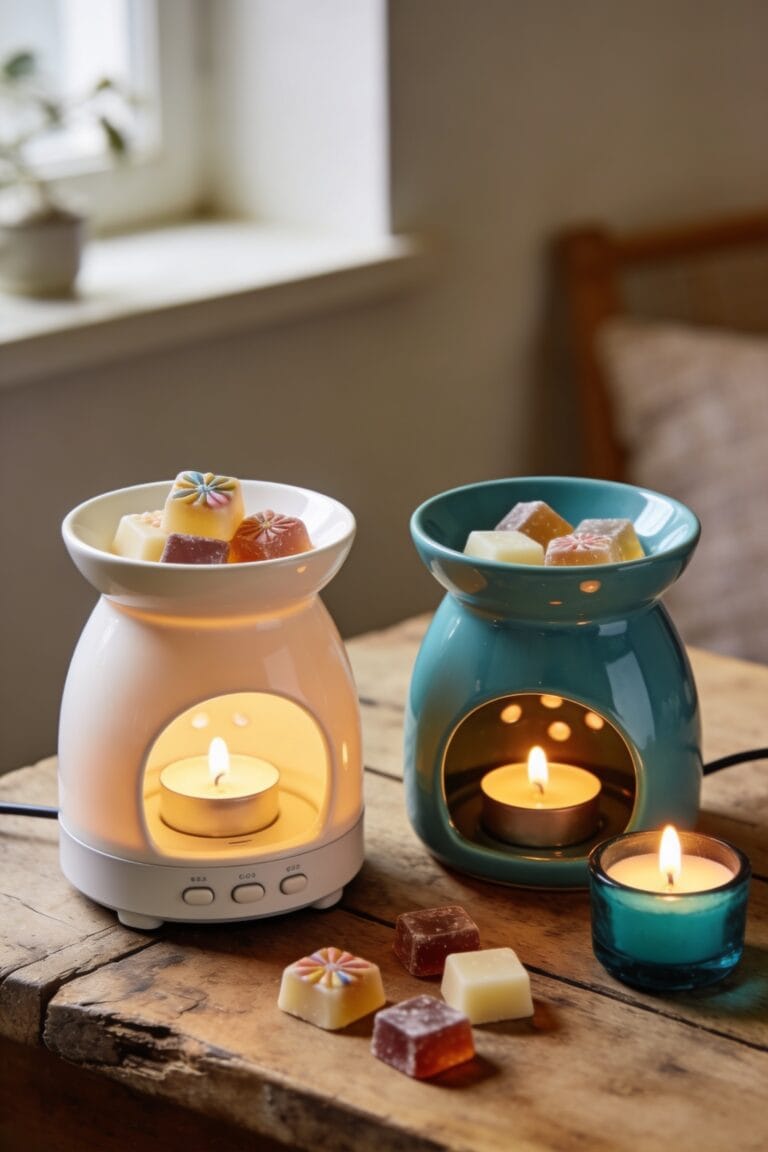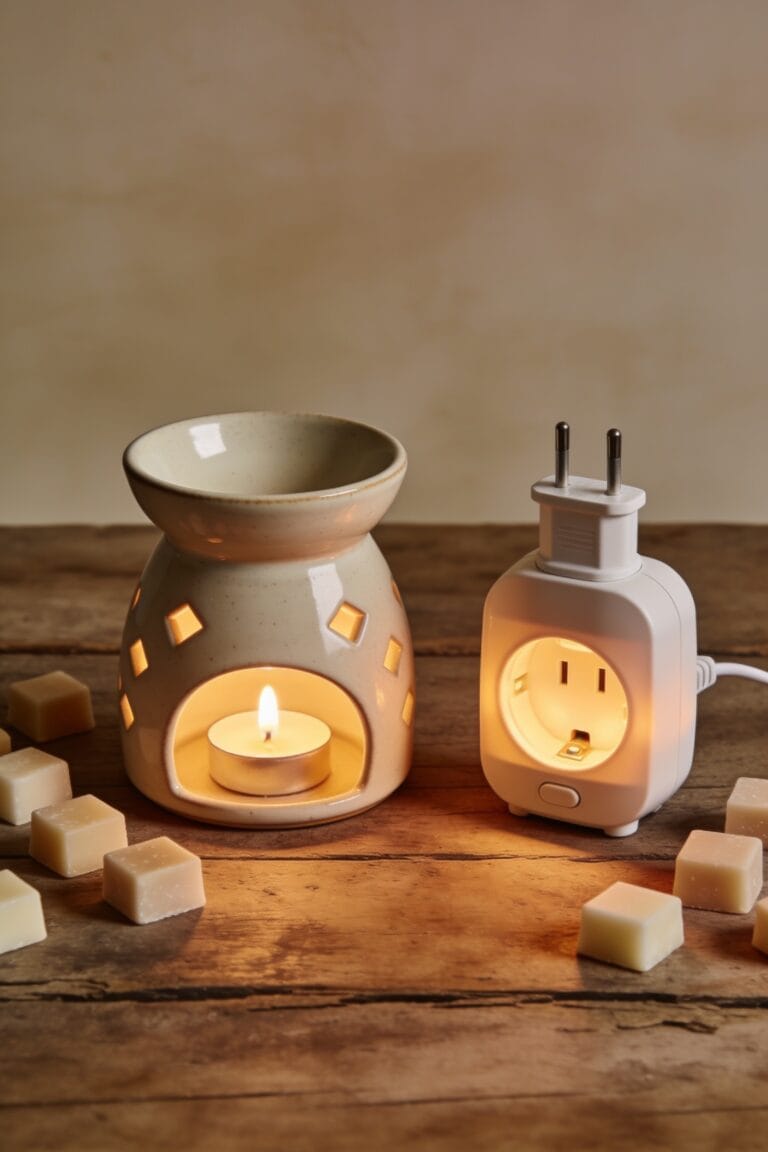
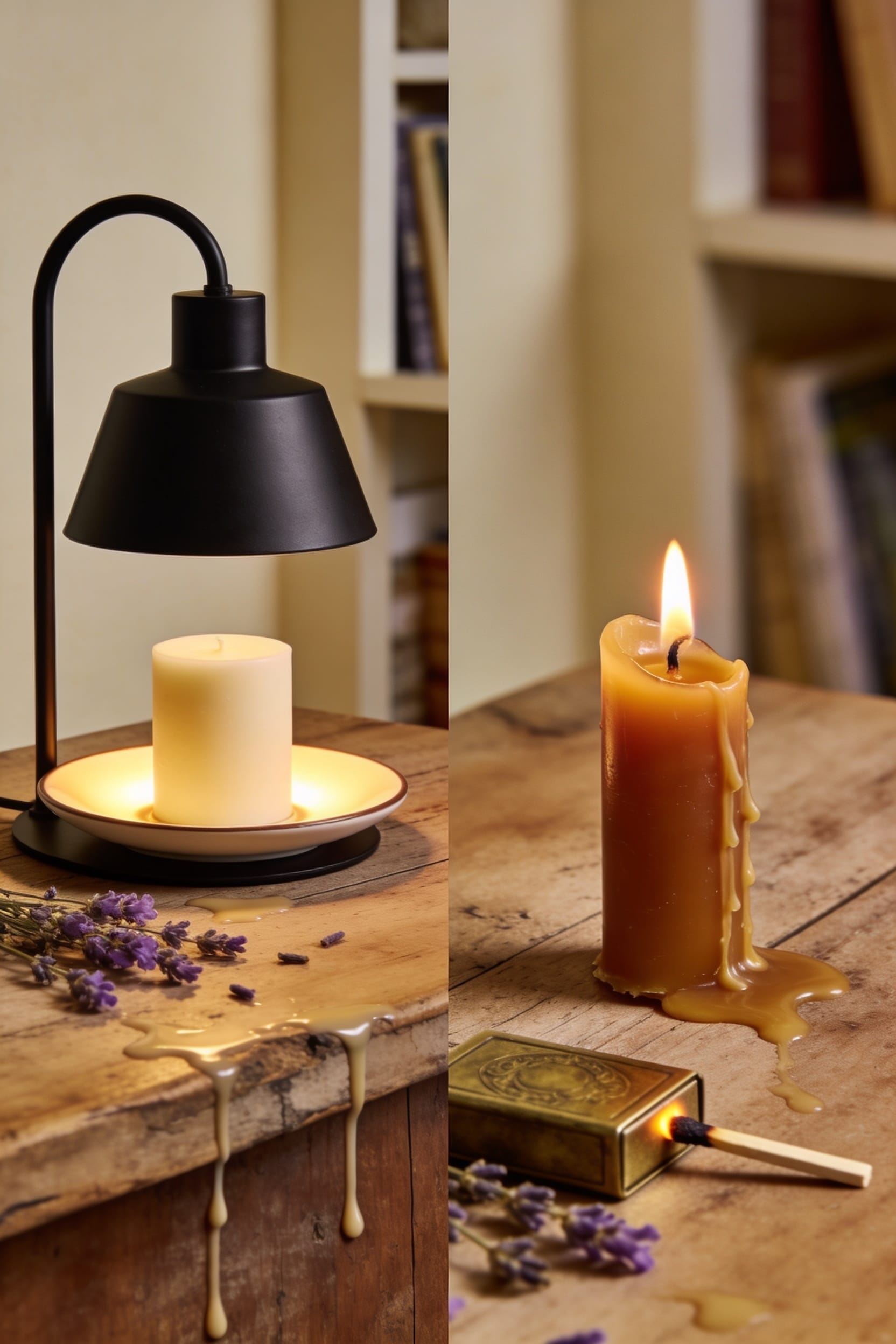

candle warmers eliminate fire hazards and soot while extending your candle’s life, but they can’t replicate that cozy flickering glow or deliver the immediate scent punch that burning does. Burning gives you ritual and ambiance fast, though it demands wick maintenance and produces respiratory irritants. Warmers excel in small spaces and around pets, offering gradual fragrance release without smoke buildup. Neither’s objectively “better”—it depends on whether you prioritize safety and longevity or that irreplaceable candlelit atmosphere. The real answer gets more nuanced once you understand what each method actually does to your wax.
Key Takeaways
- Burning candles produce immediate, strong scent throw ideal for small rooms; warmers offer gradual, even fragrance distribution better for larger spaces.
- Candle warmers eliminate fire hazards, prevent burns, and reduce soot and smoke, making them safer around pets, plants, and curtains.
- Warmers extend candle longevity by melting wax slowly and preventing tunneling, while burning consumes wax and wick faster.
- Burning provides flickering ambiance and ritual that warmers cannot replicate, though warmers prioritize safety and cost efficiency over time.
- Warmers require upfront device investment but reduce candle replacement frequency; burning needs regular wick maintenance to prevent excessive soot.
Which Method Is Safest for Your Home?
When you’re weighing candle warmer versus burning, safety should honestly be your first consideration—especially if you’ve got curious pets, kids, or that one friend who’s always knocking things over. Candle warmers eliminate open flame entirely, which means zero fire hazard around curtains, plants, or your pet’s tail. No flame also means no accidental burns from touching a hot wick or getting too close. Burning candles, though, produces soot, carbon, and smoke that accumulates over time—annoying cleanup and potential respiratory irritation in small spaces. Here’s the thing: warmers come with timers and auto shut-off features, removing the “did I blow that out?” anxiety. For child safety and pet hazards, warmers win decisively. Both release VOCs, but burning adds extra pollutants you genuinely don’t need floating around your home.
Best for Small Spaces: What Actually Works
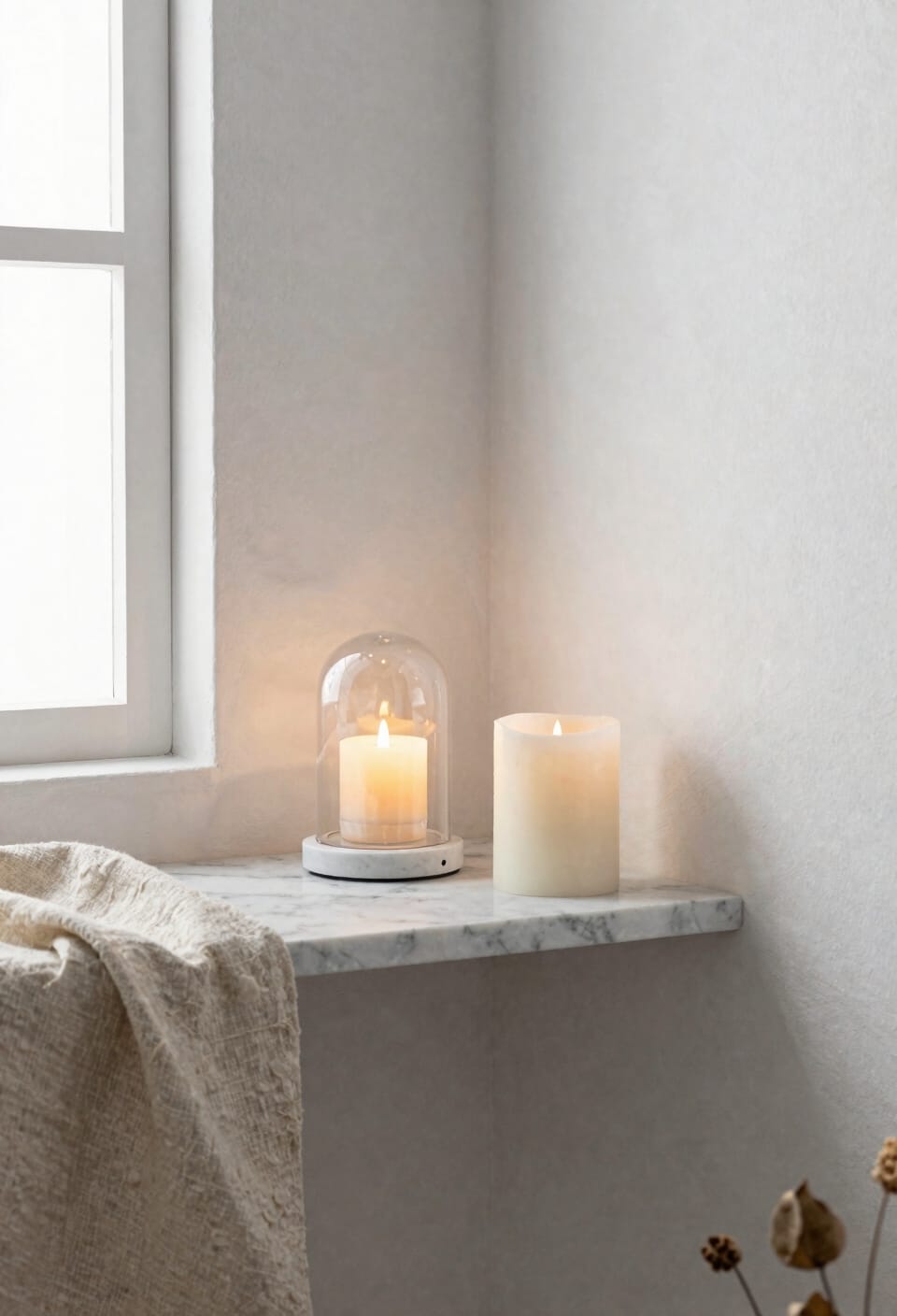
If you’re living in a studio apartment, a dorm room, or basically anywhere you could sneeze and hit three walls, here’s the thing: your candle choice matters way more than it does for someone with a walk-in closet to spare. Candle warmers win here because they don’t require airflow considerations that burning demands. When you burn a candle in tight quarters, you’re competing with limited ventilation and smoke buildup—not ideal. Warmers release fragrance gradually without consuming oxygen or producing soot, which matters when your bedroom basically *is* your kitchen. You’ll also avoid fragrance layering issues where competing scents get trapped and turn weird. Grab a warmer, skip the smoke stress, and actually enjoy your small space smelling fantastic.
How Strong Is the Scent Throw?
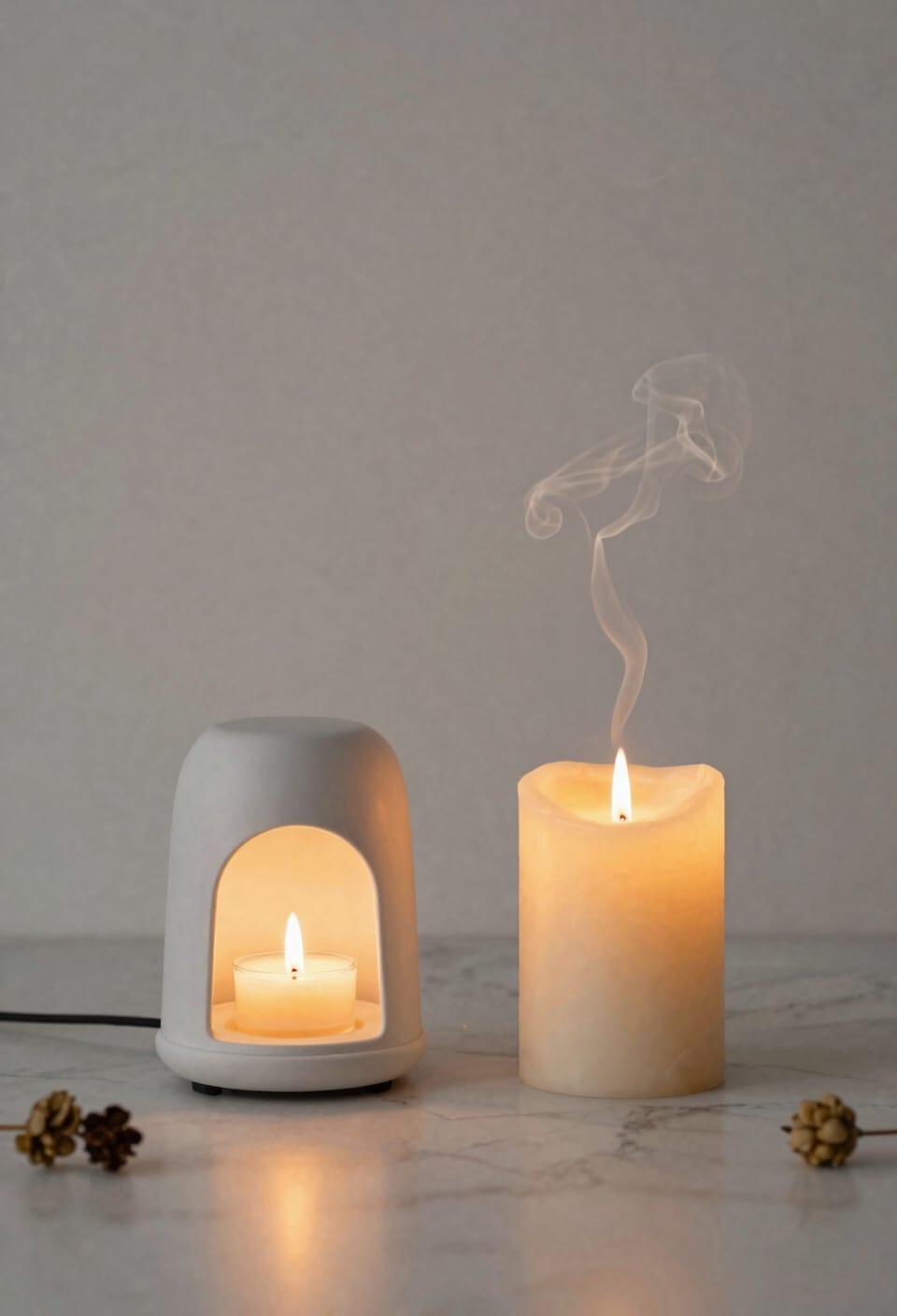
scent throw—that’s how far and how strong your candle’s fragrance travels through a room—isn’t actually the same experience whether you’re burning or warming.
When you burn a candle, you’re getting that strong throw right away. The flame creates a full melt pool, and heat pushes fragrance molecules into the air fast and hard. It’s immediate and obvious.
Warmers work differently. They offer gradual diffusion—slow, steady fragrance release at lower temperatures. You’re not getting that initial punch, but you’re getting something more even throughout your space.
The real difference? Burning dominates small rooms quickly; warming suits larger spaces better. Soy wax in burning candles gives you consistent, long-lasting fragrance if you’re burning correctly. Either way works great—just depends what you’re after.
Which Lasts Longer: Burned or Warmed Candles
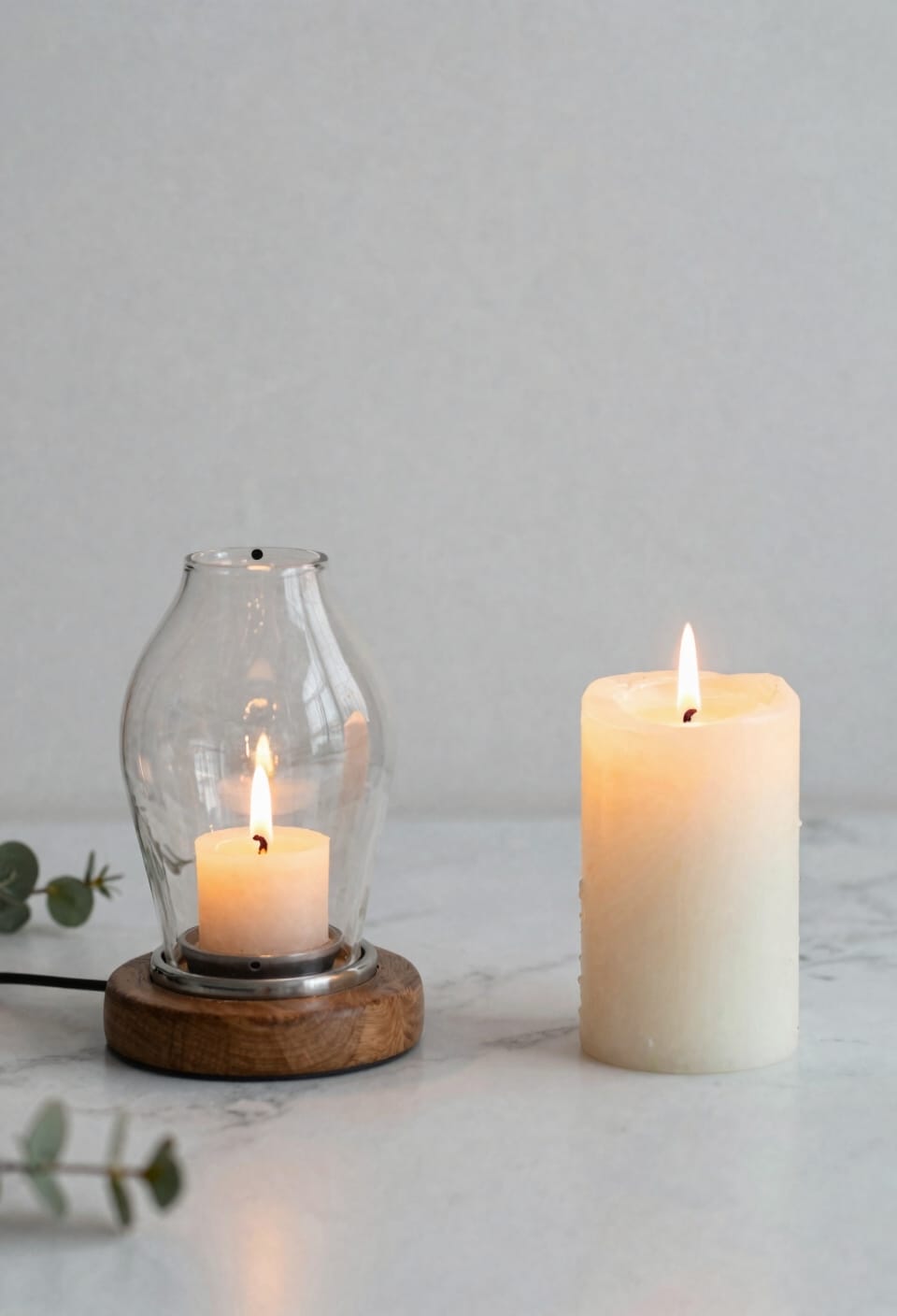
Now here’s where the real math gets interesting. When you burn a candle, that wick longevity matters—once it’s consumed, your candle’s done. A warmer, though? It melts wax at a slower melt rate, which means you’re squeezing way more fragrance hours from the same amount of wax. I’m talking potentially double or triple the lifespan. Burning eats through your candle faster because you’re literally consuming the wick with every session. Warmers avoid that entirely. You’ll get more bang for your buck with a warmer, especially if you’ve invested in quality candles. The slower, gentler heat means less waste, less tunneling—that annoying hollow ring around the sides—and frankly, more time enjoying your favorite scent without replacing candles constantly.
Burning vs. Warming: Maintenance Reality
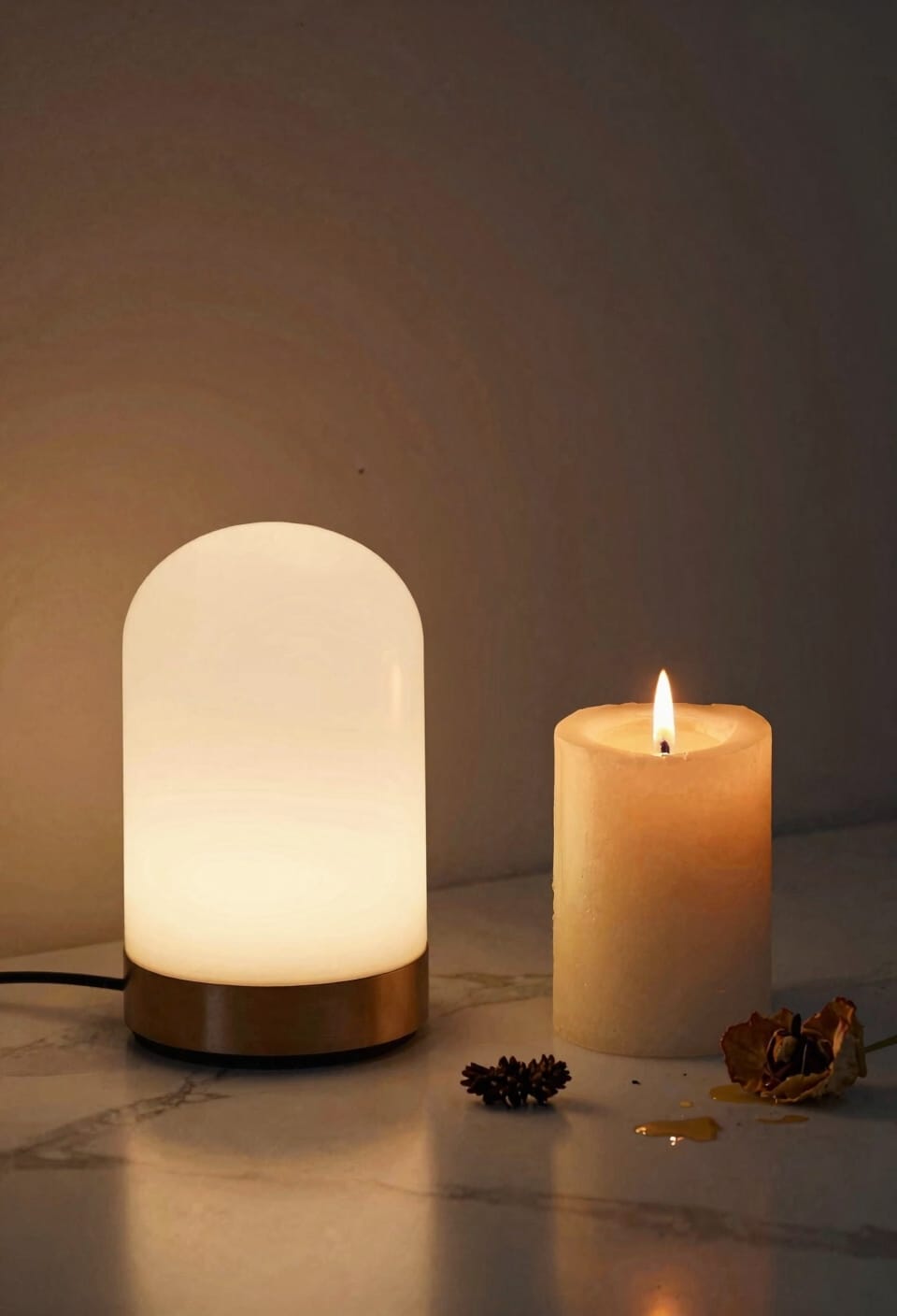
Keeping your candles in good shape comes down to choosing your method—and here’s where warmers start pulling ahead. With burning, you’re stuck doing wick maintenance regularly. Trim that wick to about a quarter-inch, or you’ll get black smoke and soot all over your ceiling (trust me, it’s not a good look). Warmers? They skip the whole trimming circus. No wick means no maintenance headaches. The trade-off is wax disposal—lamp warmers eventually need you to scoop out hardened wax layers. Plate warmers let you just swap in fresh candles. Burning leaves you with cleanup duty too: soot residue, potential black marks on walls, the works. Warmers keep things tidy. You’re basically choosing between wick drama or occasional wax disposal.
Cost Efficiency: The True Long-Term Price
Look, here’s where the math gets interesting: warmers demand upfront cash—you’re dropping money on the device itself before you even plug it in—but they’re designed to squeeze every last bit of fragrance out of your candles. You’ll reduce your purchase frequency dramatically because you’re not burning through wicks and wasting melted wax pooling unevenly at the jar’s edges. Sure, there’s an energy footprint from running the warmer, but it’s minimal compared to what you’re saving by extending each candle’s life. No wick trimming supplies needed either. Over time, that upfront investment pays itself back while burning candles keep demanding replacement after replacement. Your wallet—and your stash—will thank you.
Flame Glow vs. Subtle Warmth: The Ambiance Tradeoff
But here’s where the rubber meets the road: all that efficiency and savings means nothing if you’re sitting in your living room missing the whole reason you wanted a candle in the first place. Burning gives you flame rituals—that flickering glow, the crackling sounds, the therapeutic ritual aesthetics that make you feel genuinely cozy. Warmers? They’re all function. You get gentle diffusion and ambient lighting if you grab a lamp warmer, sure, but you lose the flicker entirely. No therapeutic ritual. No wood-like sounds. Just warmth and scent. Look, I’m not saying warmers aren’t brilliant for safety and longevity. They absolutely are. But sometimes you just want the real thing—flame, glow, the works. Most of us switch methods depending on mood anyway.
Match Your Needs: A Quick Decision Tree
Here’s the thing: if you’ve got pets, kids, or curtains you’d rather not see go up in flames, a warmer’s your answer. Small apartments? Same deal. But if you’re after that cozy ritual and seasonal preferences matter to you, burning delivers the goods. Gifting suggestions? Warmers work beautifully for safety-conscious friends. Holiday mood? Grab matches and lean into the flame. Honestly, you don’t need to pick just one. I switch methods depending on what I’m craving that day.
Use Both: When to Burn and When to Warm
Since you don’t actually have to choose between these two methods, you might as well stop pretending you do. Your evening rituals deserve flexibility. Burn candles when you want that therapeutic flame flicker and genuine coziness—think winter nights or special occasions. Warm them during workdays when safety exceptions matter most, especially around curtains or pets. Try seasonal swaps: burning in cozy months, warming during busy seasons when you need fragrance without monitoring. Here’s the thing about fragrance layering—you can warm one candle while burning another in a different room, creating depth without overwhelming your space. Mix and match by mood. You’ve earned the right to be tactical about your own comfort.
Frequently Asked Questions
Can I Use Wax Melts in a Candle Warmer Lamp Designed for Jar Candles?
I’d recommend caution—you can use wax melts, but I’ll note safety considerations. Most lamp warmers aren’t designed for loose melts; wax compatibility matters since melts may drain differently than jar candles, potentially damaging your warmer.
Do Candle Warmers Work Effectively With Different Wax Types Like Paraffin or Gel?
I’d say warmers work well with paraffin and gel—like a phonograph playing modern music. Wax compatibility matters for even melting, and you’ll find scent longevity improves since lower temperatures preserve fragrance oils better than burning does.
How Often Should I Replace the Bulb in a Lamp Warmer?
I’d recommend checking your lamp warmer’s warranty coverage since bulb lifespan varies by model. Most halogen bulbs last 2,000-5,000 hours with regular use. You’ll notice decreased energy consumption and warmth when replacement’s needed.
What’s the Ideal Room Size for Optimal Scent Distribution With a Warmer?
I’ve found that warmers work best in medium-sized rooms—roughly 200-400 square feet. They’re ideal for small spaces where they’ll saturate the air, yet still effectively scent large rooms if you’re patient with gradual diffusion.
Can I Leave a Candle Warmer on Overnight Safely With Auto Shut-Off Features?
I’d say yes, you can safely leave your warmer on overnight with auto shut-off features. They’re designed for unattended use, offer child safety benefits, and many support battery operation for added security and peace of mind.
Conclusion
Look, I burned the same $28 luxury candle three times without trimming the wick, and it tunneled so badly I couldn’t reach the wax at the edges. Waste. A warmer would’ve solved that, but I love flame ambiance. Here’s my truth: you’re not choosing one method forever. Burn when you want coziness, warm when you want safety and longevity. Your candles—and your wallet—will thank you.