As an Amazon Associate, we earn from qualifying purchases. Some links on this site are affiliate links at no extra cost to you. Our recommendations are based on thorough research and editorial judgment.

How to Use Candle Lanterns Indoors and Outdoors Safely

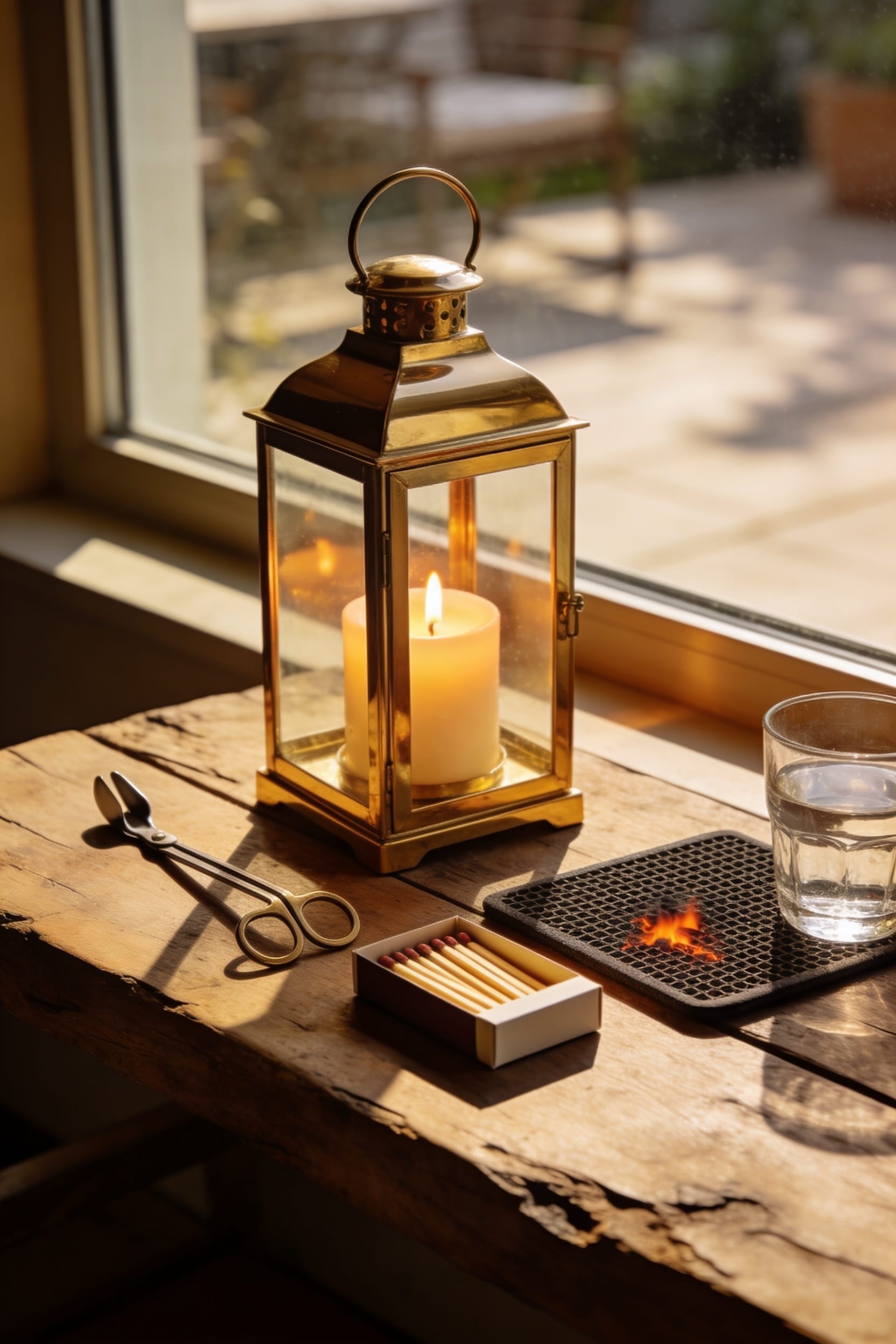
All right, here’s the thing: most lantern fires happen during lighting and extinguishing, so use a longer match or dedicated lighter to keep your fingers safe. Keep your lantern on a sturdy, level surface at least twelve inches from anything flammable—curtains, books, that stack of mail you keep meaning to sort. Trim your wick to about one centimeter, extinguish with a snuffer instead of blowing, and never leave it unattended. Stick with quality lamp oil, monitor wind conditions outdoors, and consider battery alternatives during holidays. There’s genuinely more to know about preventing every common mistake.
Key Takeaways
- Maintain at least 12 inches clearance from flammable items and place lanterns on sturdy, level surfaces away from clutter.
- Trim wicks to 1 cm before lighting and extinguish with a snuffer to prevent flare-ups and soot buildup.
- Use high-quality pure lamp oil and monitor lanterns constantly during lighting and extinguishing when most fires occur.
- Outdoors, secure lanterns on flat surfaces away from dry grass and low branches; reposition or extinguish during windy conditions.
- Use battery-operated LED alternatives indoors during holidays or in homes with children, pets, or frequent visitors for added safety.
Why Your Candle Lantern Could Catch Fire (And How Often It Does)
candle fires account for 2.4% of all home fires annually. Most happen because people ignore that simple 12-inch clearance rule. You’re not doomed, though. Smart placement and regular wick trimming solve nearly everything.
Recommended Products

Dusk to Dawn Technology – Keep your home as efficient as possible, with dusk to dawn technology the animated flame bulb will immediately ignite when the sun starts to set

【Professional Studio Photography Light & Softbox Kit from Godox】Including Godox SL60II-D 75W LED Lights with Reflector kit *3, 24x36" softboxes *2, 37" Octagon softbox *1, 43" White Softbox & Reflector Umbrella kit *1, 110"light stands *3, Boom arm with Sandbag *1, Snoot *1, Barn door *1, Carry Bag *1, the photography light kit is perfect for home/studio video recording, live streaming, makeup, portrait and product photography, fashion photo taking, children's photo shooting, wedding shooting, etc.

BULK PACK: Set includes 180 UNSCENTED TEALIGHT FUEL CELLS with extended 8 HOUR burn time . DIMENSIONS: Diameter: 1 1/4 inches Height: 1 inch
Where to Place Indoor Lanterns Without Risk
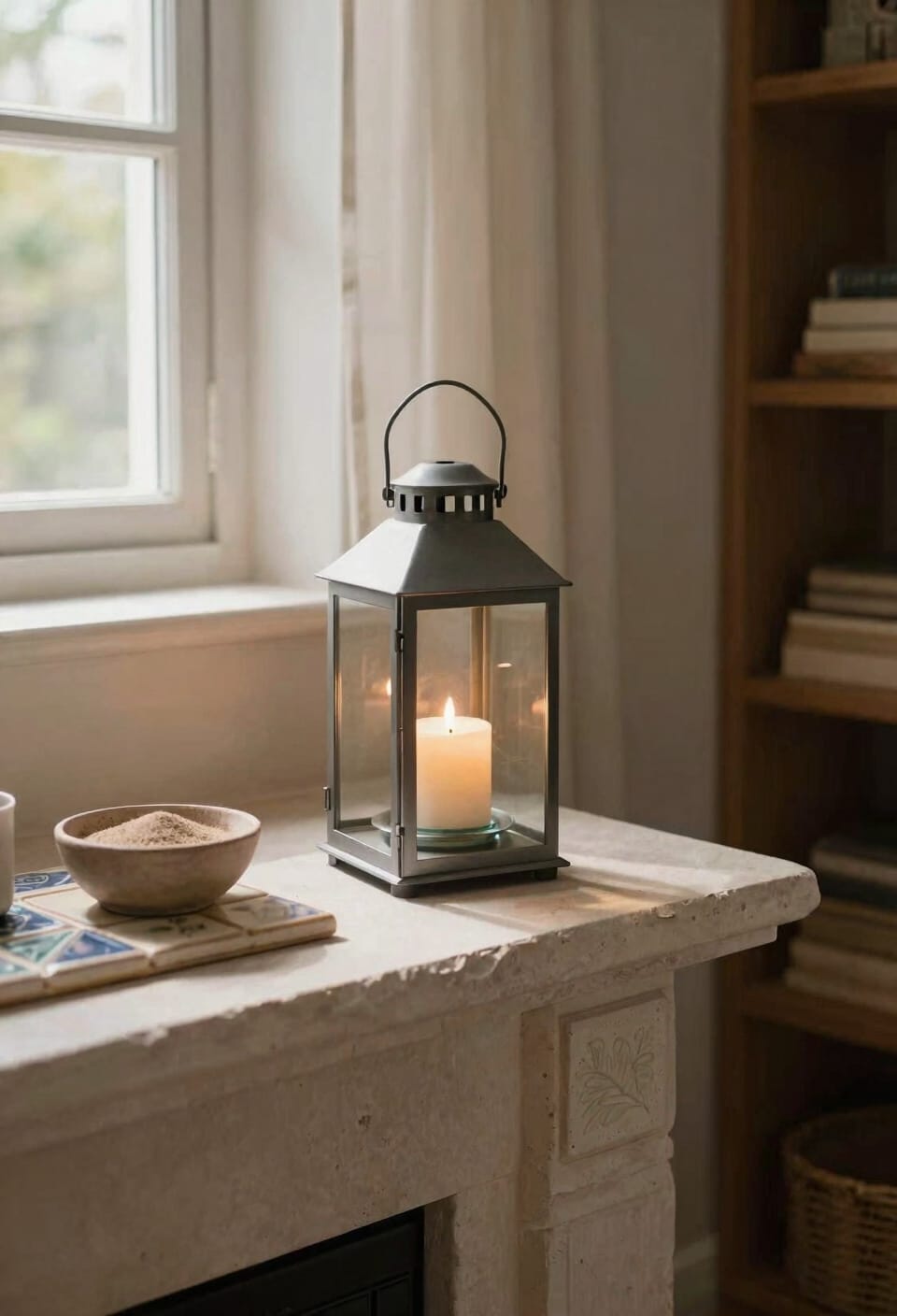
Now that you know *why* fires happen, let’s talk about actually preventing them—and it all comes down to where you put the thing. Look, mantel placement might seem obvious, but I’ve seen people nestle lanterns right next to dried flower arrangements like they’re decorating a funeral home. Don’t do that. Keep your lantern at least 12 inches from anything flammable—curtains, books, that pile of mail you’ve been meaning to sort. And here’s the thing: avoid bedside alternatives entirely. One-third of home candle fires start in bedrooms, which honestly should be reason enough. Put your lantern on a sturdy, level surface in a main living area where you can actually see it. Your wrist will thank you when you don’t accidentally knock it over at 2 a.m.
Recommended Products

Quantity and Size: you will get 16 pieces of metal LED lantern lights in black in a vintage style, meeting your daily use and change; Measuring about 7.68 inches/ 19.5 cm in height, the lanterns are convenient to take

Enough Quantity and Compact Size: there are 6 pieces of vintage style hurricane lanterns, coming in retro color, sufficient to meet your daily use, replacement and sharing needs; Each lantern measures approx. 12 inches in length, convenient and portable
Enough Quantity and Compact Size: there are 6 pieces of vintage style hurricane lanterns, coming in retro color, sufficient to meet your daily use, replacement and sharing needs; Each lantern measures approx. 12 inches in length, convenient and portable
Setting Up Outdoor Lanterns: Wind, Surfaces, and Clearance
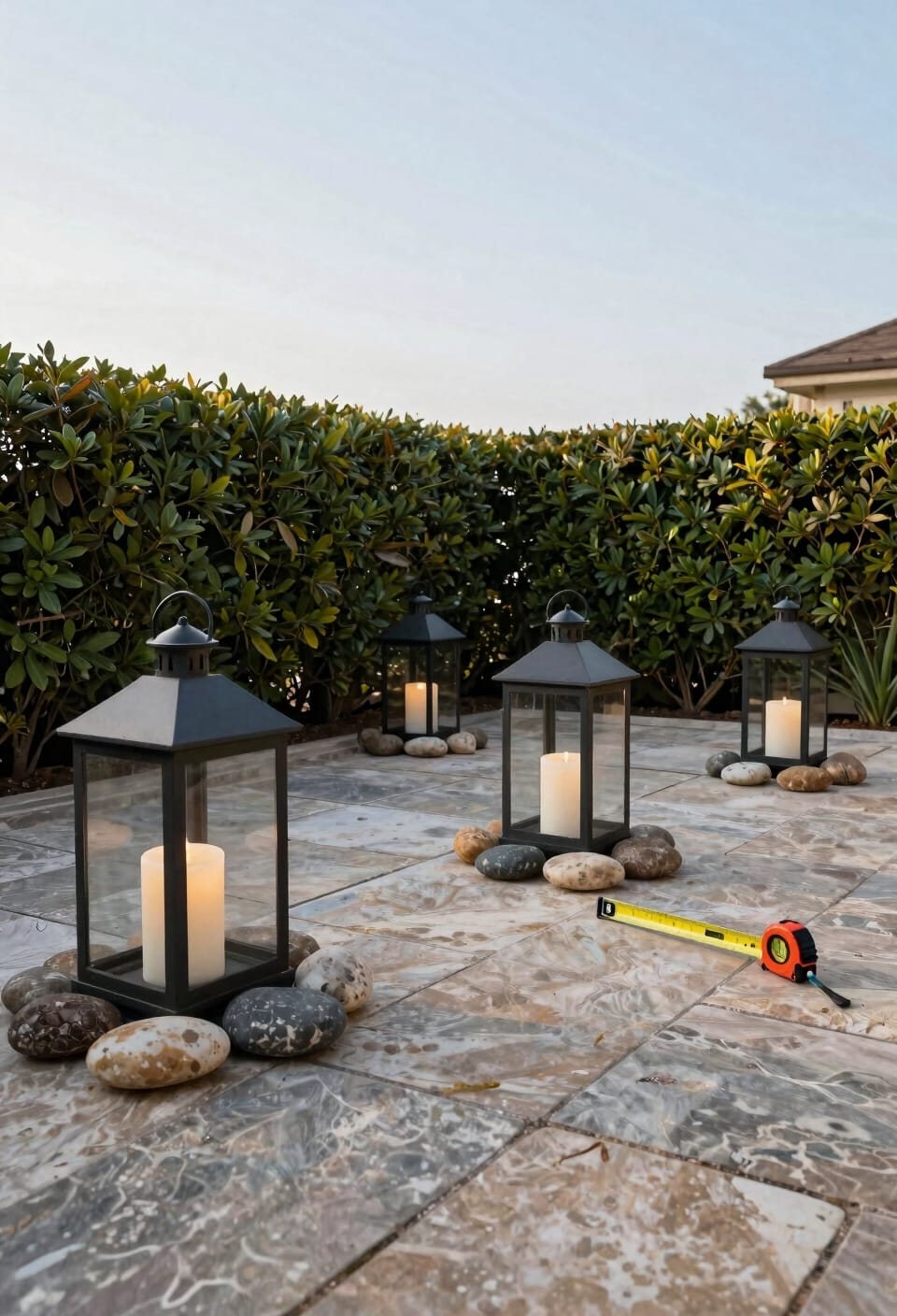
When you take your lantern outside, you’re trading one set of fire hazards for a completely different menu of disasters—and wind is basically the villain of the whole operation. Find a flat, stable surface away from dry grass, low branches, and anything flammable. Windproof placement matters enormously; tuck your lantern into a sheltered spot or use ground anchoring techniques like weighted bases if you’re on exposed terrain. Monitor constantly because wind conditions shift faster than you’d expect. Never leave it unattended, especially during breezy afternoons. Keep that wick trimmed to 1 cm max before lighting. When you’re done, extinguish with a snuffer—no blowing—and let the base cool completely before bringing it inside. Your outdoor setup’s only as safe as your attention span.
Recommended Products

PALACE-LIKE SPACE & UNMATCHED COMFORT: Experience the ultimate "From Home to Nature" luxury. With a massive 22FT (6.7M) diameter, this glamping tent boasts an expansive 2.5x4m central living room and side bedroom that comfortably accommodate 10-12 people. We revolutionized the classic bell tent design by raising the side walls to 29.5 inches (75cm) and the door height to 76.7 inches (195cm), completely eliminating the cramped feeling and allowing unhindered, upright movement throughout the cabin

HEAVY DUTY OUTDOOR ADVERTISING DISPLAY: This sidewalk poster holder comes with double sided Snap Frame. The use of this aluminum frame is fairly easy. To load or change a graphic, simply snap open the four spring-loaded frame edges, remove the anti-glare transparent cover and place graphic, picture, photo, poster and or artwork as required, then snap close the frame edges. The anti-glare cover allows a clear view of the print, poster and protects the artwork from dust and direct light.

Weather-resistant and rust-resistant, this lamp post light fixture features sturdy aluminum construction with seeded glass shade, suitable for wet locations. The black finish suits any house decoration.
Light and Extinguish Lanterns Safely: Techniques That Prevent Candle Fires
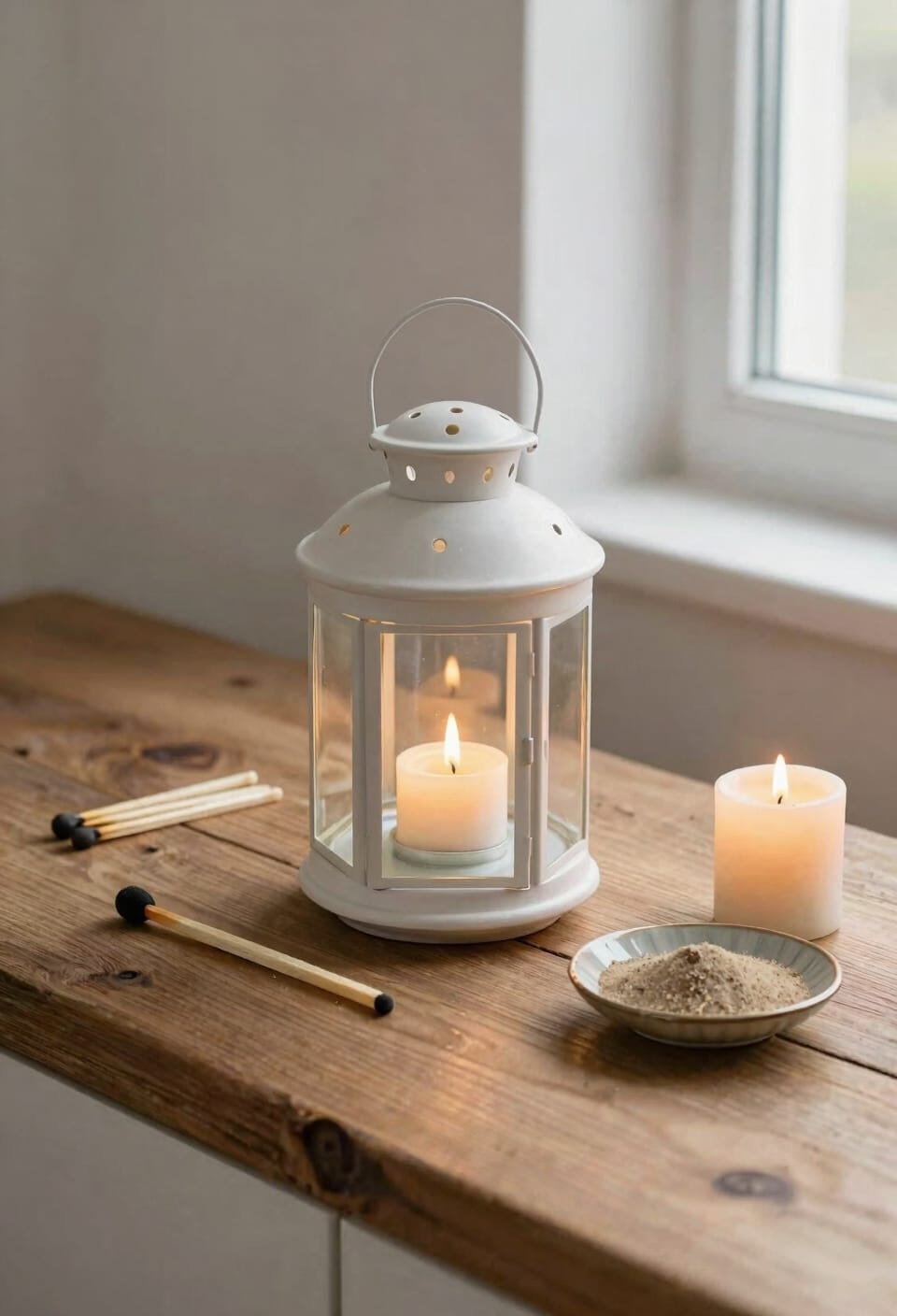
Because most candle fires happen during the lighting and extinguishing process—not while they’re peacefully burning—you’ve got to treat these moments like they deserve your full attention. Use longer matches or a dedicated lighter to keep your fingers and face safely away from the flame. Before lighting, trim your wick to about 1 cm—that’s wick maintenance 101, and it prevents the sooty smoking that makes you question your life choices. When it’s time to extinguish, skip the blow-out temptation and grab a snuffer instead. It smothers the flame without flare-ups or smoke. Never let your candle burn below two inches in the holder. Those final moments? Not worth the risk.
Candle Lantern Clearance: The 12-Inch Distance Rule Explained
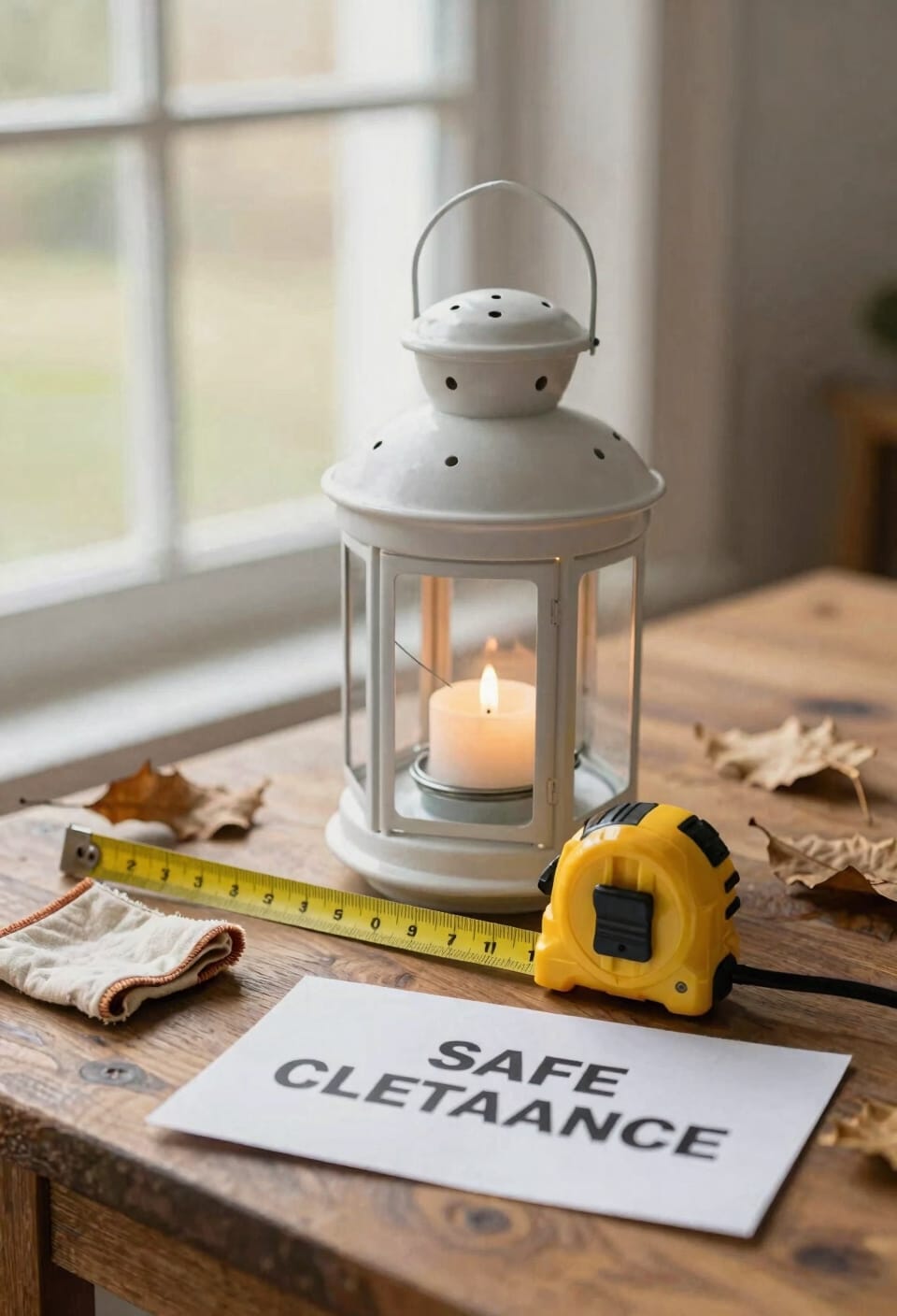
more than half of all candle fires happen because someone placed a lantern too close to something flammable, and I’d bet most of those people had no idea they were playing with fire—literally. That’s why clearance measurements matter so much.
You need at least 12 inches—that’s a ruler’s length—between your lantern and anything combustible. We’re talking curtains, blankets, papers, dried flowers, basically anything that’ll catch fire if it gets too toasty. Your candle placement determines whether you’re enjoying ambiance or calling the fire department.
Keep your lantern on a flat, stable surface away from clutter. Don’t tuck it into corners or crowd it with decorations. Give it breathing room. That small distance? It’s the difference between safe and sorry.
What Makes a Lantern and Oil Actually Safe?
All right, so you’ve got your lantern positioned perfectly—12 inches away from everything flammable, sitting on a stable surface, looking all cozy and atmospheric. But here’s the thing: location’s only half the battle. What actually keeps your lantern safe is what’s inside it and how it’s built.
Start with oil purity. You want the highest quality, purest lamp oil available—no colors, no perfumes, no sketchy additives. That matters because impurities burn unpredictably and create excess soot.
Container insulation is equally critical. Your lantern needs to protect the flame from wind and contain heat properly so the base doesn’t torch your table. Check that wick composition is designed for lanterns specifically—it’s engineered to burn steadily at consistent rates.
Finally, ventilation rates prevent carbon monoxide buildup, especially indoors. Never use gas lanterns inside, ever.
Fix Candle Lantern Problems: Soot, Flare-Ups, and Wick Solutions
Even with the perfect oil and a solid lantern build, you’ll eventually run into problems—and that’s where most people give up instead of fixing them. Look, soot buildup means your wick’s too long or the oil isn’t pure enough. Trim it to 1 cm maximum and run a smoke testing check—if you’re still seeing black wisps, upgrade your oil quality. Flare-ups happen when you move the lantern too quickly; slow movements are your friend here. Wick maintenance is straightforward: extinguish before the flame gets too high, trim before relighting, and replace the wick if it won’t cooperate after retrimming. You’ve got this. Most problems aren’t lantern failures—they’re just asking you to pay attention.
Recommended Products

CLASSIC BLACK HURRICANE LANTERN – Decorative lantern with clear glass panels and sturdy black metal frame. Designed to complement rustic, farmhouse, modern, and traditional décor for everyday styling or special occasions.

【 High-Quality Material】 The lantern body is made of SUS304 stainless steel material with excellent corrosion resistance and toughness, which is strong, wear-resistant, and heat-resistant.

When to Use Battery Alternatives: Holiday Safety and Winter Peaks
When December rolls around and your home’s suddenly glowing with candles everywhere—on mantels, windowsills, side tables, basically anywhere there’s a flat surface—that’s exactly when the fire department sees a spike in candle-related incidents. The numbers don’t lie: holiday season fires jump dramatically. All right, here’s my honest take: battery-operated candles aren’t cheating. They’re smart. Winter alternatives like LED flameless lights give you that cozy glow without the risk, especially if you’ve got kids, pets, or clumsy relatives visiting. Holiday substitutes have come a long way—some even flicker convincingly. You get the aesthetic, the warmth, the whole vibe, minus the actual fire hazard lurking on your coffee table. Sometimes the safest candle is no candle at all.
Recommended Products
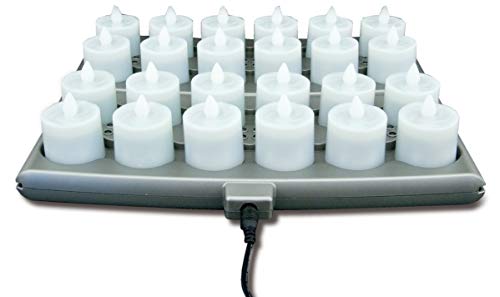
Commercial quality rechargeable LED Candle System

Timeless European Christmas Tree Design: This artificial christmas tree features award-winning True Needle foliage meticulously crafted to capture the iconic look of native European silver firs, including charming teardrop shape and beautiful forked tips - delivering unmatched beauty and quintessential Christmas tree sophistication for decades of elegant celebrations

ENHANCED SAFETY, KID FRIENDLY: This flameless led candles serve as a safer alternative to traditional wax candles, perfect for homes with children. The battery candles' design ensures peace of mind with a sealed battery compartment.
Frequently Asked Questions
Can I Carry a Lit Candle Lantern by Its Handle Indoors or Outdoors?
No, I wouldn’t carry a lit lantern by its handle—it’s unsafe carrying etiquette. The base gets extremely hot, creating thermal risks for burns. I’d extinguish it first or use battery-operated alternatives instead.
How Should I Store Candle Lantern Supplies and Lamp Oil Safely at Home?
I’ll lock my lantern supplies in a vault of caution. Store lamp oil in childproof containers within flame retardant storage in cool, dark, dry areas away from children and pets, examining all products for damage beforehand.
What Ventilation Is Needed When Using Candle Lanterns in Enclosed Spaces Like Tents?
I’d make sure you’ve got adequate airflow in your tent to prevent carbon monoxide buildup and heat accumulation. You’ll want draft control—crack an opening—so toxic gases can escape safely while you’re using candle lanterns.
Why Should Candle Lanterns Be Avoided in Bedrooms, and What Are the Statistics?
I’d avoid candle lanterns in your bedroom because one-third of home candle fires start there. You’re risking fire hazards while you’re sleeping—unable to respond quickly. The fire risk and sleep disruption make bedrooms particularly dangerous for open flames.
Can Gas or Propane Lanterns Be Used Safely Indoors for Lighting Purposes?
Better safe than sorry—I’d strongly advise against using gas or propane lanterns indoors. Their propane combustion produces dangerous indoor emissions, including toxic carbon monoxide that’ll harm your health.
Conclusion
I’ve learned that candle lanterns demand respect—they’re beautiful light sources that can turn dangerous in seconds, yet they’re entirely manageable with the right precautions. You’re balancing ambiance against risk, indoor coziness against outdoor unpredictability. The good news? You’ve got this. Follow the distance rules, watch your wicks, and when doubt creeps in, reach for battery alternatives. Your home—and your peace of mind—will thank you.