As an Amazon Associate, we earn from qualifying purchases. Some links on this site are affiliate links at no extra cost to you. Our recommendations are based on thorough research and editorial judgment.

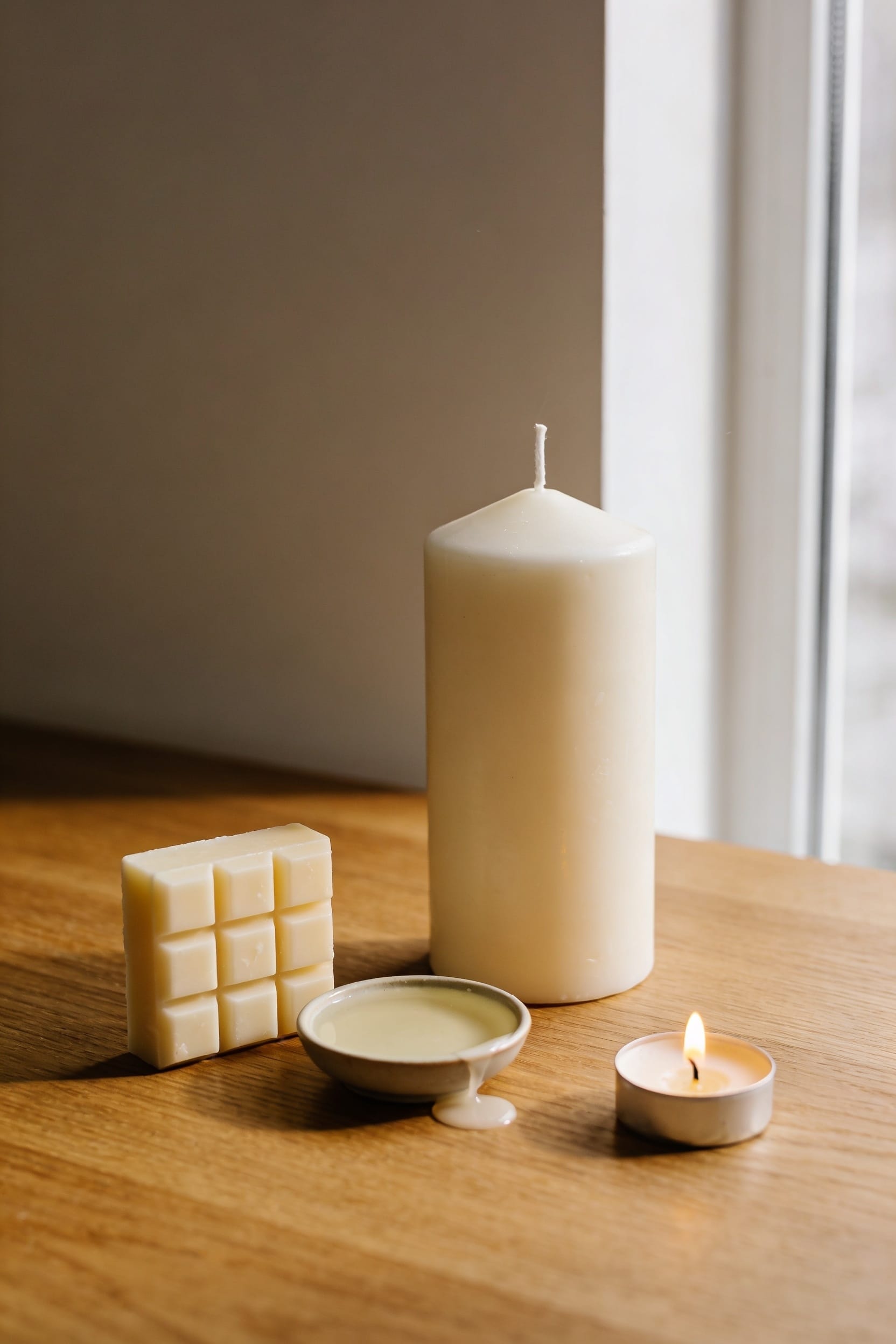
Can You Put Wax Melts in a Candle? What Happens When You Try

All right, you can technically pour wax melts into a candle container with a wick, but here’s the thing—they’ll burn hot, fast, and messy because their lower melting point wasn’t designed for flame. You’ll get excessive smoking, soot, and uneven burning instead of that slow, steady glow you’re after. Glass containers can crack from uneven heat, and plastic molds will literally melt. If you want candles that actually work, stick with candle-grade wax. But if you’re curious about making it work anyway, there’s a better way to do this.
Key Takeaways
- Wax melts have a lower melting point than candle wax, causing them to liquefy too rapidly when exposed to a wick flame.
- Open flames on wax melts create uncontrolled burn rates, excessive smoking, soot, and potentially dangerously large flames due to chemical incompatibility.
- Glass containers can crack from uneven heat exposure when burning wax melts, and plastic molds will melt completely.
- Wax melts are specifically designed for warmers using gentle, steady heat—not the intense, direct flame that candles require for proper burning.
- Burning wax melts as candles poses safety hazards and may violate labeling regulations if sold without proper candle-specific warnings and certifications.
Can You Actually Use Wax Melts as Candle Wax?
Look, I get why you’d think about repurposing wax melts into candles—they’re basically wax, right? Technically, yes. But here’s the thing: wax melts aren’t designed to burn on their own. They lack wicks and melt at lower temperatures than standard candle wax. You *can* convert them into functional candles by melting them down and adding a wick, but there are safety considerations you shouldn’t ignore. Glass containers can crack from uneven heat. Plastic molds will literally melt. And then there’s the legal labeling issue—if you’re making candles to sell, you’ll need proper documentation about fragrance loads and materials. Bottom line? Converting wax melts works, but it requires intentional steps to do it safely and responsibly.
Why Wax Melts Burn Differently Than Candle Wax
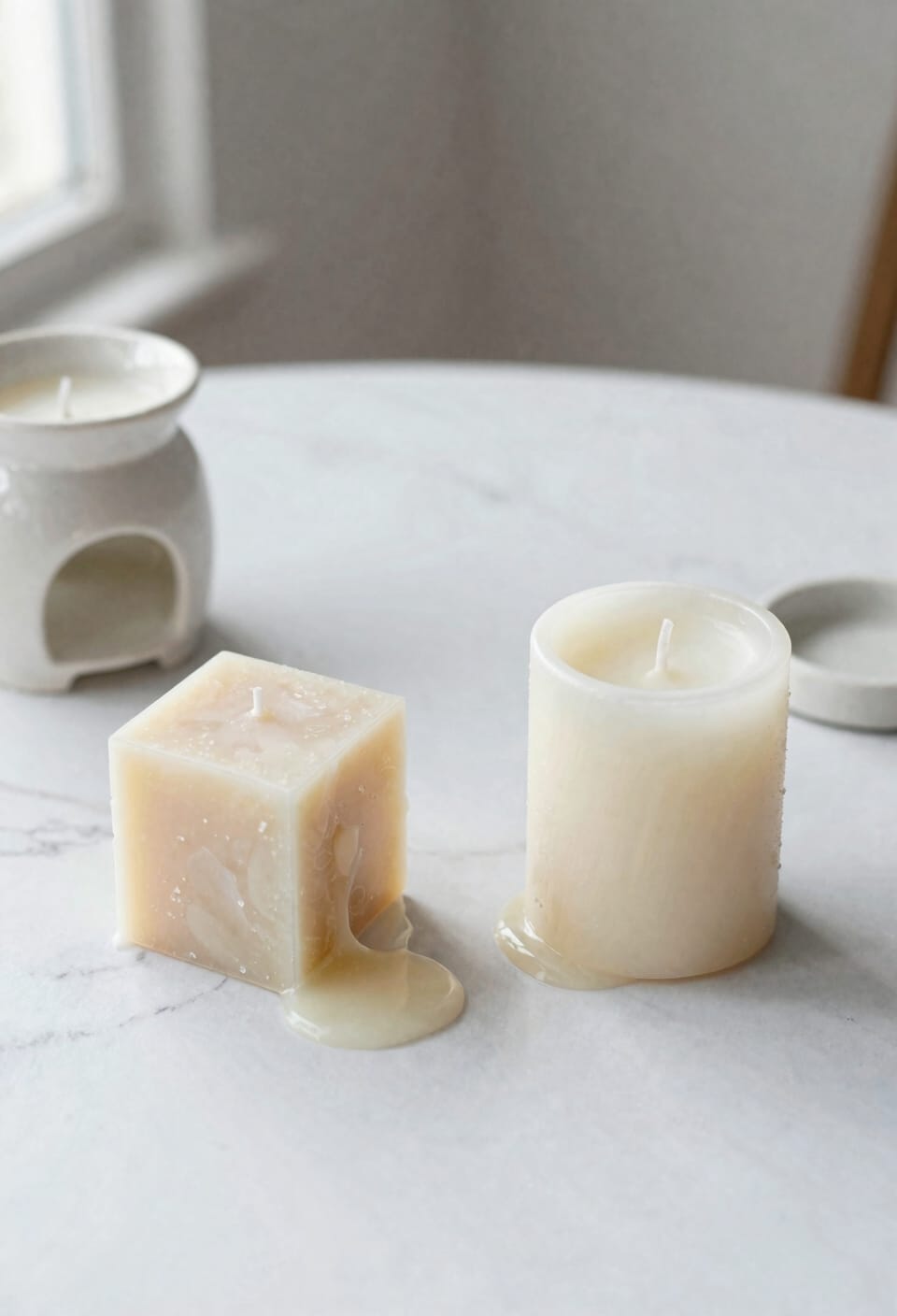
When you take wax melts designed for a warmer and try to burn them like a traditional candle, you’re fundamentally asking a different product to do a job it was never built for—and that’s where things get weird. Here’s the thing: wax melts have a lower melting point than traditional candle wax, which means they’ll liquify way too quickly when exposed to an open flame. That lower melting characteristic creates a safety hazard. The wick interaction becomes problematic too—there’s nothing to properly regulate how fast the wax burns, so you’ll get excessive smoking, soot, and potentially a dangerous flame that’s way too large. You’re basically fighting chemistry. They’re made for gentle, steady heat from below, not the intense, direct flame a wick provides.
How to Melt and Pour Wax Melts Into Candles
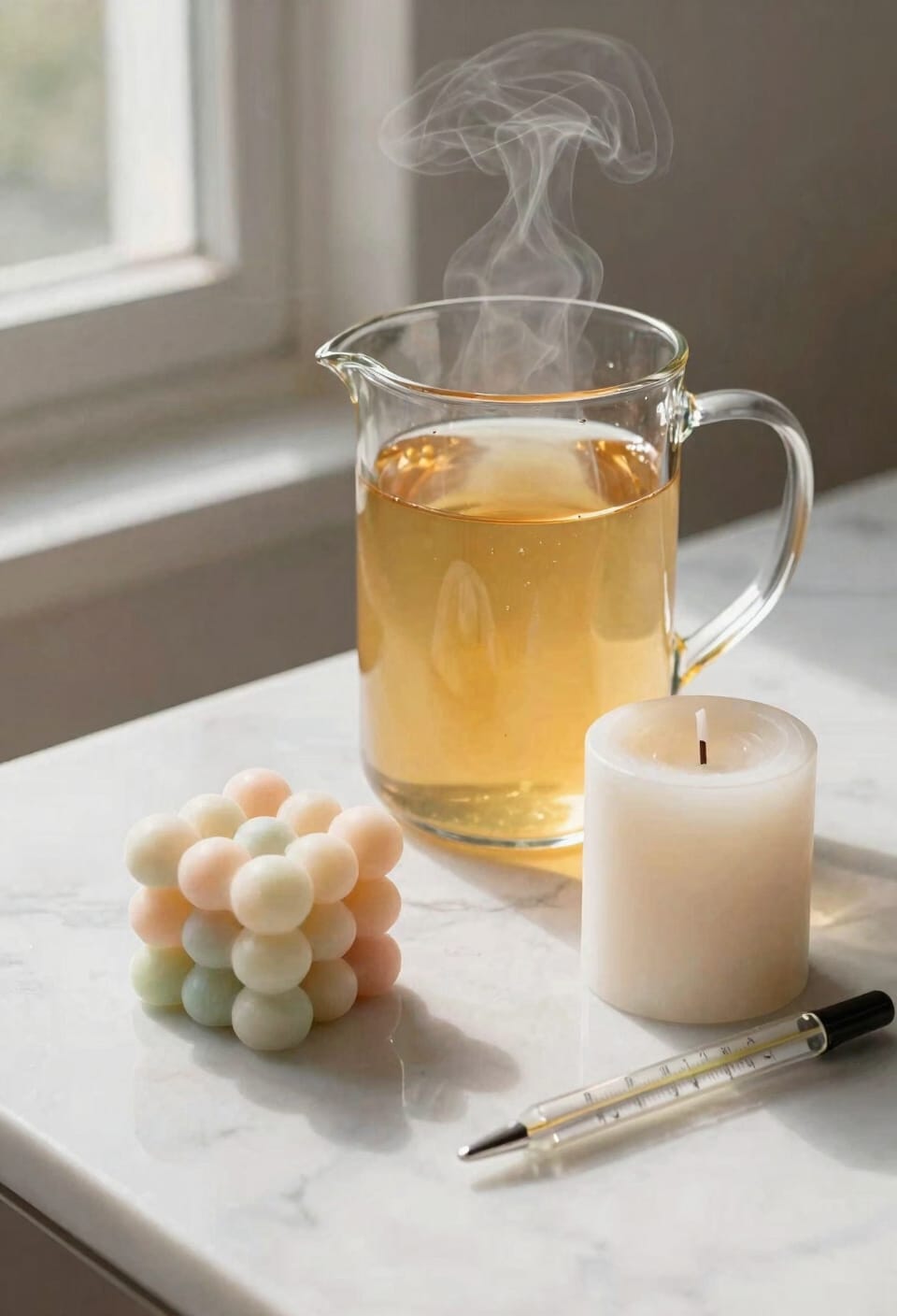
Converting wax melts into proper candles requires patience and the right technique—basically, you’re reverse-engineering a product that was never meant to burn on its own, so you’ve got to be intentional about it. I use a double boiler setup: place your wax melts in a heat-safe container suspended over simmering water. Heat to around 185°F for peak melting temperatures, then pour into your container selection—glass jars work best, though avoid anything plastic since it’ll literally melt. Use four packs per candle since each yields about 2.5 ounces. Pre-center your wick before pouring, then let everything cool completely. Trim that wick to quarter-inch and you’re golden. Honestly, it’s not rocket science, just slow and steady wins this race.
Step-by-Step Instructions for Your First Batch
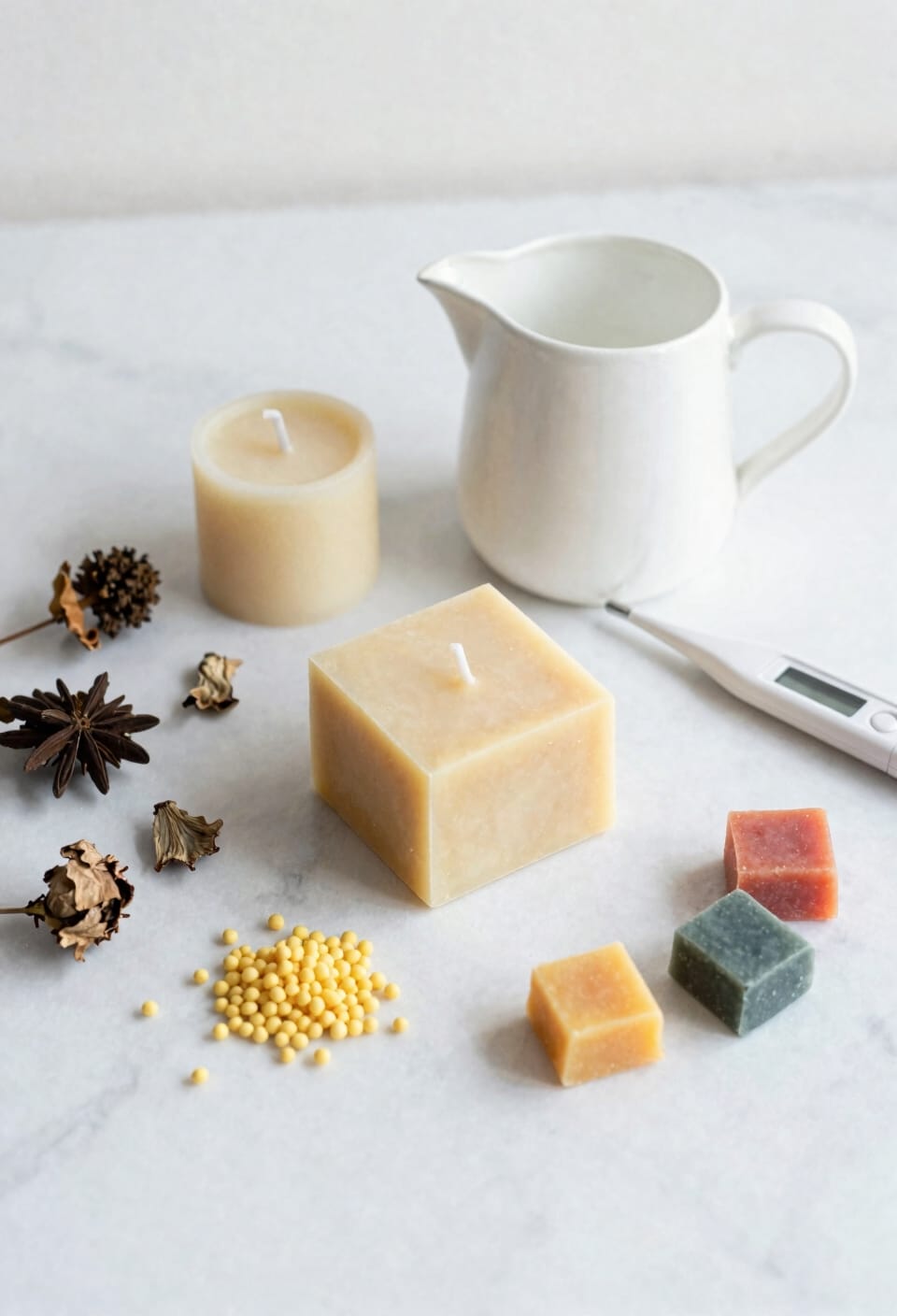
Since you’ve got your materials lined up and understand the basic melting-and-pouring concept, let’s walk through actually making your first candle so you don’t end up with a lumpy, poorly-scented disaster that smells like regret. First, perform safety checks on your container—no cracks, no thin glass that’ll shatter when heat hits it. Melt four wax melt packs using a double boiler until they’re liquid gold at 185°F. Stir in fragrance oil for two minutes, then pour slowly into your prepped jar with centered wick. Once cooled completely, trim that wick to quarter-inch. Here’s the thing: labeling tips matter. Write your scent name, batch date, and melting instructions on a label. You’ll thank yourself later when you’re wondering what “that amazing one” was called.
Common Mistakes When Converting Wax Melts to Candles
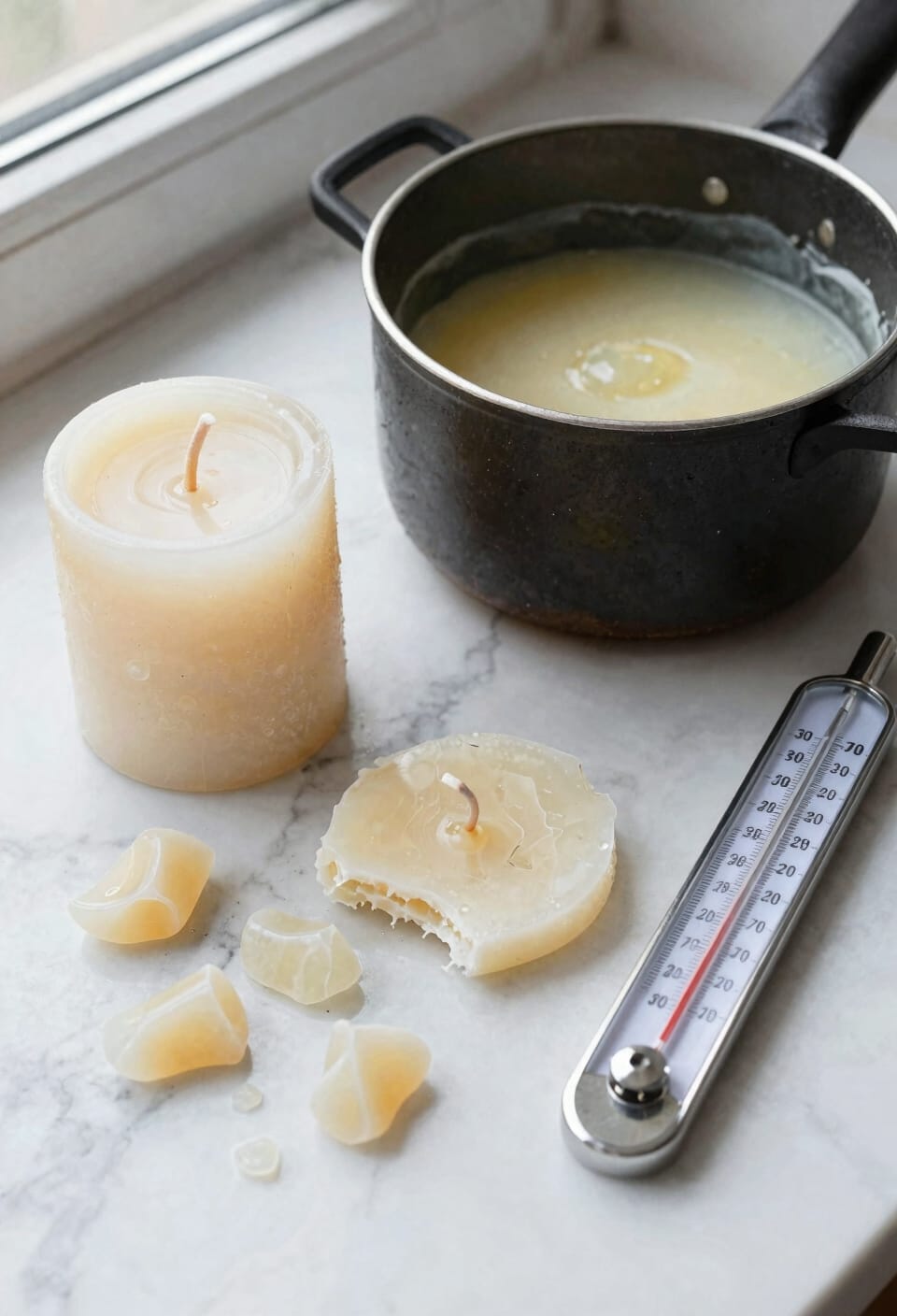
All right, you’ve made it through your first batch and didn’t burn your house down—that’s genuinely impressive. Now here’s where most people stumble: overheating hazards. Pushing your wax past 185°F doesn’t make it melt faster; it just scorches your fragrance and wastes money. Keep that thermometer handy.
Wick placement trips everyone up too. Center it properly before pouring, or you’ll end up with a candle that burns down one side like it’s got commitment issues. An off-center wick creates tunneling—where wax stays stuck to the sides while the middle burns down into a sad pit.
Also, don’t skip cooling time. Poking at warm wax to “check” it only causes uneven surfaces and wick wobbling. Patience isn’t boring; it’s professional.
Testing Your Candle: Burn Time and Scent Throw
Now comes the part where you actually light the thing and find out if you built a candle or a scent-delivery disappointment—and honestly, this is where homemade candles either shine or teach you a hard lesson about patience. Light it up and watch the burn duration closely during that first hour. You’re checking whether it burns evenly or tunnels down the middle like a sad little chimney. The scent dispersion should hit you pretty quickly given that high fragrance load we talked about. If it doesn’t smell like anything after ten minutes, something went wrong. If it smells like a perfume factory exploded, you’re golden. Trim that wick to a quarter-inch and try again if needed.
Reusing vs. Replacing Wax Remnants
Once you’ve burned through a candle and you’re left staring at that stubborn pool of wax at the bottom, you’ve got a choice to make. You can toss it—wasteful, I know—or you can reclaim that wax. Here’s the thing: reuse benefits far outweigh replacement costs. Those leftover wax remnants contain fragrance and potential energy. Melting them down into new candles or wax melts costs you basically nothing beyond a wick and container. You’re not buying fresh wax; you’re recycling what you’ve already paid for. Sure, replacement costs add up if you keep buying new candles instead of repurposing what you’ve got. I’ve saved probably thirty bucks just this year by refusing to trash perfectly good wax. That’s not nothing.
Frequently Asked Questions
What Temperature Should Wax Melts Reach Before Adding Fragrance Oil?
I’d heat your wax melts to 185°F before adding fragrance oil. This temperature guarantees you’ll achieve peak fragrance load and strong scent throw. You’ll stir for two minutes after adding the oil to properly blend everything.
Can Plastic Molds Be Used for Pouring Converted Wax Melt Candles?
No, I’d literally lose my entire mold if I tried that. Plastic’s got zero mold durability against melted wax—it’ll melt faster than ice in July. For plastic safety, I’d stick with silicone molds instead.
How Many Wax Melt Packs Are Needed for Standard Candle Sizes?
I’d recommend using four packs for a 10-18 oz candle, considering their melt ratio and scent concentration. Each pack yields approximately 2.5 oz of wax, so you’ll achieve peak fragrance throw in standard sizes.
Why Is Microwaving Wax Melts Not Recommended for Candle Conversion?
I don’t recommend microwaving wax melts because the metal wicks create microwave hazards—they can spark or cause fires. Plus, you’ll get uneven melting, which ruins your candle’s quality and consistency throughout.
Will Converted Wax Melt Candles Work in Warming Lamps Afterward?
I’ve found that converted wax melt candles are like Swiss Army knives—versatile tools for multiple uses. You’ll get excellent scent longevity in warming lamps, though wick compatibility matters less since you’re removing the wick entirely.
Conclusion
Look, I’ve watched melted wax pool like liquid silk, watched flames flicker uncertainly over hastily repurposed melts. You *can* do it, sure, but honestly? Save yourself the headache. Wax melts and candle wax are built differently—different melt points, burn rates, fragrance loads. You’ll likely end up with tunneling (when wax burns down the middle, leaving walls untouched) or weak scent throw. Just stick with purpose-made candle wax. Your nose’ll thank you.