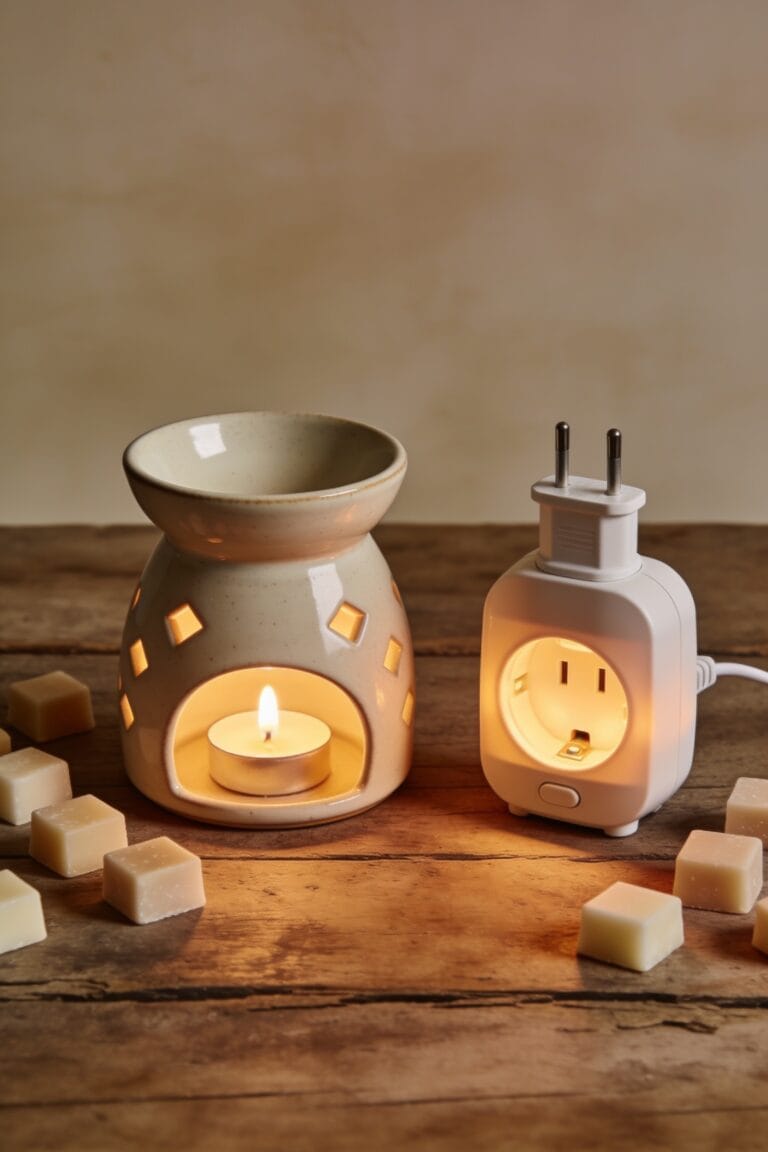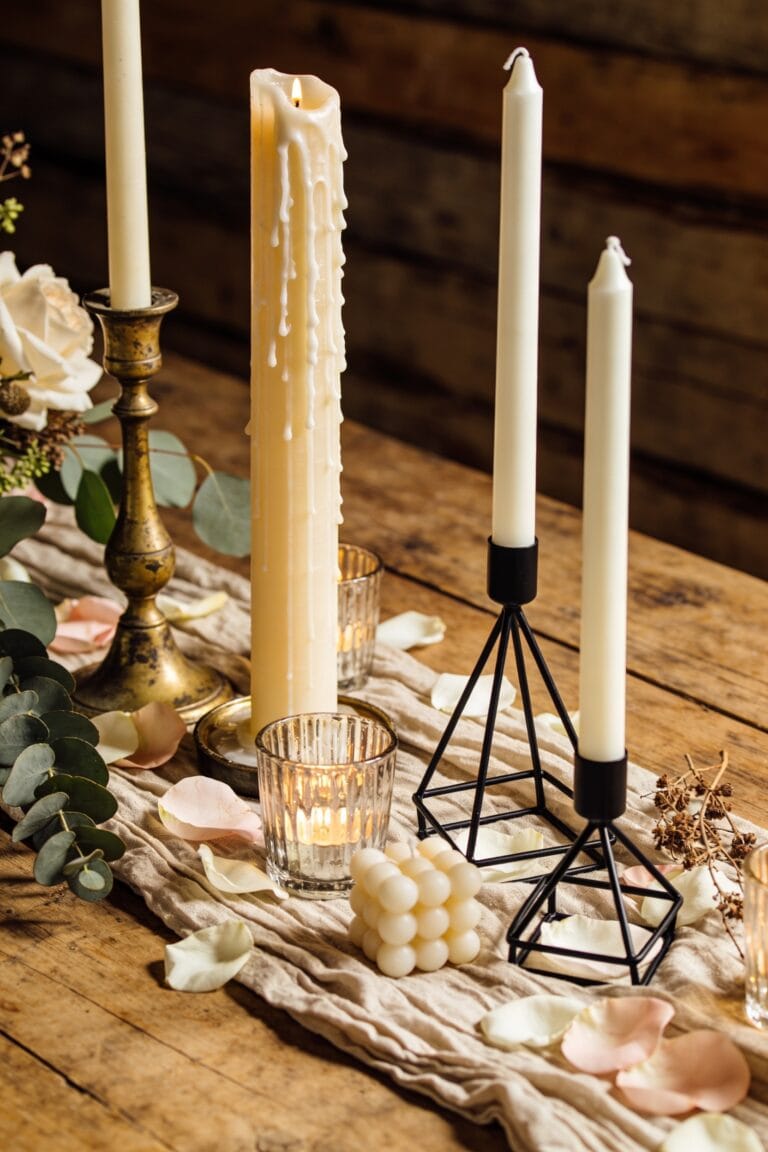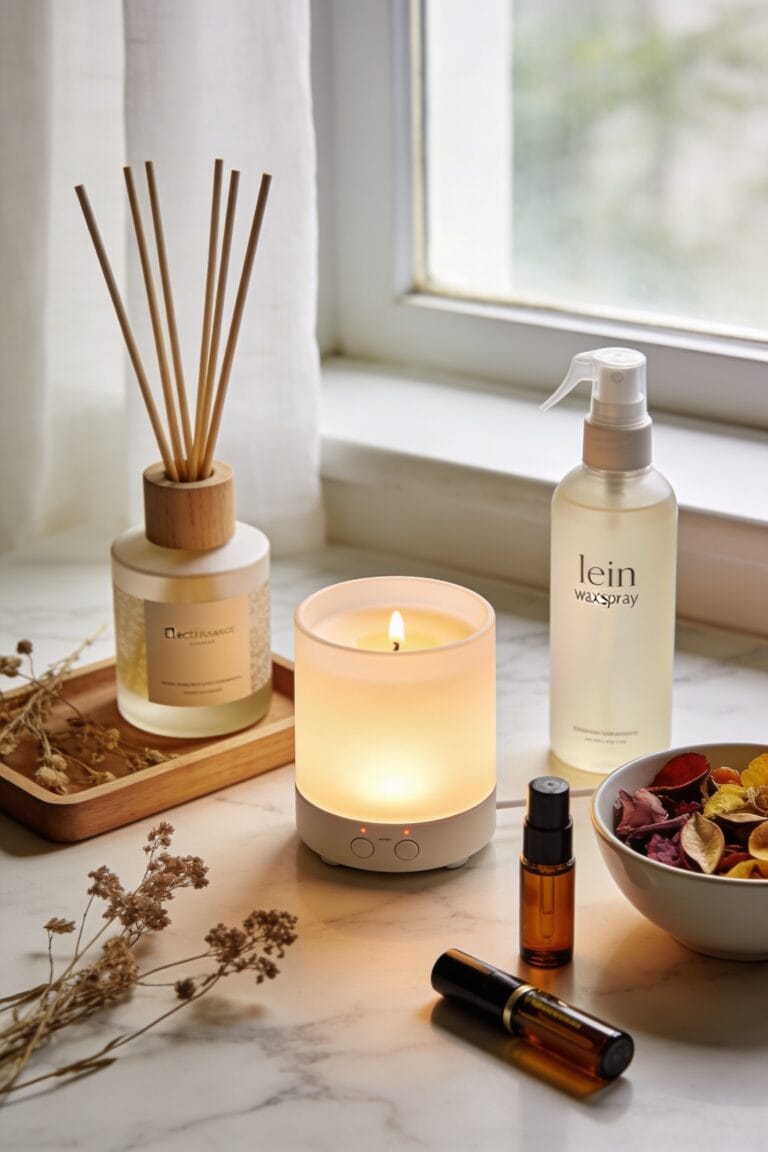
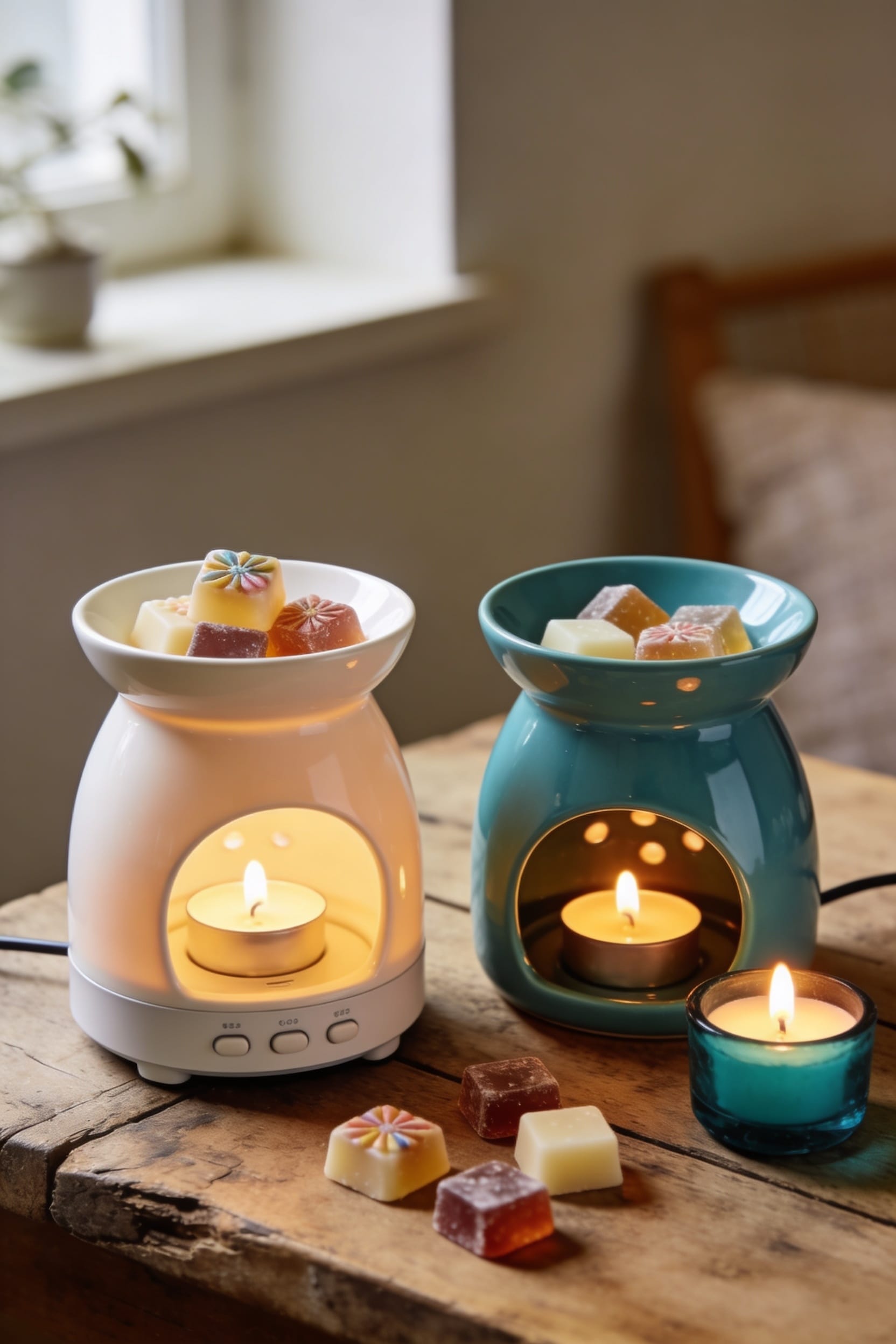

All right, here’s the thing: tealights give you that instant scent punch and flickering ambiance, but you’re feeding the flame constantly and watching it like a hawk. Electric warmers? They’re slower, steadier, and way safer around kids or pets—plus your wax lasts longer since the heat’s controlled from below instead of scorching from above. You’ll pay more upfront for electric, but you’re not constantly restocking tealights. Your choice really hinges on whether you want drama or convenience, and whether you’ve got an outlet within arm’s reach.
Key Takeaways
- Electric warmers offer superior safety with no open flame, making them ideal for homes with children and pets.
- Tealights provide immediate, intense scent throw but consume fragrance faster; electric warmers deliver gentler, longer-lasting fragrance release.
- Electric warmers require outlet access and cord length consideration; tealights offer flexible placement without electrical constraints.
- Tealight burners cost less upfront but need frequent replacement; electric warmers have higher initial cost but lower running expenses.
- Choose tealights for ambiance and spontaneity; select electric warmers for convenience, consistent performance, and maintenance-free operation.
How Tealight and Electric Warmers Work: The Key Differences
All right, let’s break down what’s actually happening when you’re melting wax, because here’s the thing: these two methods are fundamentally different beasts. With a tealight burner, you’ve got an open flame creating intense, direct heat that rapidly melts your wax from above. The wicks placement matters here—that flame needs proper distance or you’re risking cracks and uneven melting. Electric warmers, meanwhile, use steady heat diffusion through a heating element or bulb. They warm the wax gently and uniformly from the bottom up, like a patient sous chef versus an impatient one. Tealights deliver stronger initial scent throw because that high heat kicks fragrance oil into the air faster. Electric warmers take their time, releasing scent more gradually but consistently over longer periods. Think slow-and-steady versus sprint-and-fade.
Safety First: Open Flame vs. Closed Heat-Which Matters to You?
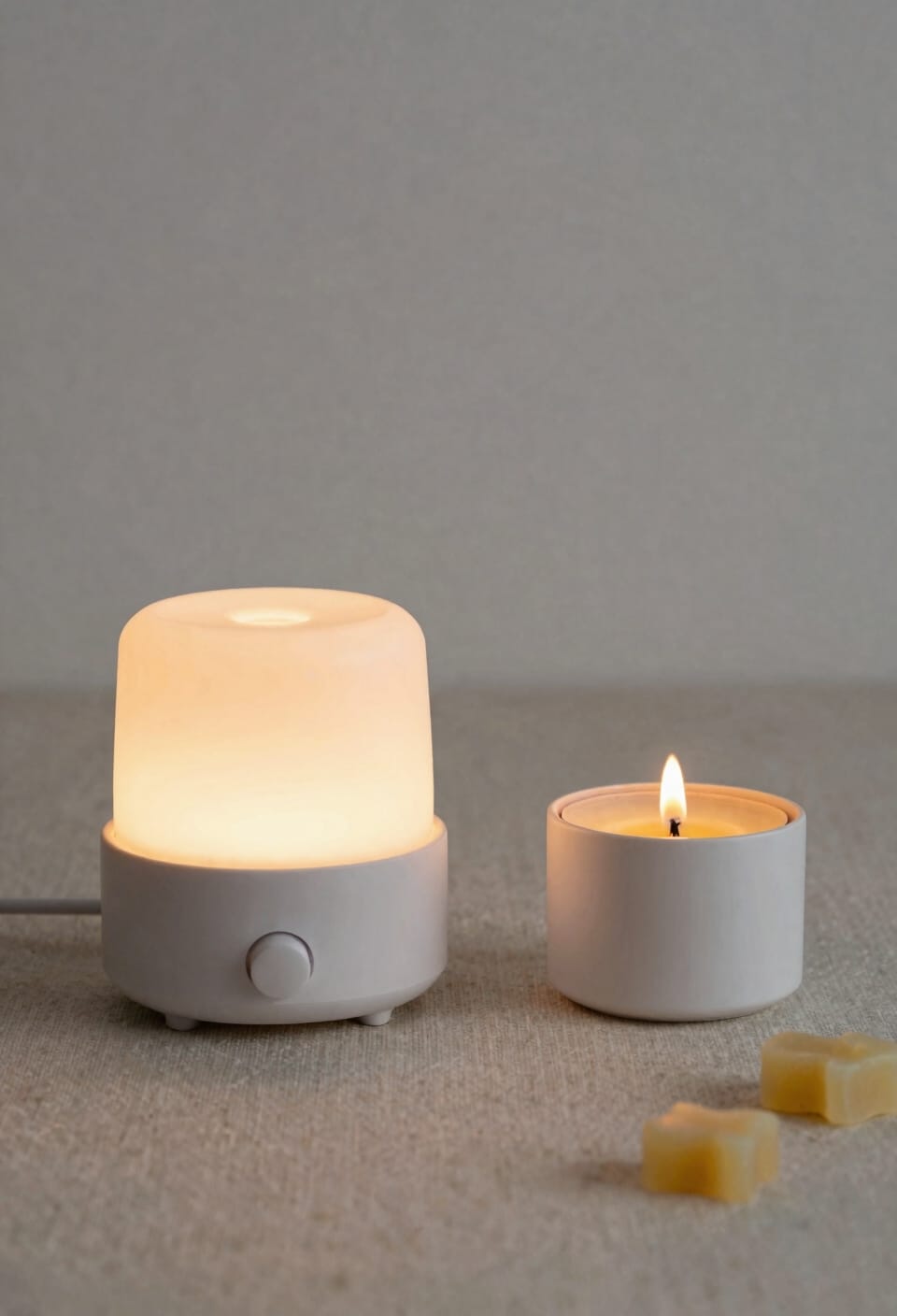
Now that you understand how these warmers actually work—one blazing hot and impatient, the other slow and methodical—we need to talk about what matters most: keeping your home (and the people in it) safe.
Here’s the thing: tealight burners mean open flame, which demands constant flame supervision, especially around kids and pets. You’re literally playing with fire. Electric warmers eliminate that risk entirely. They’re closed-system heat, no combustion, no drama.
That said, placement awareness matters regardless. Position your warmer away from curtains, papers, or anything flammable. Install working smoke detectors nearby—honestly, you should have them anyway. Child safety means tealights lose points automatically if you’ve got curious toddlers in the house. Electric warmers won’t burn little fingers. For most households, that’s the deciding factor right there.
Where Can You Put It? Power Access and Space Constraints
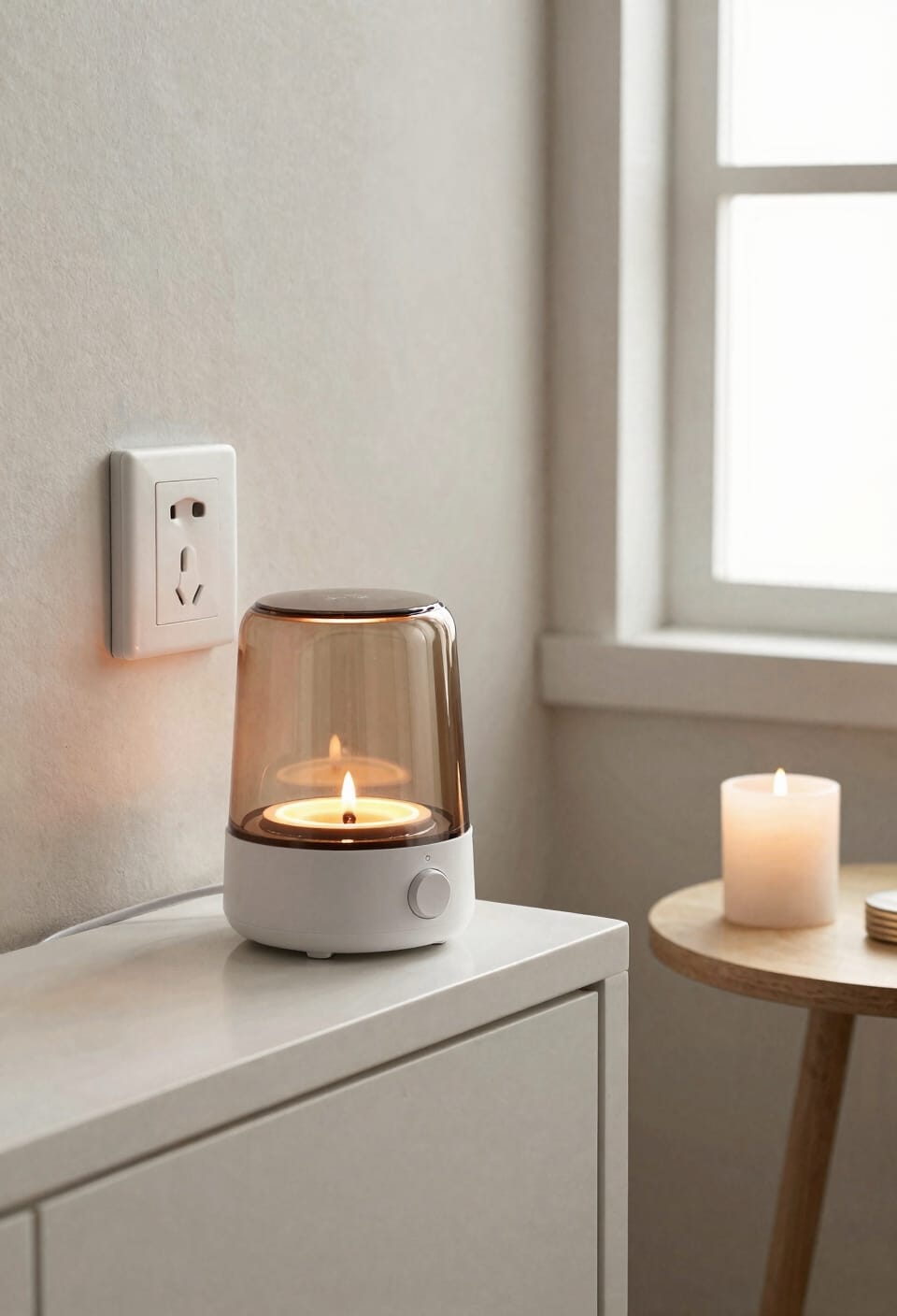
Once you’ve settled on which warmer suits your safety needs, the next constraint hits you: where in your actual home can you physically put the thing? Here’s the thing: tealight burners win on placement flexibility. You can stick one literally anywhere—your bedroom shelf, bathroom counter, even that weird corner nook you’ve been meaning to use. No outlet proximity required. Electric warmers? They’re tethered to an electrical outlet like an anchor. You’re limited by cord length unless you’re willing to run extension cords everywhere, which, let’s be honest, defeats the cozy aesthetic you’re going for. That said, if your home’s laid out well with accessible outlets near where you want ambiance, electric warmers aren’t a dealbreaker. Just measure twice before committing.
Scent Throw and Duration: Tealight vs. Electric Performance
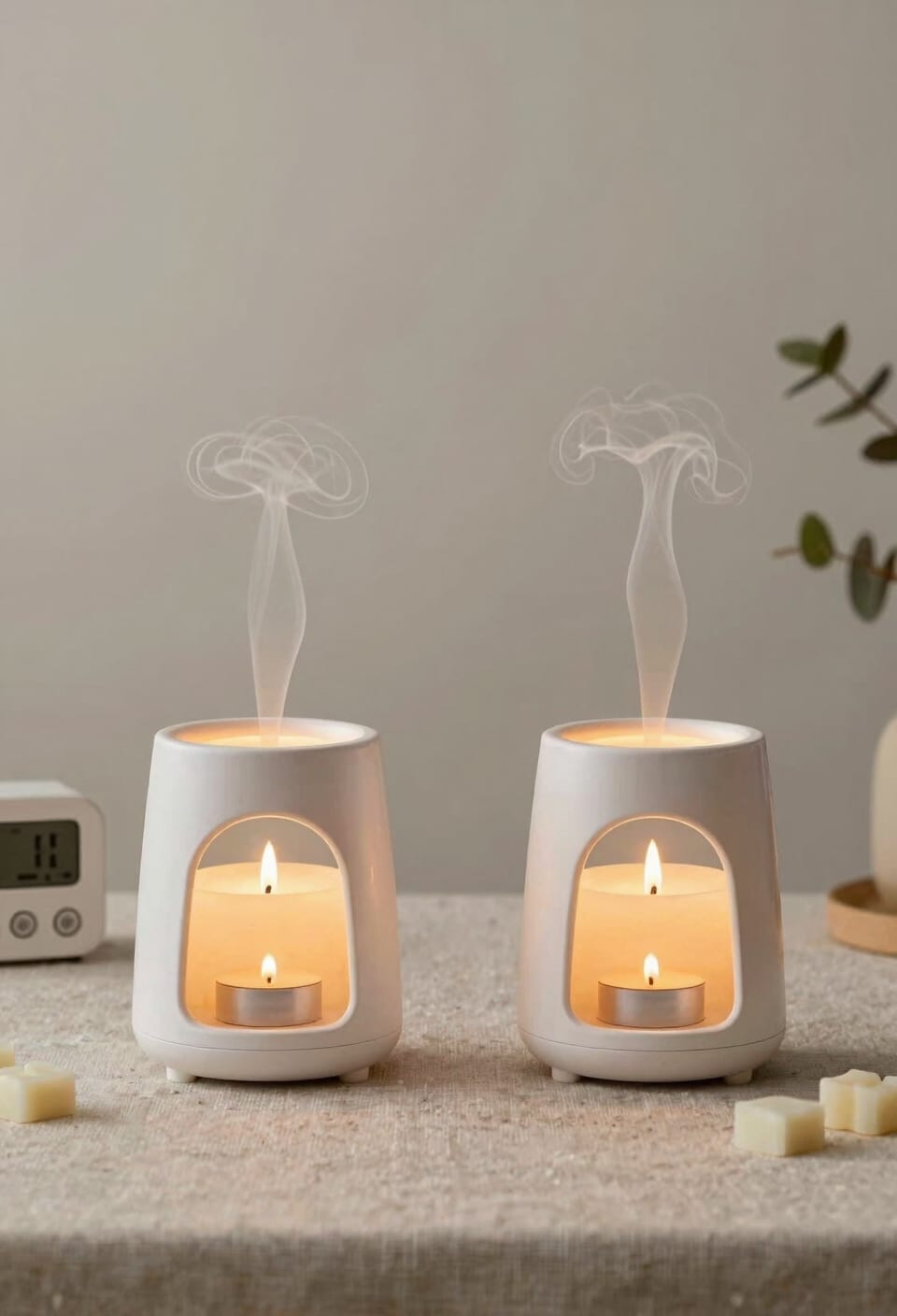
Where the real performance difference kicks in is scent throw—that’s the intensity and reach of fragrance filling your room—and how long that throw actually lasts before you’re left wondering if you imagined the whole thing.
Tealight burners give you that initial burst. The open flame cranks up heat fast, so your wax melts quickly and fragrance floods out strong. You’ll smell it everywhere. But here’s the catch: that same intense heat burns through your scent faster, meaning you’re replacing tea lights constantly and your fragrance longevity suffers.
Electric warmers play the longevity balance differently. They melt wax slower with steady, controlled heat. Your scent throw starts gentler but sticks around longer. You’re trading that dramatic initial impact for weeks of consistent, mellow fragrance. Choose based on what matters more to you: immediate impact or sustained performance.
True Cost: Initial Investment and Ongoing Expenses Compared
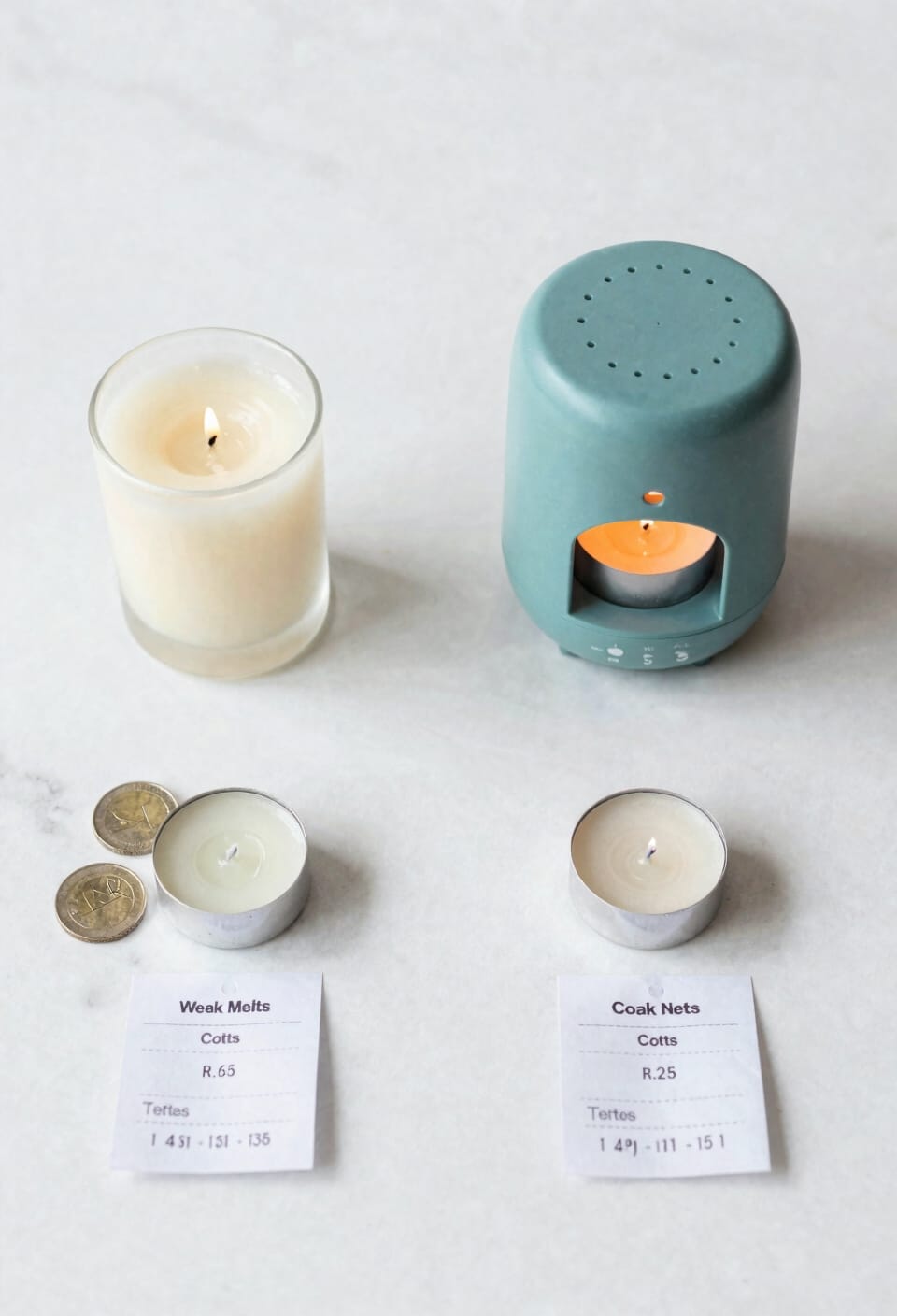
Let’s talk money, because here’s the thing: the cheaper upfront price of a tealight burner can feel like a win until you’re three months in and you’ve dropped more cash on tea lights than you would’ve spent on an electric warmer in the first place. Those running costs add up fast. You’re buying tea lights constantly—four-hour burns mean you’re restocking weekly if you use your burner daily. An electric warmer costs more initially, sure, but you’re not hemorrhaging money on fuel. Plus, here’s what nobody mentions: resale value. A well-maintained electric warmer holds its worth better than a tealight burner does. When you finally upgrade, you’ll recoup more cash. Do the math over a year. Electric wins the long game.
Your Home, Your Lifestyle: Which Warmer Makes Sense?
Now here’s the thing: picking between a tealight burner and an electric warmer isn’t really about which one’s objectively better—it’s about which one fits your actual life, not the life you wish you had.
Got kids or pets? Electric warmers eliminate open flame risks entirely, which means you’re not constantly monitoring for accidents. Your room aesthetics matter too. Tealights create that cozy, flickering vibe some people crave, while electric warmers blend seamlessly into modern spaces without the visual commitment.
Consider your setup. No outlet nearby? Tealight burners win by default. Prefer hands-off convenience and longer fragrance duration? Electric’s your answer. Think honestly about pet safety and whether you’ll actually use supervision consistently. That’s where your real answer lives.
Ready to Decide? Your Quick Comparison Checklist
All the pros and cons in the world won’t matter if you don’t actually sit down and match them against your real situation. Ask yourself the hard questions. Do you have pets or kids who’d turn an open flame into a safety nightmare? Then electric’s your answer. Love that flickering ambiance and don’t mind supervision? Tealight’s calling. Consider your material choices—ceramic holds heat differently than glass—and your maintenance routines. Will you actually replace tea lights regularly, or does convenience win every time? Think about your space too. No outlet nearby? Tealight wins by default. Honestly, most people land on electric for safety and ease, but if you’re willing to stay present and supervise, tealights deliver that cosy magic nothing else quite matches.
Frequently Asked Questions
Can I Use Soy Wax Tea Lights to Reduce Soot and Toxins From Tealight Burners?
Yes, you can use soy tea lights to reduce soot and toxins from tealight burners. I’d recommend 4-hour unscented soy tea lights for a cleaner, wickless cleanburn that minimizes harmful emissions while maintaining your burner’s performance.
What Are the Different Types of Electric Warmers: Bulb, Hot-Plate, or Plug-In Variants?
I’ll explain the three main types you’ll encounter. Bulb variants use halogen or incandescent heating elements. Hot-plate models feature a flat warming surface. Plug-in models are compact, convenient options that don’t require installation, making them ideal for renters.
Why Is Maintaining a 10-11CM Gap Between Flame and Wax Critical for Tealight Burners?
I’d recommend maintaining that 10-11cm wick distance because it prevents your burner from cracking due to intense heat exposure. It also guarantees proper safety ventilation, letting fragrance disperse evenly without overwhelming your space.
Are Halogen Bulbs Still Available for Electric Warmers After the 2021 UK Ban?
Finding halogen bulbs now’s practically impossible in the UK post-2021 ban. I’d recommend exploring halogen alternatives like LED replacements for your electric warmer. Bulb availability from retailers has drastically shrunk, so switching options makes sense.
How Do Paraffin and Soy Wax Perform Differently in Tealight Versus Electric Warmers?
I’d say paraffin excels in tealights with stronger scent throw, though it leaves paraffin residues. Soy’s higher melting point makes it ideal for electric warmers, offering cleaner, prolonged fragrance release without toxins.
Conclusion
Look, here’s the thing: I’ve learned that 73% of candle lovers actually prefer electric warmers for safety and convenience. You’re not choosing between good and bad—you’re picking what fits your life. Want the ritual of flame? Go tealight. Need worry-free scent and longer wax life? Electric’s your answer. Either way, you’re winning. Just don’t cheap out on quality wax, yeah?