As an Amazon Associate, we earn from qualifying purchases. Some links on this site are affiliate links at no extra cost to you. Our recommendations are based on thorough research and editorial judgment.

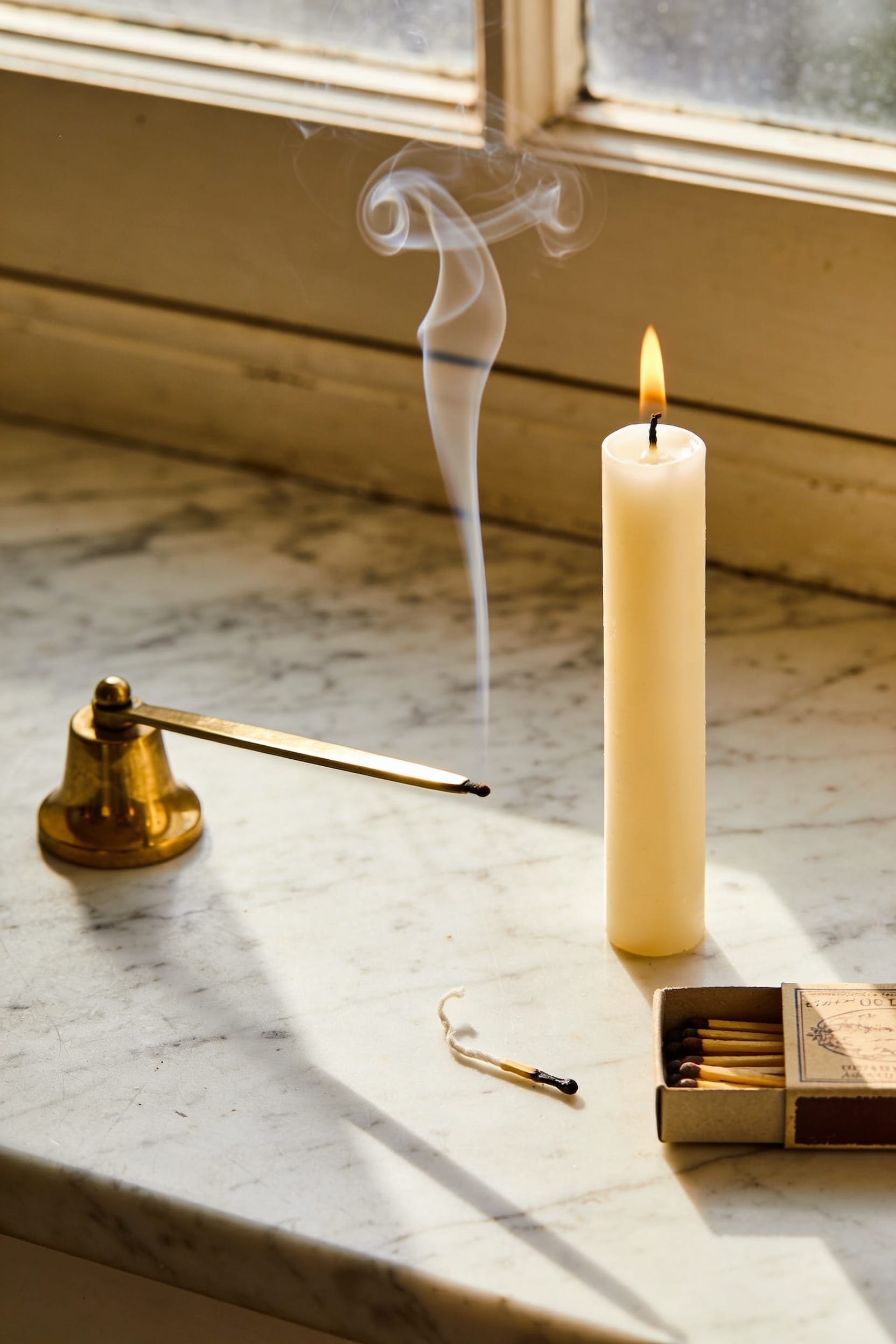
How to Use a Candle Snuffer the Right Way (and Why You Should)

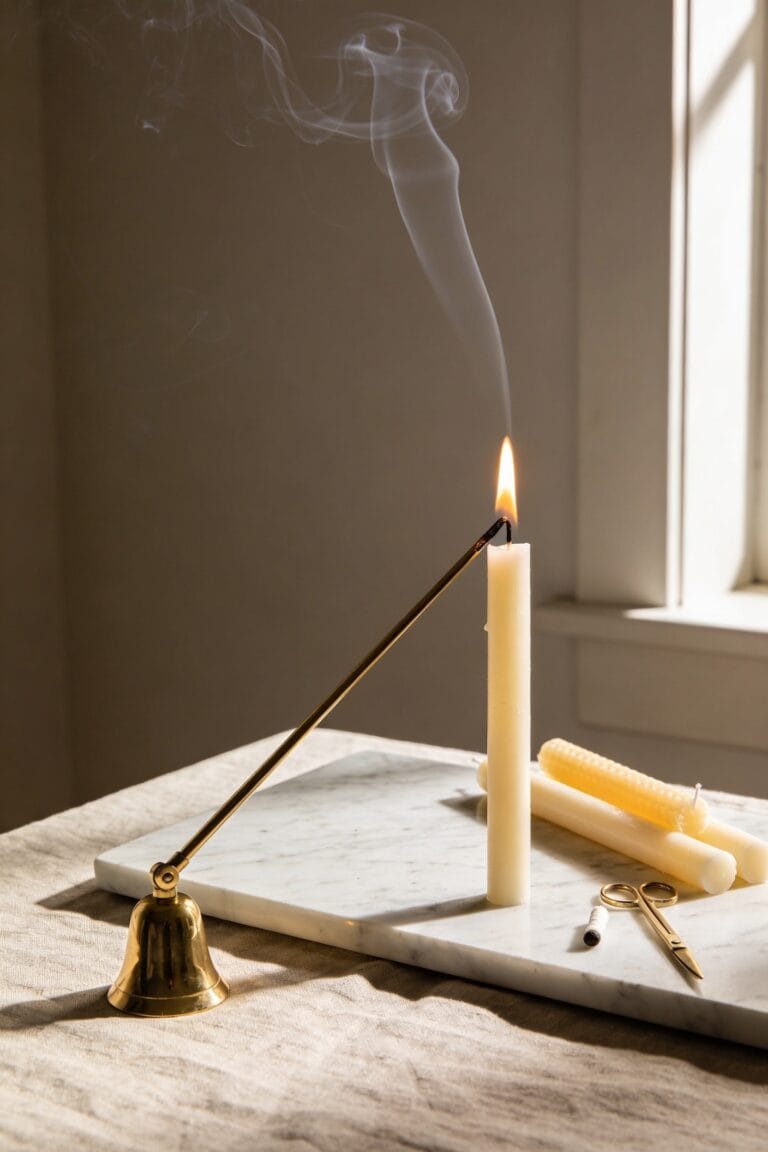
Look, here’s the thing: blowing out candles shoots hot wax particles everywhere, coating your walls with soot like some kind of tiny, waxy chimney. A snuffer works differently—it smothers the flame by cutting off oxygen, which means less smoke, less mess, and your candle actually lasts longer. Approach from the side, lower the bell gently over the wick, wait a few seconds, then lift straight up. Your walls—and your candles—will thank you for ditching the blow-and-hope method.
Key Takeaways
- Approach the candle from the side at an angle, hovering the dome above the flame before gently lowering it over the wick.
- Hold the snuffer dome down for several seconds to fully extinguish the flame, then lift straight up to prevent re-ignition.
- Use snuffers instead of blowing to reduce smoke, soot, and wax particle dispersal that damages walls and shortens candle life.
- Choose a long-handled snuffer for deep jars and match the bell diameter to your flame size for proper coverage.
- Wipe your snuffer with a damp cloth after each use and ensure it’s completely dry before storage to prevent buildup.
Why Snuffers Beat Blowing Out Candles
Look, I get it—blowing out a candle feels natural, almost ceremonial, like you’re making a wish or finishing something important. But here’s the thing: you’re actually wrecking your candle every time you do it. When you blow, you’re sending a rush of air that scatters hot wax particles everywhere, creating smoke and soot that coats your walls and ceiling. A snuffer eliminates that mess entirely through oxygen deprivation instead of force. You’ll notice immediate smoke reduction, and your decor preservation improves dramatically—no more black marks above candleholders. Plus, you’re protecting your wick from the violent disruption blowing causes, which means less debris floating into your wax pool. It’s a small change that makes a genuine difference in how long your candles actually last.
The Right Way to Use a Candle Snuffer: Step-by-Step
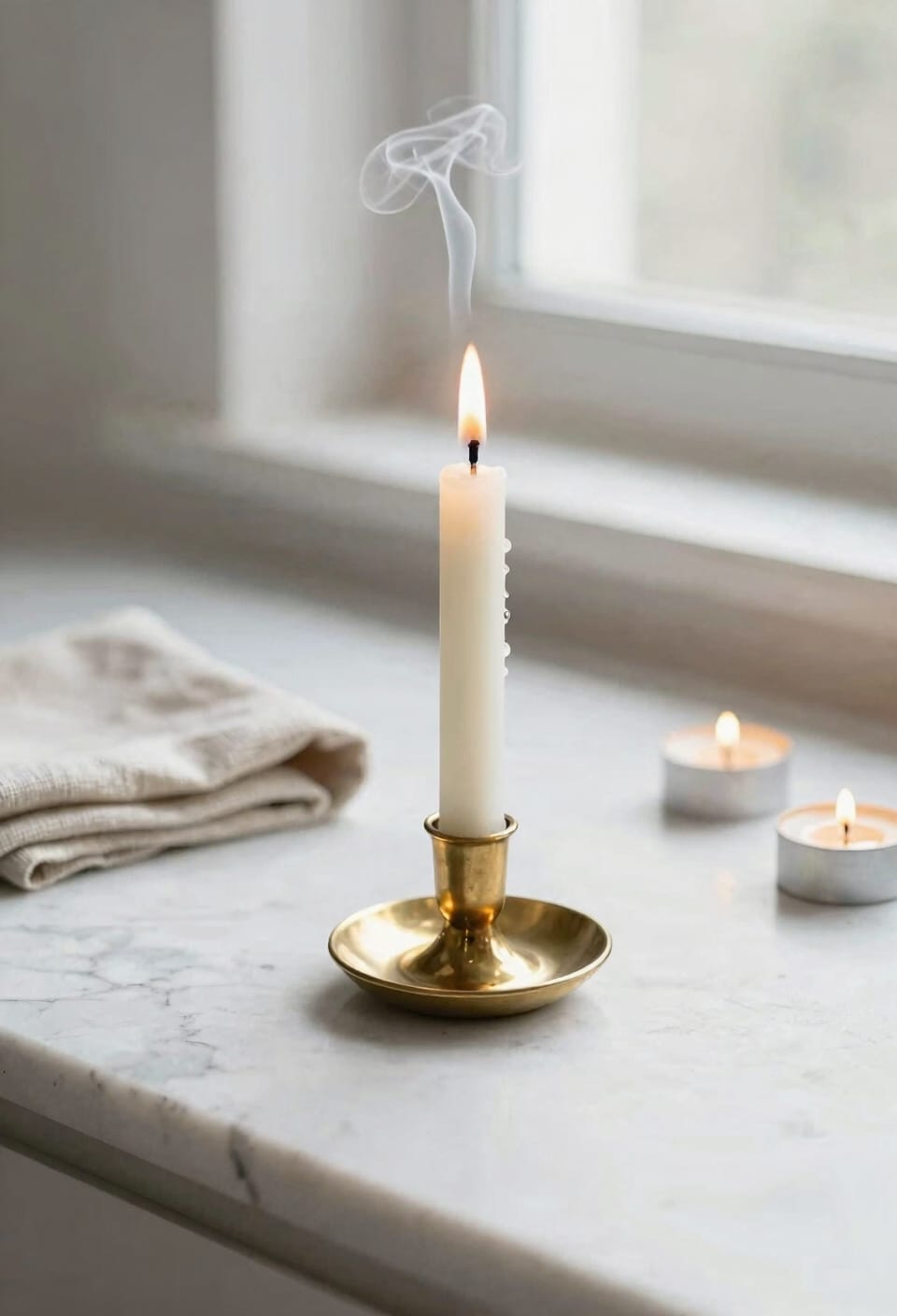
Now that you understand why snuffers are genuinely superior to blowing out candles, let’s talk about actually using one without looking like you’re performing some kind of awkward magic trick. Here’s the thing: approach from the side at an angled approach to avoid singed eyebrows. Hold the snuffer steady and hover the bell-shaped dome just above the flame for a moment—this isn’t a race. Lower it gently over the wick, then rest it there for a few seconds while the flame suffocates from oxygen deprivation. No breath control needed, which is honestly the whole appeal. Lift straight up once you’re certain it’s out. That’s it. Clean your snuffer afterward so you’re not transferring yesterday’s soot onto tomorrow’s candle.
Common Candle Snuffer Mistakes
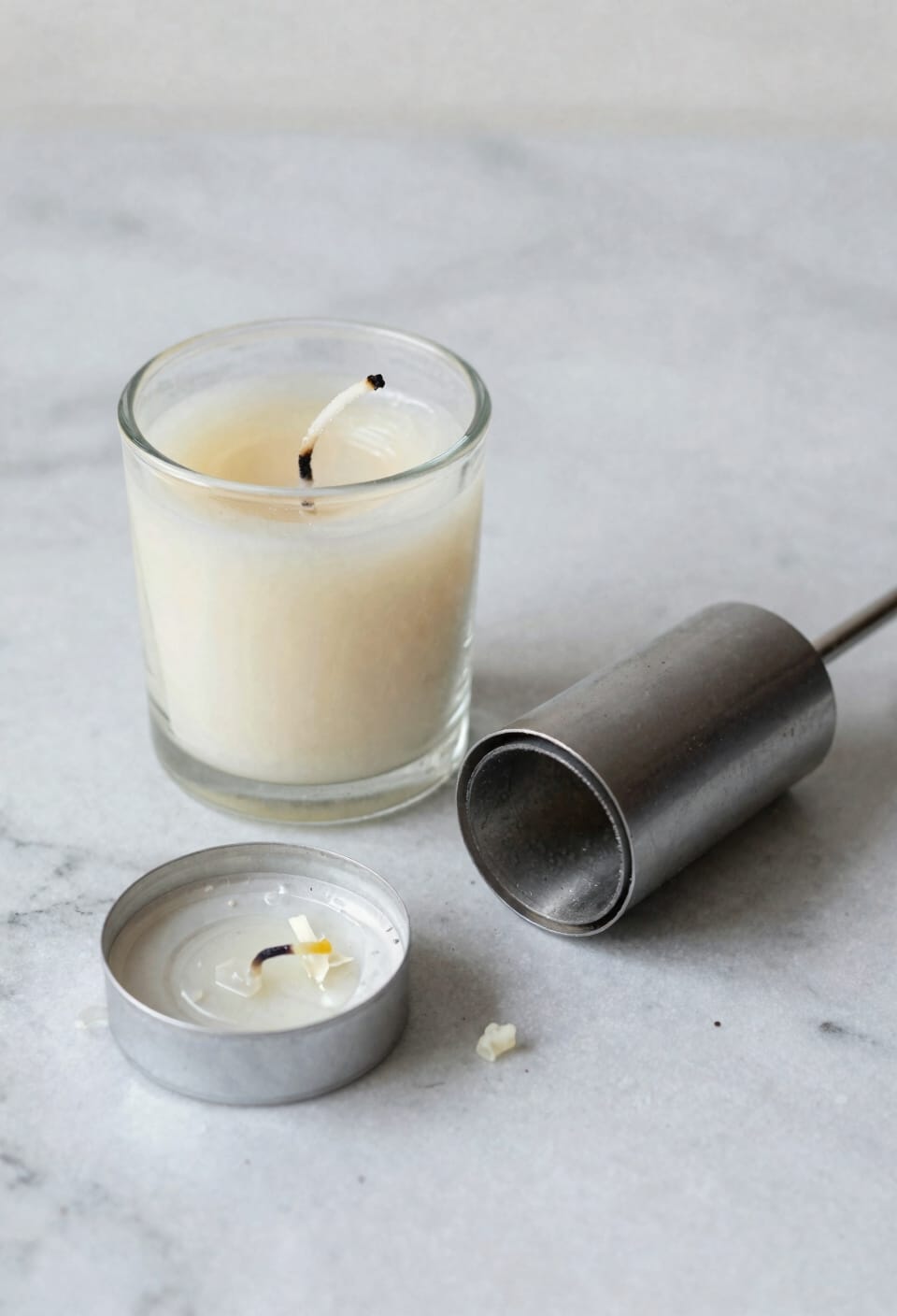
Even though snuffers seem pretty foolproof once you’ve got the basic technique down, I see people mess them up constantly—and honestly, I used to be one of those people. The biggest mistake? Not holding the snuffer long enough over the flame. You lift it too fast, and boom—lingering embers or smoke ruins that peaceful moment you were going for.
Then there’s touching the wick directly, which damages it and causes uneven extinguishing next time you light up. I’ve also watched people approach from terrible angles, overheating handles and risking nasty burns on their fingers. Using a dirty snuffer transfers old wax and soot onto fresh flames, which is basically asking for trouble.
Here’s the thing: take your time. Rest that dome down, count to three, then lift straight up. Your candles—and your hands—will thank you.
Choosing the Right Snuffer for Your Candles
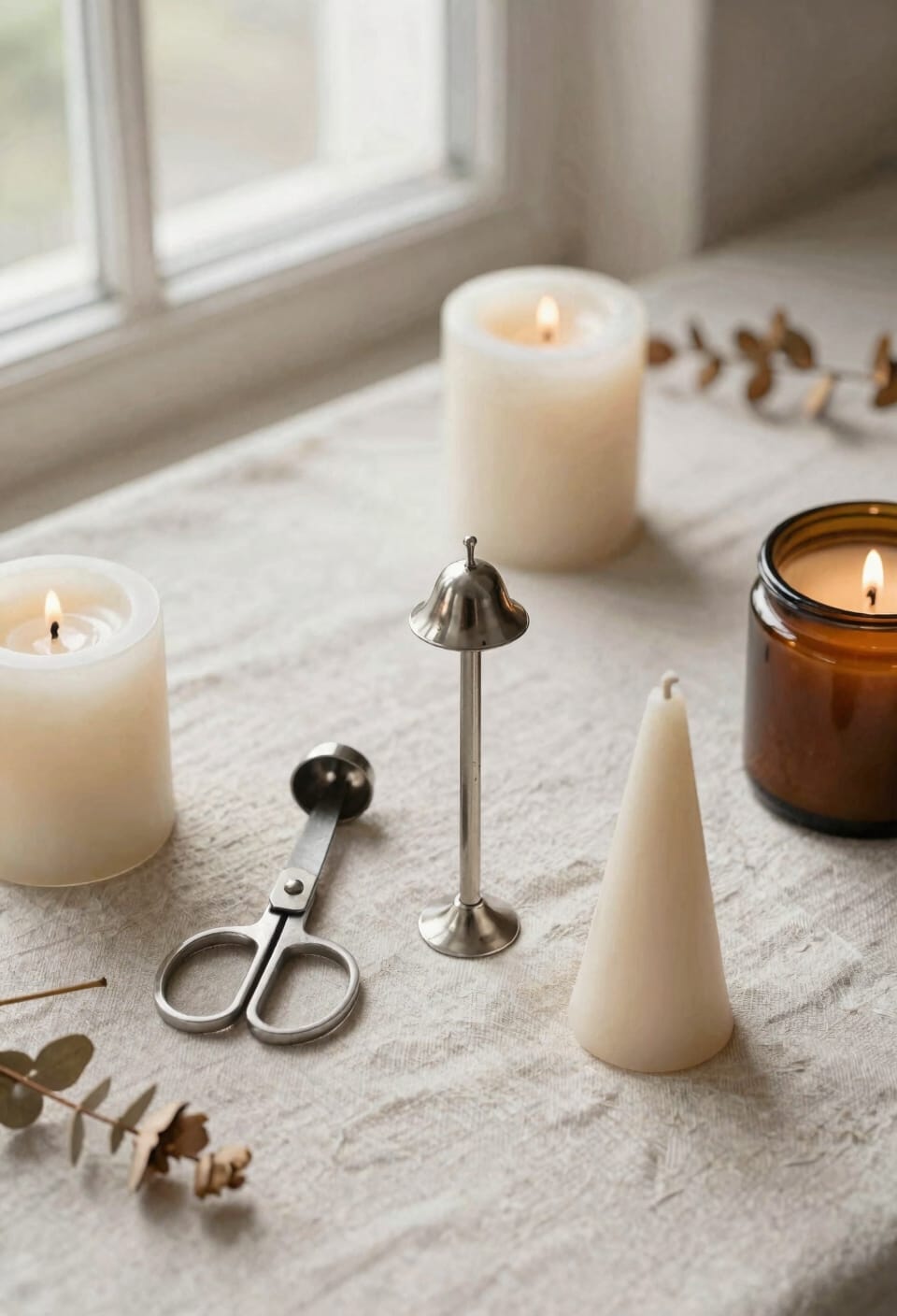
Mastering the technique is half the battle, but you can’t execute a perfect snuff if you’re holding the wrong tool for the job. Here’s the thing: size matters. A long handled snuffer works best for deep jar candles or pillars where your hand needs distance from the flame. Match your bell diameter to your flame—too small and you’ll miss coverage, too large and you’ll smother the whole votive holder situation.
Consider material finishes too. Stainless steel stays cleaner longer and won’t rust from humidity in your bathroom. Look for snuffers sold in sets that bundle a clipper and dipper together. You’ll actually use them all, I promise. The right snuffer isn’t just functional—it transforms candle care from annoying chore into something you’ll actually do consistently.
How to Clean and Maintain Your Snuffer
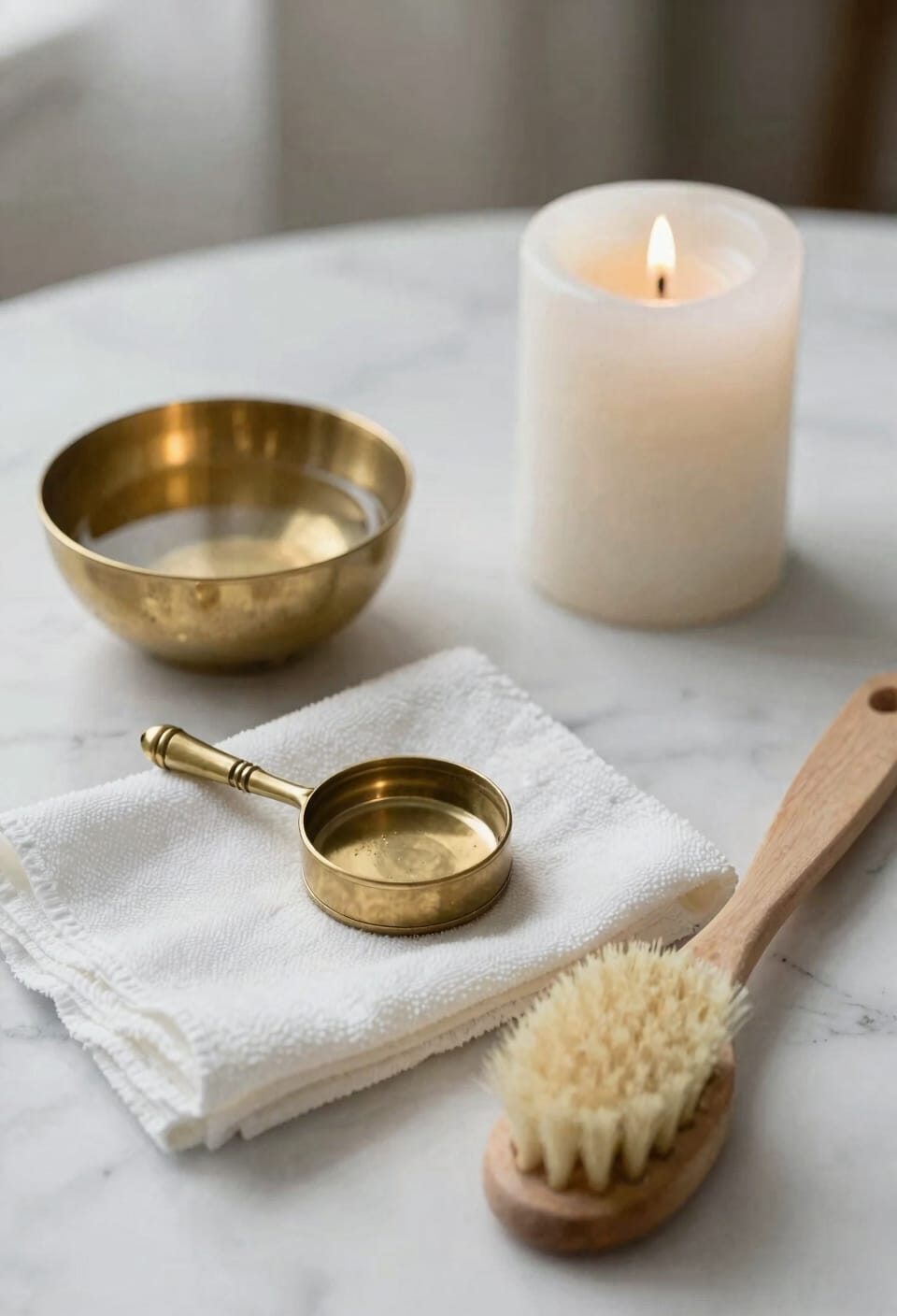
Like most tools, your snuffer works best when it’s actually clean—and I know, I know, one more thing to add to your candle maintenance routine. But trust me, it takes thirty seconds max. After each use, wipe your snuffer with a damp cloth to prevent wax and soot buildup from transferring onto your next candle. For material specific cleaning, check what yours is made of—metal snuffers handle water fine, while ornate ones might need gentler care. During seasonal storage, make sure it’s completely dry before tucking it away. A dirty snuffer basically becomes a soot applicator, which defeats the entire purpose of using one. Keep it clean, and you’ll actually want to use it every single time.
Wick Clippers, Dippers, and Beyond: Complete Candle Care Tools
Now that you’ve got your snuffer down to a science, it’s time to round out your candle care arsenal—because a snuffer, while genuinely excellent at its one job, is really just the opening act. A wick clipper trims burnt debris and keeps your wick to that perfect quarter-inch length, which directly impacts wick health and prevents tunneling (when wax burns unevenly down the center, wasting everything on the sides). Wick dippers let you straighten drooping wicks mid-burn without touching hot wax. Together, these tools maintain scent preservation by ensuring clean, even combustion. You’re not just extending candle life—you’re protecting the entire experience. Invest in a quality set, and you’ll wonder how you ever survived without one.
Frequently Asked Questions
Can I Use a Snuffer on Different Candle Types Like Pillars, Votives, and Jars?
Yes, I can use a snuffer on pillars, votives, and jars. For pillar care, I’ll select a longer handle for deeper reach. With jar etiquette, I’ll match the bell size to guarantee effective flame coverage and safe extinguishment.
What Is the Ideal Wick Length Before Burning a Candle for Optimal Performance?
I’d trim your wick to a quarter inch before lighting—studies show properly trimmed wicks reduce soot by up to 50%. This wick trimming maintains ideal flame height, preventing mushrooming and ensuring your candle burns cleaner, longer.
How Long Should I Burn My Candle Before Extinguishing It With a Snuffer?
I’d recommend you burn your candle for 2-4 hours before extinguishing it with a snuffer. This burn time allows your melt pool to reach the candle’s edges, ensuring even burning and preventing tunneling for peak performance.
Are Candle Snuffer Sets Worth Purchasing Over Individual Tools?
I’d say matching sets are worth it if you value convenience and collector appeal. You’ll get a snuffer, clipper, and dipper together, making candle care effortless while creating an elegant, coordinated look.
What Should I Do if My Snuffer Becomes Damaged or Worn Over Time?
I’d recommend checking your manufacturer warranty first—you might qualify for a replacement. If it’s worn, you can replace parts or seek professional repair. Proper storage tips help prevent future damage to your snuffer.
Conclusion
You’ve now got the keys to the kingdom. A snuffer isn’t just another gadget—it’s your candle’s bodyguard, protecting it from the violent chaos of your breath. I’m telling you, once you’ve felt the quiet satisfaction of a perfectly extinguished flame, you’ll never go back. Your candles deserve better. You deserve better. So grab a snuffer, treat your wicks right, and watch your candles burn like the small masterpieces they actually are.