As an Amazon Associate, we earn from qualifying purchases. Some links on this site are affiliate links at no extra cost to you. Our recommendations are based on thorough research and editorial judgment.

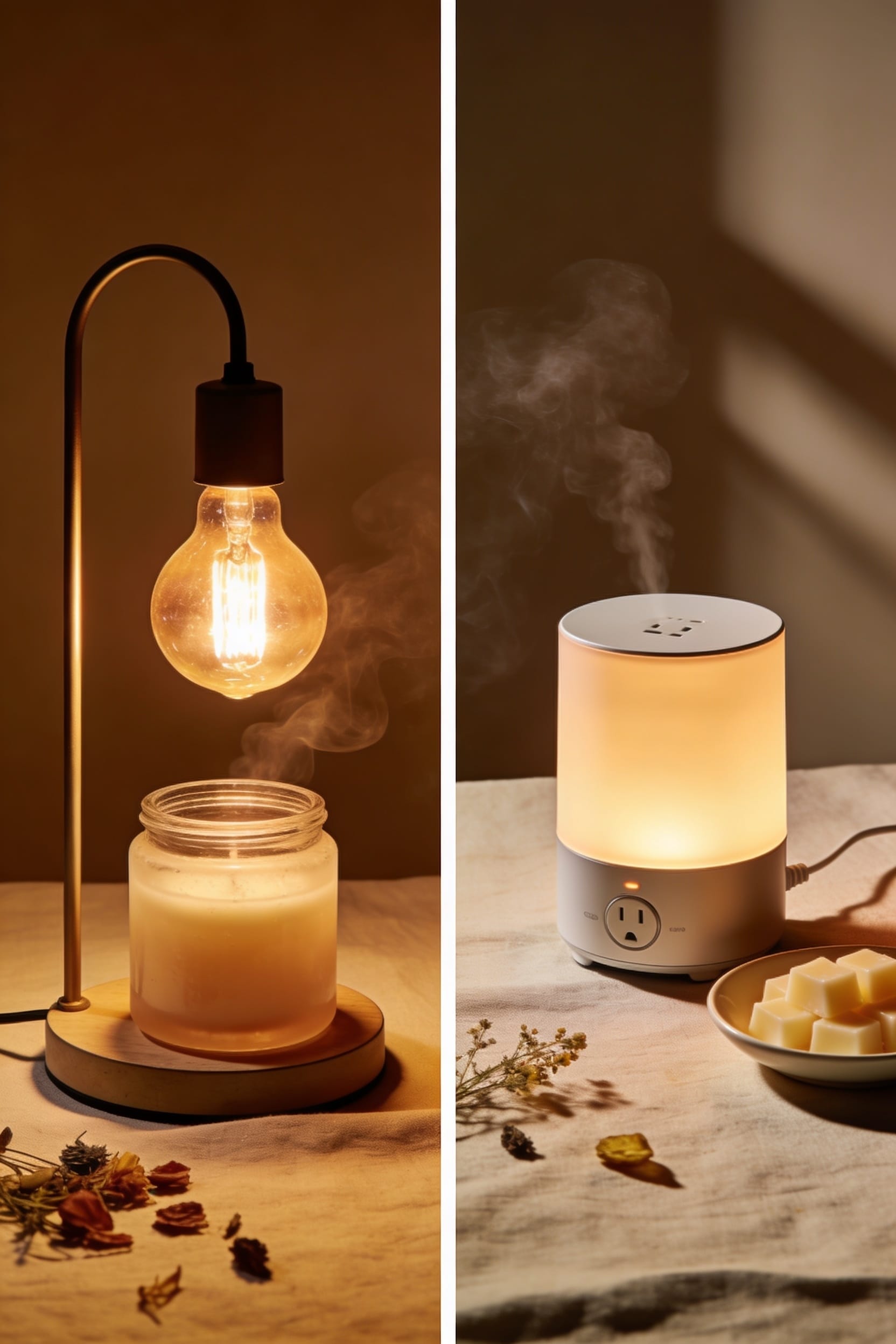
Candle Warmer Lamp vs. Electric Warmer: Which Gives Better Scent?

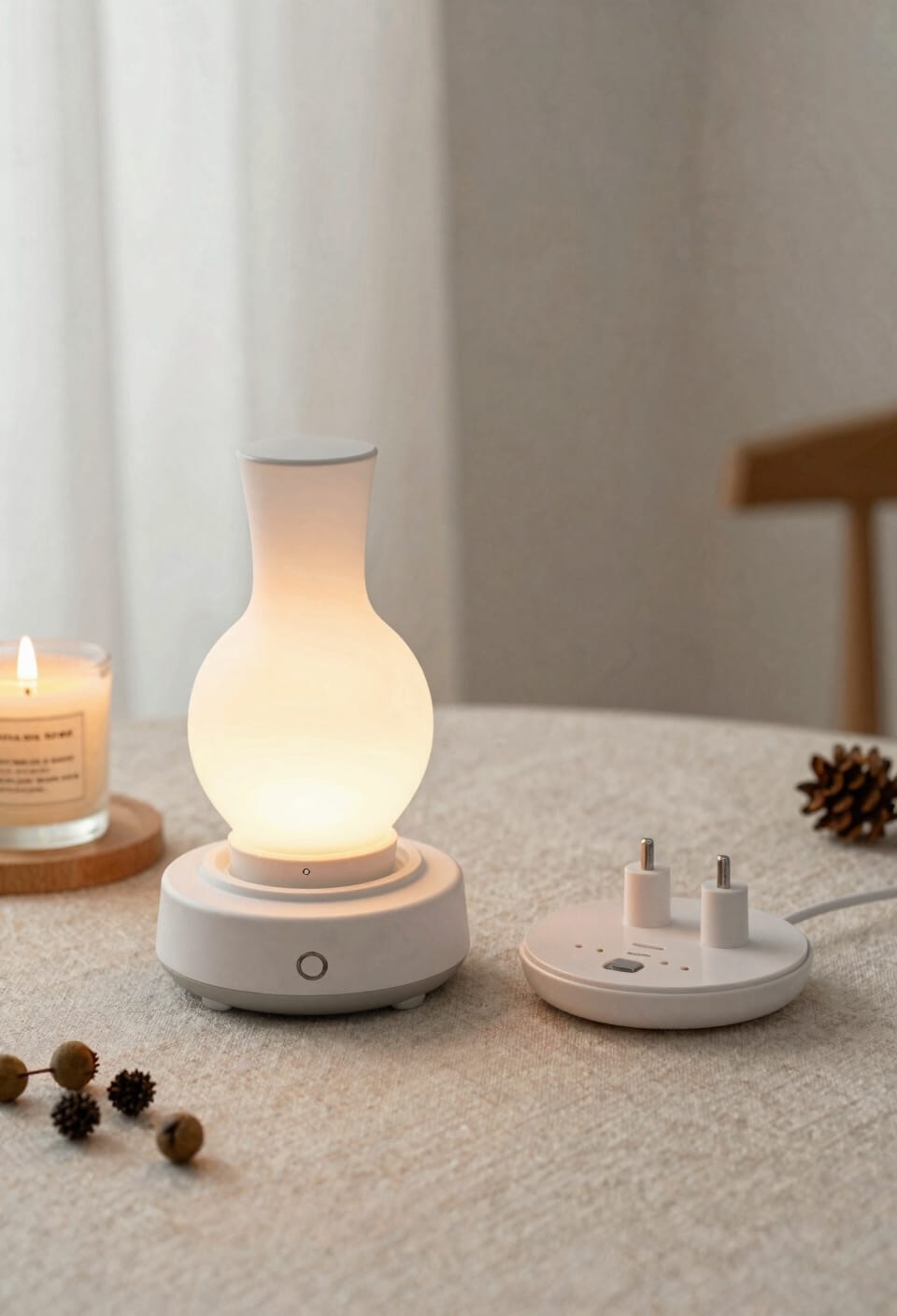
Lamp warmers heat from above, releasing scent gradually and evenly—think slow burn without the actual flame. Plate warmers heat from below and work for both jar candles and loose wax melts, giving you flexibility. Honestly, neither one “wins” on scent alone; lamp warmers create gentler throw while plate warmers distribute fragrance steadier. Your choice depends on room size and whether you want subtle aroma or something that fills the space. The real differences lie deeper than you’d think.
Key Takeaways
- Lamp warmers heat from above for gentle, gradual scent throw; plate warmers heat below for broader compatibility and flexibility.
- Lamp warmers suit jar candles without overheating; plate warmers work with both candles and wax melts for versatile use.
- Burning delivers intense scent peaks ideal for large rooms; warming provides subtle, even fragrance for smaller spaces.
- Both methods eliminate soot and open flame risks; warmers allow unattended use with enhanced household safety around pets.
- Warmers produce up to three times more fragrance hours than burning, making them more cost-effective per hour of scent.
Scent Throw: Burning vs. Warming
When you’re standing in front of your candle collection wondering why one smells like a full-on aromatherapy experience while another barely whispers its fragrance into the room, you’re bumping up against one of the great candle debates: burning versus warming.
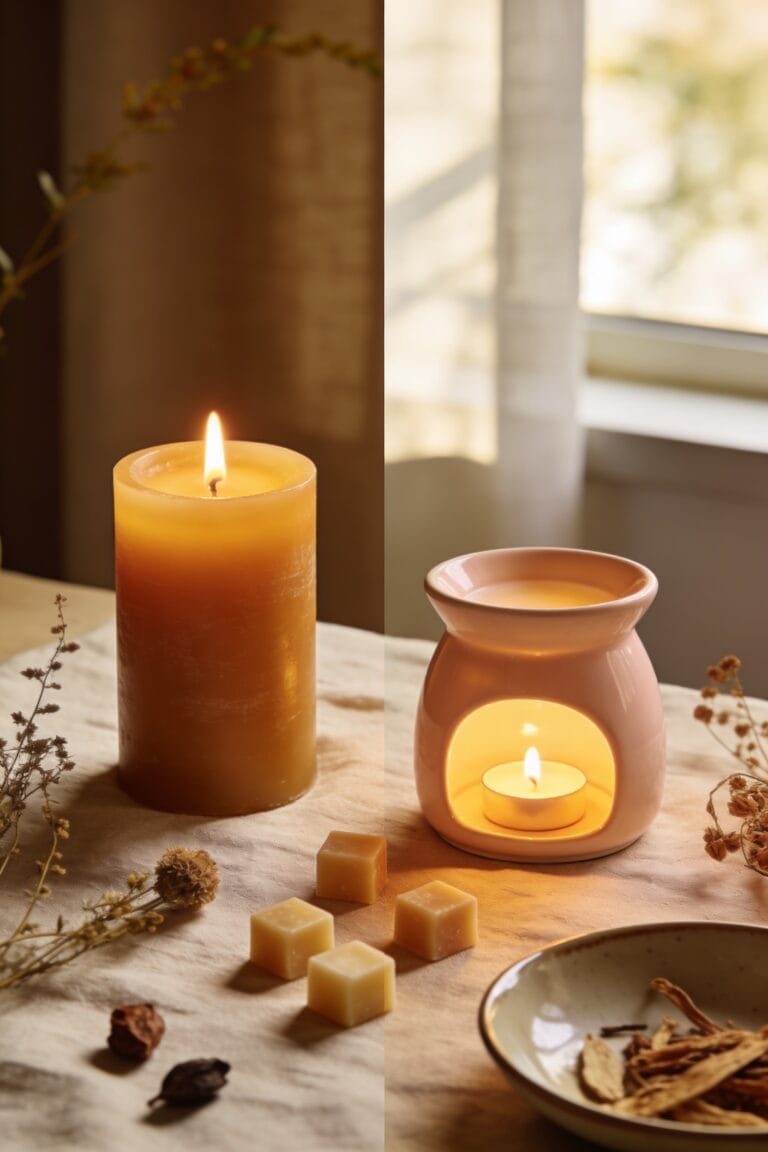
Here’s the thing: burning creates immediate scent peaks because that open flame and full melt pool release fragrance fast and intense. You get hot spots of aroma near the candle itself. Warmers, though? They’re the slow burn—literally. They release scent gradually, distributing it more evenly throughout your space without those dramatic scent peaks. Both methods work brilliantly depending on your candle’s size and fragrance load. You’re really choosing between a fireworks show or a steady glow.
Candle Lifespan and Cost: Why Warming Wins
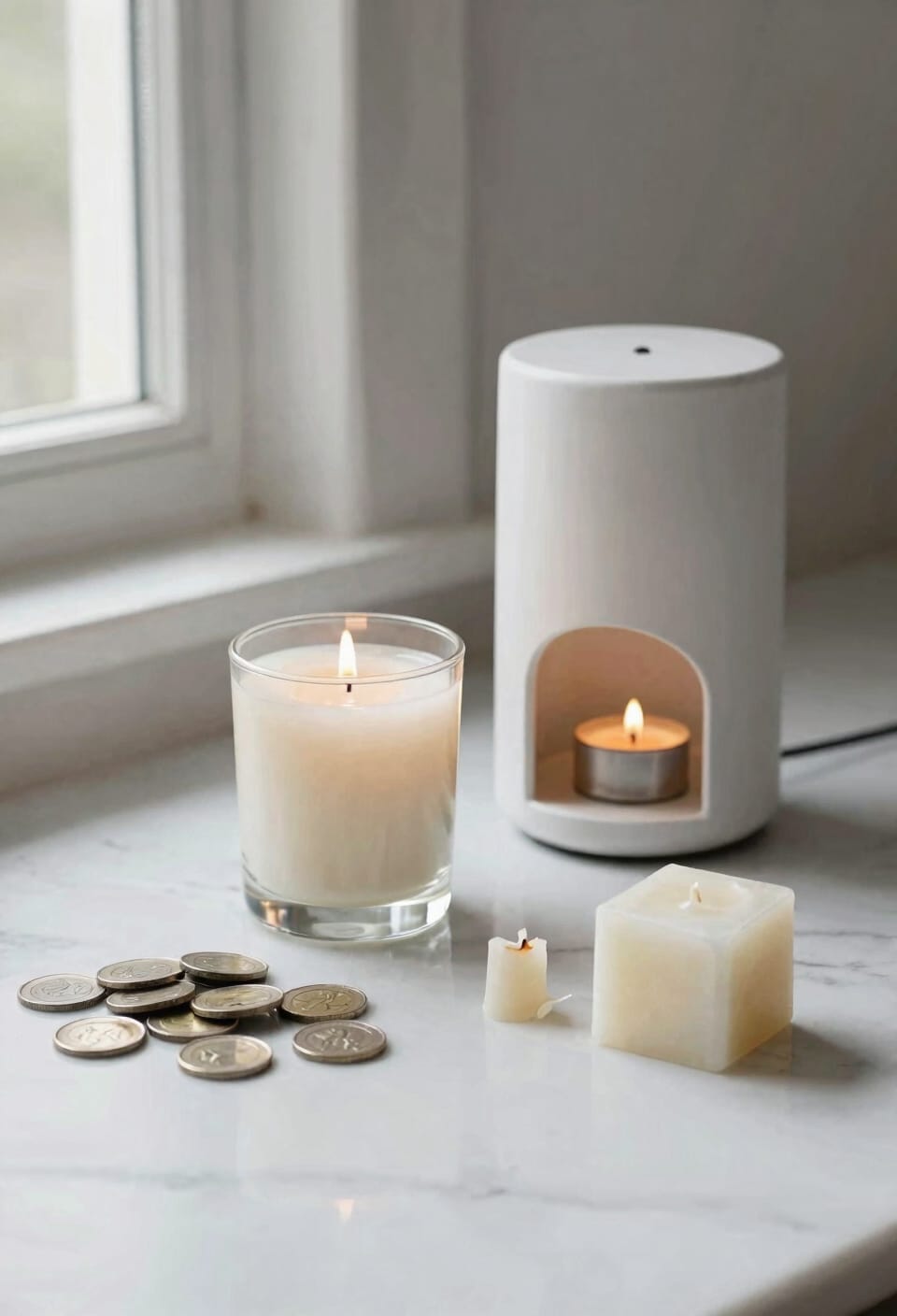
Because warmers melt your candles at lower temperatures without consuming the wick, you’re getting up to three times more fragrance hours from the same amount of wax. That’s not a typo—I’m talking serious wax preservation. No tunneling happens, no wax gets wasted stuck to the jar sides, and your candles last dramatically longer. Look, wax melts cost less than replacement candles anyway, so switching to warming is genuinely budget friendly. You’ll avoid soot cleanup too, which saves money on furniture damage and scrubbing supplies you didn’t know you needed. The math is simple: lower cost per fragrance hour, indefinite warmer reuse, and candles that actually finish before next season. That’s why warming wins your wallet over.
Safety, Soot, and Why Electricity Beats Flame
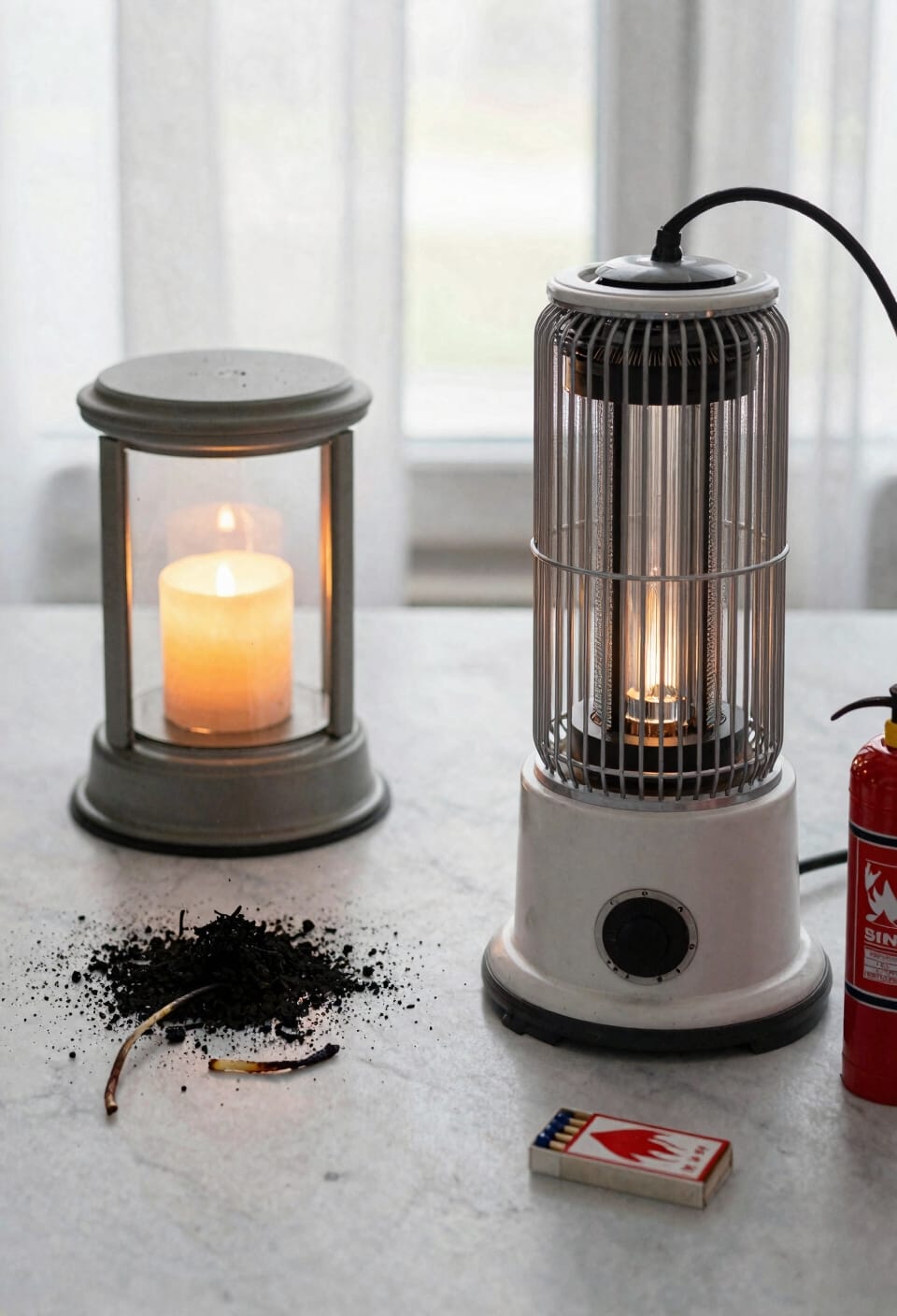
All right, here’s the thing—if you’ve ever wiped black soot off your walls and wondered where it came from, that’s your burning candle waving a little flag that says “I’m releasing particles into your air.” That smoke you see curling up from a flame? It’s tiny carbon particles floating straight into your home. Electric warmers skip this mess entirely. No soot means cleaner walls, healthier lungs, and happier fire alarms that won’t randomly decide 3 a.m. is the perfect time to screech. Plus, if you’ve got pets or kids, warmers eliminate open flame risks altogether. No accidental knockovers, no singed fur, no panic. You’re just gently melting wax at low temperatures. Electricity wins here, hands down.
Lamp vs. Plate Warmers: Choose the Right One
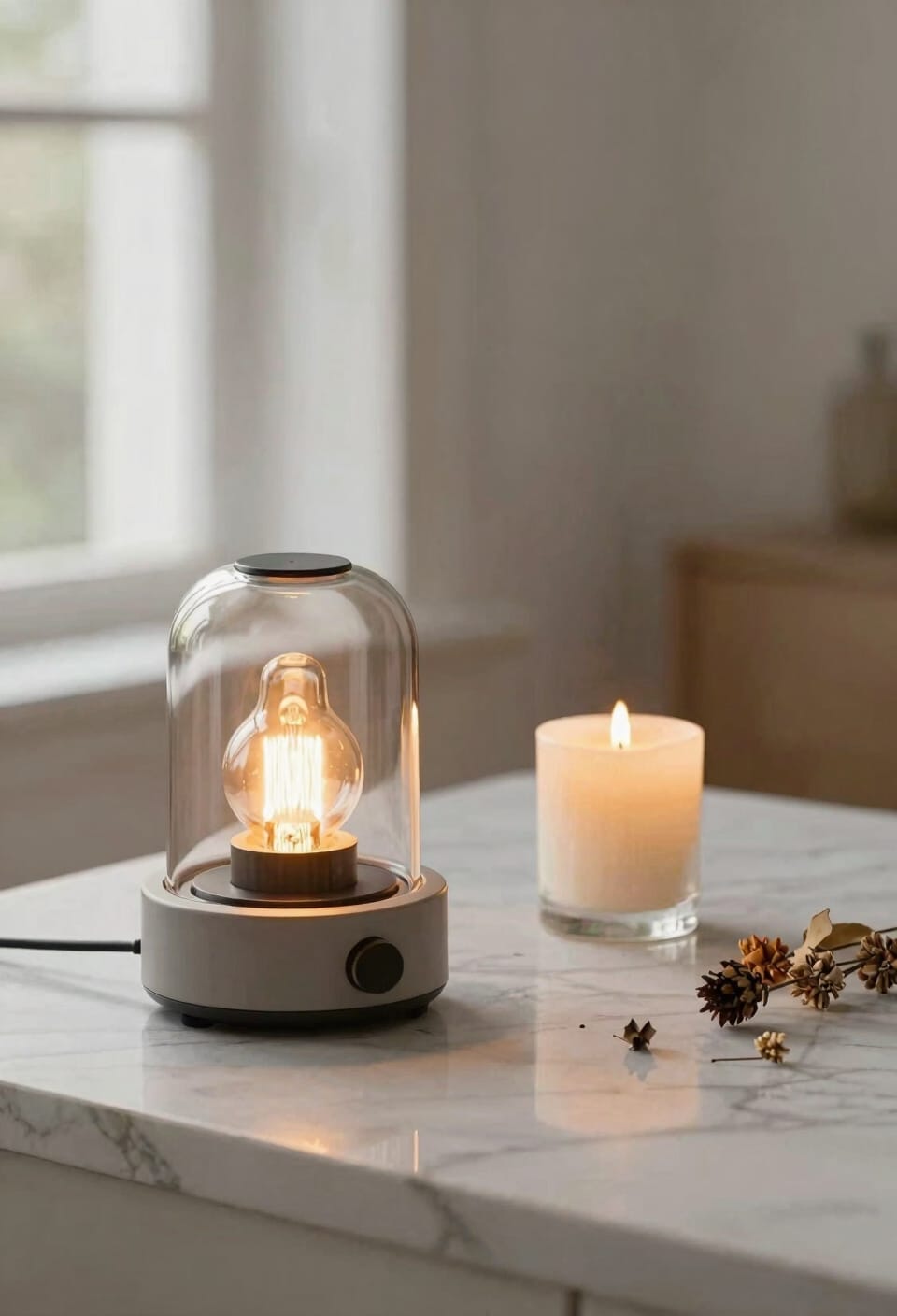
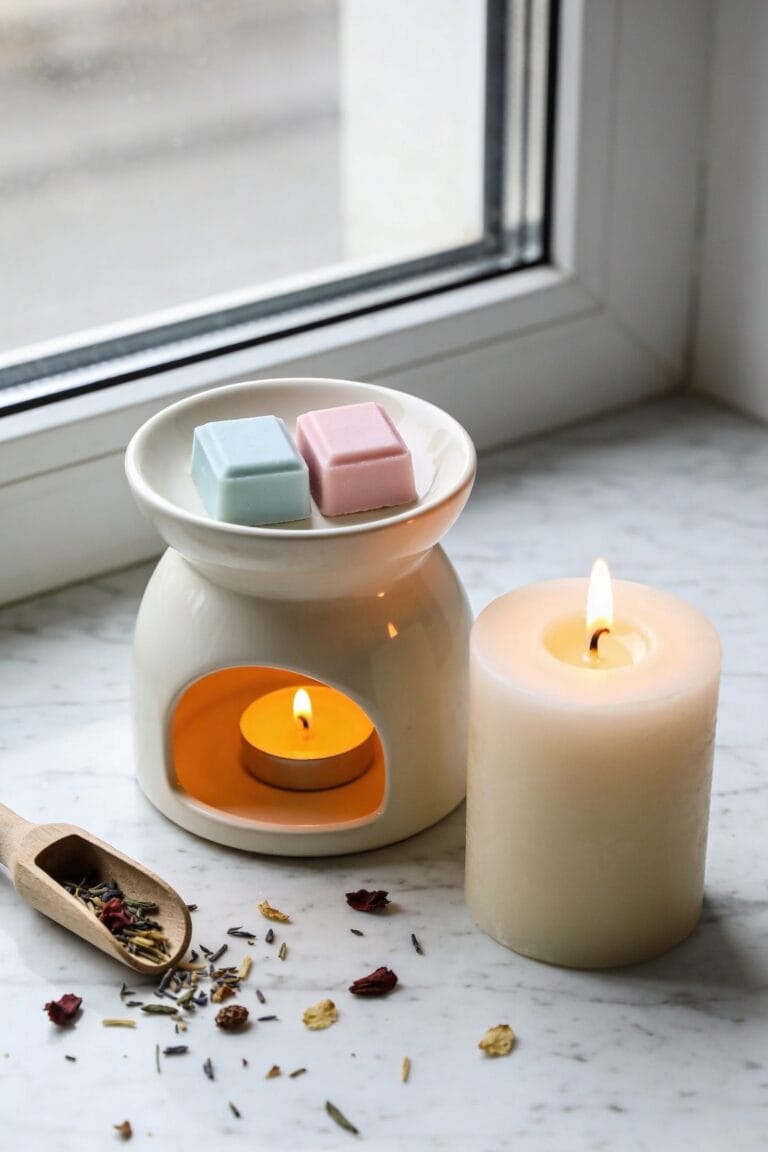
Now that you’ve decided an electric warmer is your move, you’ve got another choice to make—and it’s actually simpler than you’d think. Lamp warmers heat jar candles from above, while plate warmers work from below for both candles and wax melts. The difference matters because heat patterns affect how your fragrance releases. Lamp warmers create gentle, gradual scent throw perfect for smaller rooms. Plate warmers offer more even wax compatibility—they won’t overheat delicate blends or cause tunneling. I’d pick a lamp warmer if you’re melting existing jar candles. Go plate if you want flexibility with wax melts or oils. Either way, you’re getting consistent, flameless fragrance without the soot disaster that comes from burning.
So, Which Method Should You Actually Use?
If you’re standing in front of your candle collection right now wondering whether to light the wick or plug in a warmer, the honest answer is: it depends on what you actually want from your fragrance experience. Here’s the thing: if you’ve got a large room and crave serious scent intensity, burning delivers that punch. But if you’re working with a smaller space or prefer subtle, even fragrance that won’t overwhelm you, a warmer wins every time. Consider your lifestyle too. Unattended burning makes me nervous; warmers let you leave without guilt. Your room size and scent intensity preferences matter most. Pick based on your actual habits, not Instagram aesthetics.
Frequently Asked Questions
How Long Does It Take for a Candle Warmer to Release Fragrance Compared to Burning?
I’d say warmers take longer for initial scent diffusion—they release fragrance gradually over minutes, while burning gives you instant throw. You’re trading quicker release timing for sustained, subtle scent distribution that lasts longer.
Can Candle Warmers Work With All Candle Sizes and Jar Types?
I’d say most warmers work well with standard jars, though you’ll want to check wick compatibility and jar insulation. Smaller candles heat faster, while larger ones need adequate space for even warming without overheating.
Do Warmers Work Effectively in Large Open Spaces or Multiple Rooms?
I’d say warmers struggle in expansive areas because scent dispersal depends heavily on air circulation and room placement. They’re better suited for intimate spaces—burning candles deliver superior throw for larger open rooms.
What’s the Average Electricity Cost of Running a Warmer Daily?
I’d estimate you’re looking at minimal daily operating costs since most warmers use just 25–40W. Running one continuously costs roughly a penny or two daily, making them incredibly energy-efficient for fragrance enjoyment.
How Often Do You Need to Replace Warmer Bulbs or Heating Elements?
I’d say you’ll replace bulbs every 1–2 years, though I’d send a telegram about element degradation—warmers rarely need replacement. Bulb lifespan depends on daily use, but heating elements outlast most appliances, making warmers incredibly durable investments.
Conclusion
Look, here’s the thing: warming’s your best bet if you want scent that blooms like a flower opening at dawn—gentle, sustained, and minus the smoke. I’ll burn a lamp warmer over flame any day because you’re stretching that candle’s life while dodging soot entirely. Your nose wins. Your wallet wins. Your lungs definitely win. That’s not a compromise; that’s just smarter.