As an Amazon Associate, we earn from qualifying purchases. Some links on this site are affiliate links at no extra cost to you. Our recommendations are based on thorough research and editorial judgment.

Tiki Torch vs. Candle for Outdoors: Ambiance, Safety & Burn Time

Look, here’s the thing—torches throw dramatic light and burn about an hour per tank, but they’ll drain your wallet fast and only protect you from mosquitoes for roughly ten minutes. Candles last 20+ hours, cost way less to maintain, and create that cozy vibe torches can’t touch. Torches excel at visual punch for crowds; candles win for intimate evenings and actual economics. Space torches six to eight feet apart, trim your candle wicks to a quarter-inch, and keep both well away from flammables. The real choice depends on your crowd and budget—but stick around to discover which setup actually makes sense for your space.
Key Takeaways
- Tiki torches create dramatic, authentic flame effects ideal for casual gatherings; candles offer softer, cozier ambiance suited for intimate dinners.
- Standard tiki torches burn approximately one hour per tank; quality candles last 20+ hours with lower refill costs over a season.
- Tiki torches provide only ten minutes of mosquito protection versus 360 minutes from DEET repellents; use torches for ambiance, not bug defense.
- Space torches 6–8 feet apart and 6 feet from structures; place candles on stable, level ground away from drafts and fabric.
- Trim torch wicks to quarter-inch before storage; drain oil-based torches before off-season, clean soot, store upright, and seal containers airtight.
Tiki Torches vs. Candles for Outdoor Ambiance
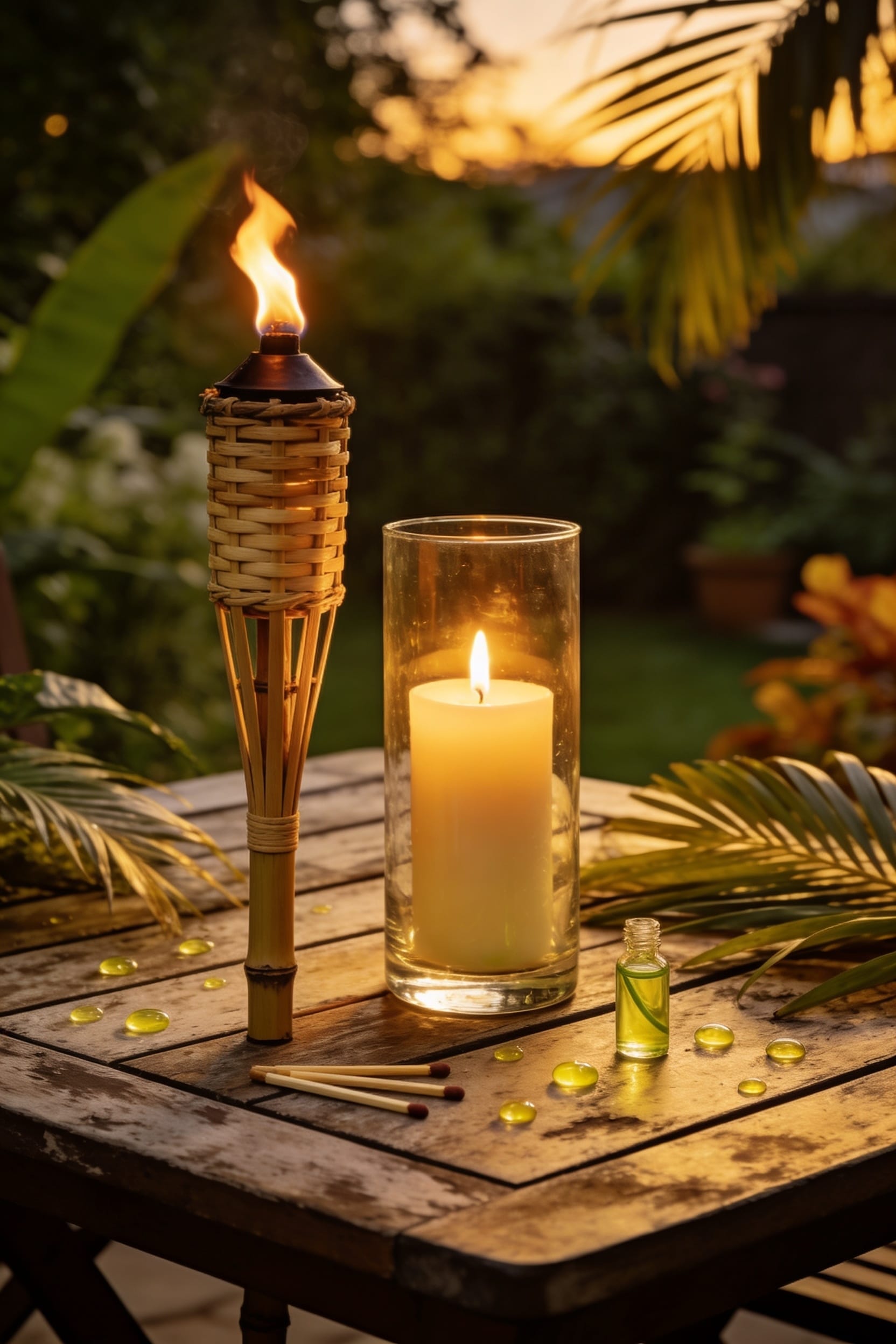
When you’re setting up your outdoor space for the evening, you’re basically choosing between two very different vibes—and I mean that literally. Tiki torches create authentic flame effects that establish an amicable mood with real-flame illumination, functioning as a visual focal point that anchors your entire patio or deck setup. Candles offer softer, more intimate mood lighting without the fuel consumption worries. Here’s the thing: torches burn brighter and carry that dramatic presence, while candles feel cozier and more refined. If you’re hosting a casual gathering, torches dominate the scene. But for intimate dinners where you actually want people talking instead of staring at flames? Candles win. Both work outdoors, but they’re solving different problems. Choose based on your crowd’s vibe, not just aesthetics.
How Burn Times and Fuel Costs Compare
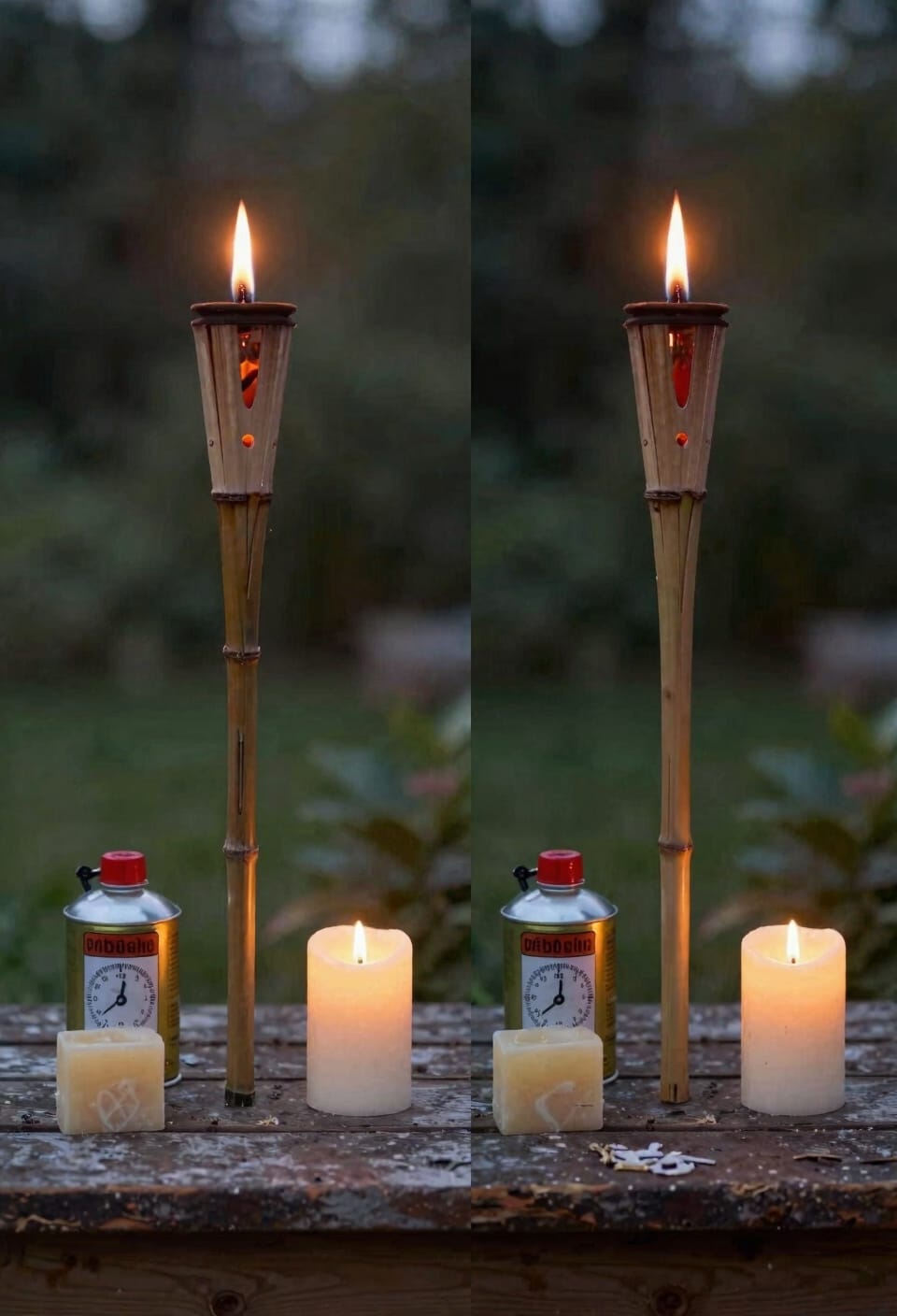
All right, now that we’ve settled the ambiance question, let’s talk money—because buying pretty light sources is only half the battle. Standard tiki torches burn roughly one hour per fuel tank, while outdoor candles vary wildly depending on size and wax quality. Here’s the thing: torch fuel costs add up fast with regular refill logistics, especially if you’re burning nightly through summer. Outdoor candles give you longer, more predictable burn times—quality paraffin candles can last 20-plus hours. You’ll spend less on refills overall. Plus, candles have a smaller environmental impact since they don’t require constant fuel purchases or produce as much smoke. The math is actually pretty straightforward: torches are flashier but emptier your wallet faster.
Fuel Types: Real Flame, Smokeless, and Citronella
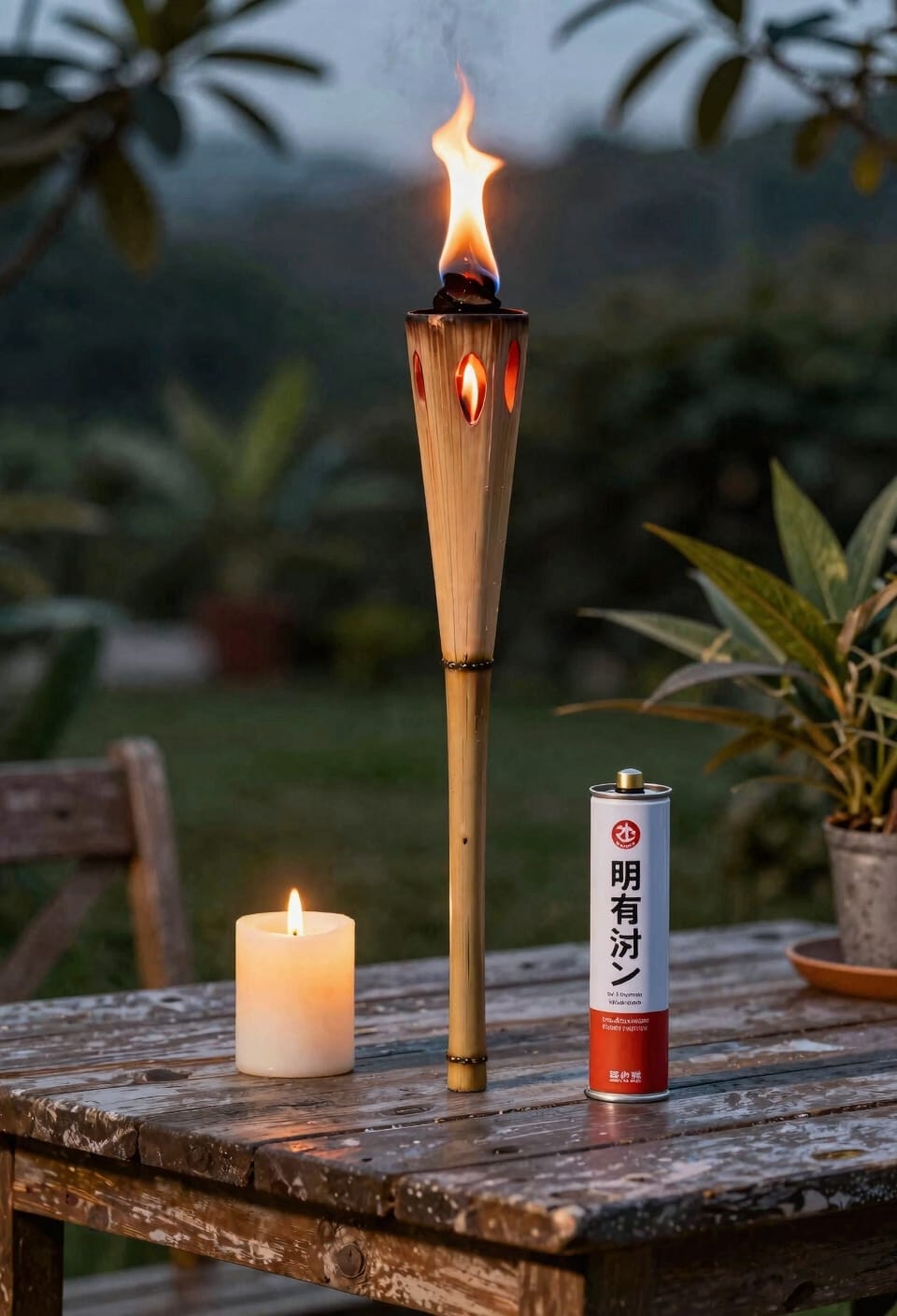
Now here’s where things get real, because not all torch fuel is created equal—and choosing the wrong one can turn your backyard ambiance into a smoky mess. You’ve got three main players: citronella oil (the scented alternative that smells nice but smokes like a factory), kerosene (the workhorse), and pure paraffin oil (the smokeless MVP). Citronella gives you mosquito-fighting vibes and pleasant scent, though you’ll need serious wick maintenance to control the smoke. Pure paraffin burns cleaner and longer with minimal additives—your lungs will thank you. Here’s the thing: lower-quality fuel and overly long wicks both create excessive smoke, so trimming your wick to quarter-inch keeps flames happy and air quality intact.
Do Tiki Torches Actually Repel Mosquitoes?
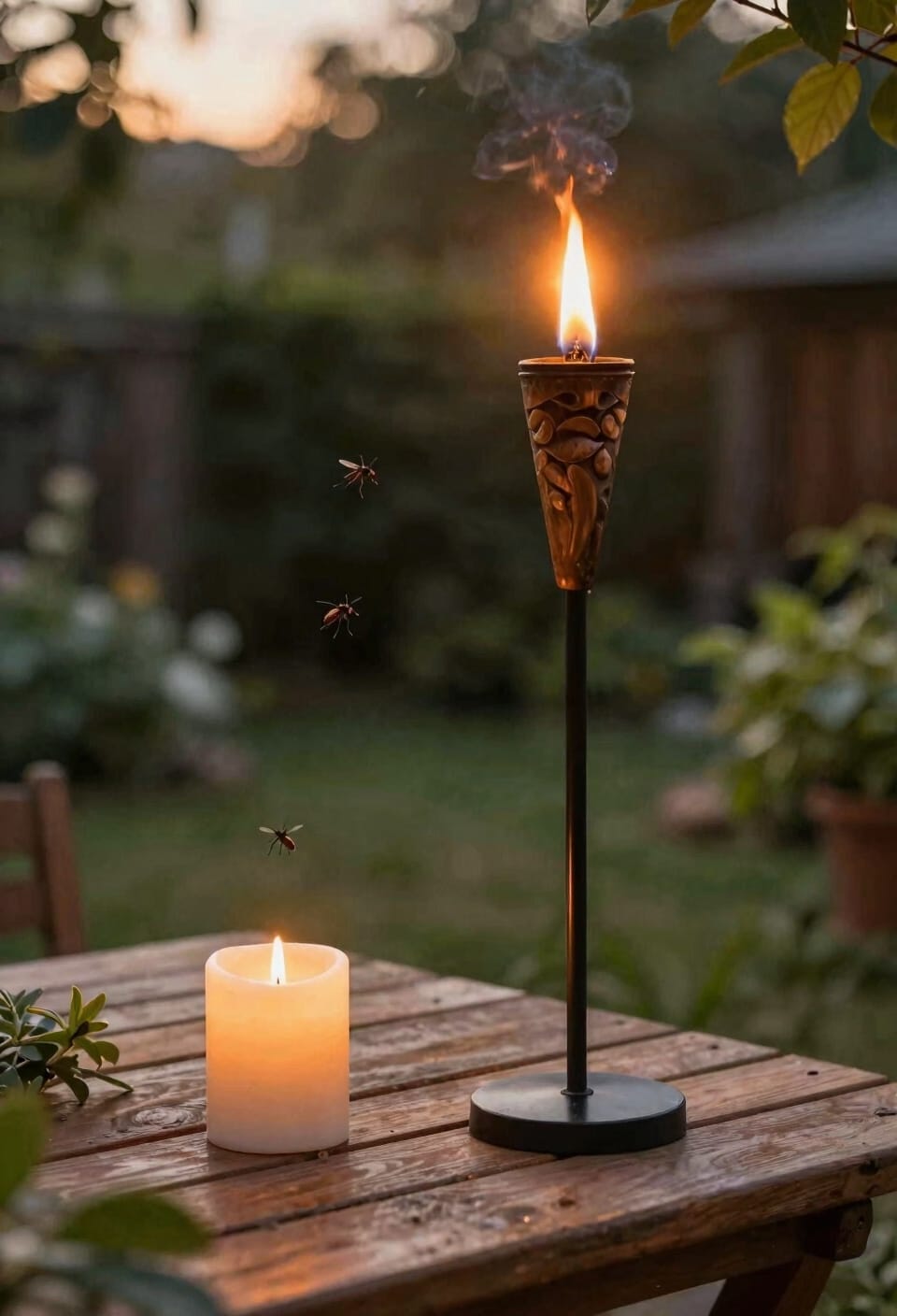
Tiki torches are brilliant for ambiance and mood, but if mosquito defense is your primary goal, they’re basically aesthetic props that’ll disappoint you come dusk. Here’s the thing: citronella efficacy drops fast—we’re talking 97.9% effectiveness down to 57.7% after just two hours. You get maybe ten minutes of real mosquito protection compared to 360 minutes from DEET repellents. Mosquito behavior doesn’t change because of a flickering flame nearby; they’re not intimidated by ambiance. Each torch only protects within a three-foot radius, so you’d need multiple torches for any decent coverage. Bottom line? Burn them for the glow and vibe, absolutely. But don’t count on them as your bug defense strategy. Pair them with actual repellent instead.
Safe Placement for Torches and Candles
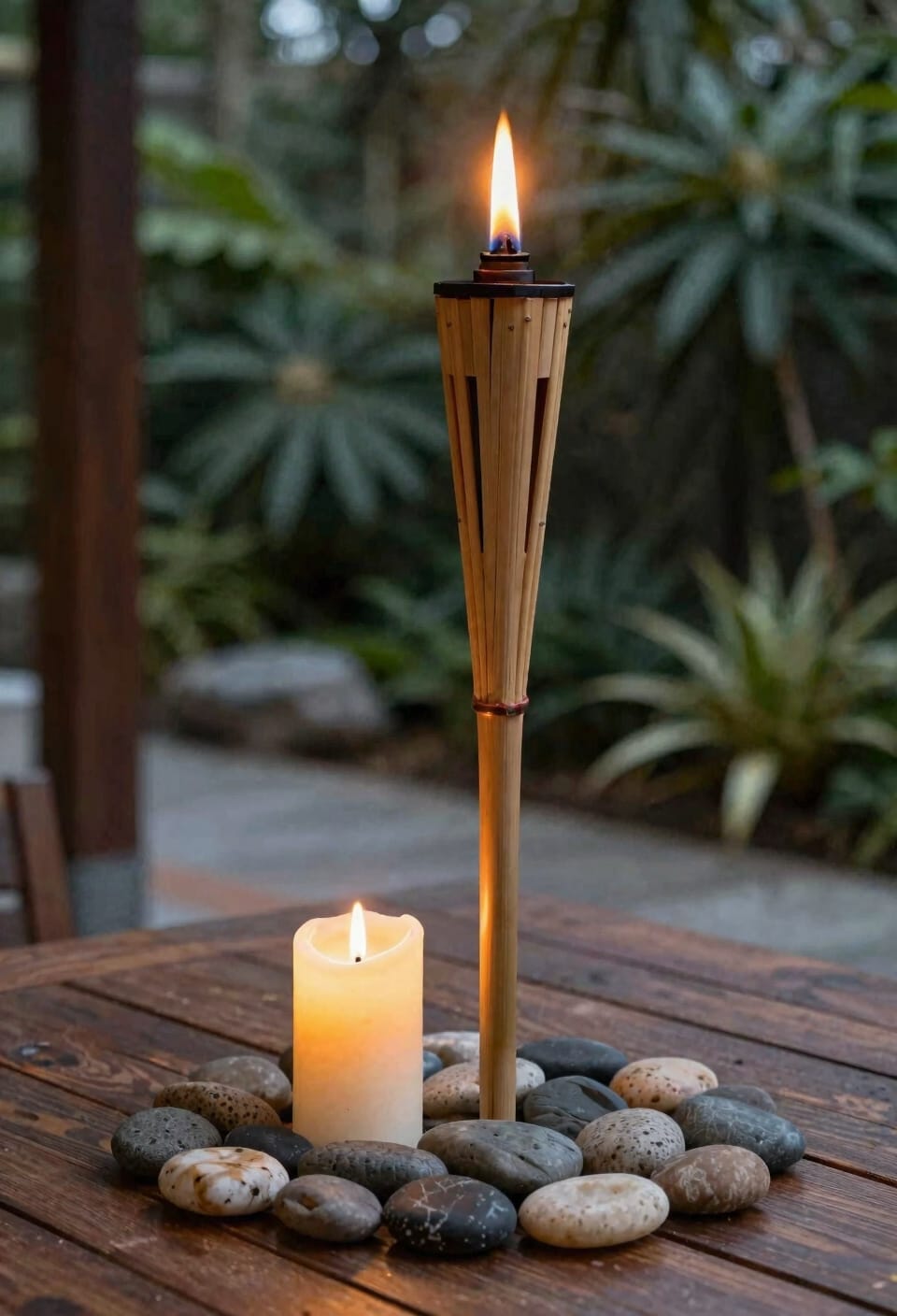
Whether you’re lighting up the patio with tiki torches or clustering candles across your deck, placement matters—a lot—because the difference between a cozy evening and a trip to the emergency room is basically just a few feet of bad judgment.
Space torches 6 to 8 feet apart and keep them at least 6 feet away from your house, trees, and anything flammable. Lit torches can’t move—seriously, don’t try—so pick your spots carefully before you light up. For candles, use heat shields (those metal rings that slip over holders) to protect surrounding surfaces from radiant warmth. Set them on stable, level ground away from drafts and fabric. Look, good placement takes two minutes and saves you from becoming a cautionary tale.
What You’ll Actually Spend Over a Season
Once you’ve got your setup locked down and you’re not about to accidentally set your deck railing on fire, the real question becomes: how much is this going to cost me? Look, tiki torches seem cheap upfront—maybe thirty bucks each—but seasonal expenses add up fast. You’re buying fuel constantly, and replacement frequency depends on how often you’re actually using them. A standard torch burns about an hour per fill-up, so if you’re hosting weekly gatherings, you’re refueling constantly. Outdoor candles? They’re steadier financially. You buy a few quality ones, trim the wicks properly, and they last. The real savings come from not constantly replacing empty fuel bottles. It’s the difference between nickel-and-diming yourself all summer versus a solid investment upfront.
Designing Your Ideal Setup by Space and Budget
All right, now that you know what you’re actually spending comes down to fuel costs and replacement cycles, let’s talk about matching your torch or candle setup to what you’ve actually got—both in terms of square footage and what you’re willing to drop on it. Your layout planning matters here. A small patio? Two or three quality torches give you enough ambiance without overkill. Bigger deck? You’ll want four to six, spacing them six feet apart for decent coverage and safe movement. Budget allocation depends on whether you’re chasing mosquito protection (spoiler: torches aren’t great at it) or pure mood lighting. Candles cost less upfront but need replacing constantly. Torches? Higher initial investment, longer burn times. Pick what matches your actual usage.
Maintenance and Off-Season Storage
Now, here’s the thing—you can’t just toss your torches in the garage come September and expect them to work flawlessly next summer. Before storage, you’ll want to focus on wicks trimming to about a quarter-inch and ensuring your container sealing is airtight to prevent fuel evaporation and debris accumulation. Let leftover fuel cool completely; moving a hot torch invites nasty burns. Store torches upright in a dry location away from temperature extremes, which can degrade fuel quality. If you’re using oil-based torches, drain them entirely before the off-season—stale fuel gums up wicks something awful. Clean the inside of containers with a soft cloth, removing any soot or residue. Come spring, you’ll appreciate the effort. Your torches will light reliably, and you won’t waste fuel troubleshooting preventable problems.
Deciding Between Torches and Candles: A Quick Checklist
Before you stock up on either torches or candles for your outdoor space, it helps to know what you’re actually trying to accomplish—because the two aren’t interchangeable, and picking the wrong one means wasting money on something that won’t do what you need.
Choose torches if you want real flame ambiance and don’t mind tending to fuel. Pick candles when you’re after scent layering and cozy light without the fuss. Here’s the thing: torches give you mosquito protection (though honestly, wearable repellents work better), while candles excel at pure aesthetic appeal. Consider your space’s size, your safety comfort level, and whether you’ll actually use them year-round. That’ll narrow it down fast.
Frequently Asked Questions
Can I Use Regular Household Candle Wax or Oil in Outdoor Tiki Torches?
I wouldn’t recommend it. You’ll need fuel specifically designed for outdoor torches—propane, kerosene, or citronella oil. Household candle wax doesn’t work safely outdoors. Consider beeswax alternatives or scented compatibility options made for torches instead.
What’s the Safest Way to Extinguish a Burning Tiki Torch Quickly?
I’d never pour water on a burning torch—here’s why. You’ll want the smothering technique instead: carefully place a metal cover over the flame to extinguish it safely without water dissuasion risks.
How Do I Prevent Tiki Torch Fuel From Freezing in Cold Weather?
I’d recommend using winter additives specifically formulated for torch fuel to lower freezing points. You can also wrap insulating sleeves around your torch containers to protect them from extreme cold temperatures.
Can Tiki Torches Be Used on Windy Days Without Safety Risks?
I’d caution you—wind’s your torch’s silent adversary. I don’t recommend using them on blustery days without flame guards, as they’ll compromise safety through unpredictable flame behavior. You’ll need proper windy etiquette: secure placement and windbreaks.
What Should I Do if Torch Fuel Spills on My Skin or Clothing?
If you spill torch fuel on your skin or clothing, you’ll want to wash immediately with soap and water. For significant exposure, seek medical attention right away to prevent burns or complications.
Conclusion
Look, choosing between tiki torches and candles is like picking between Prometheus and a birthday cake—both bring fire, but for different reasons. You’ve got the data now: torches for drama and mosquito defense, candles for intimacy and portability. Your ideal setup probably involves both, honestly. Start small, test your space, and don’t overthink it. Your patio’s waiting.