As an Amazon Associate, we earn from qualifying purchases. Some links on this site are affiliate links at no extra cost to you. Our recommendations are based on thorough research and editorial judgment.

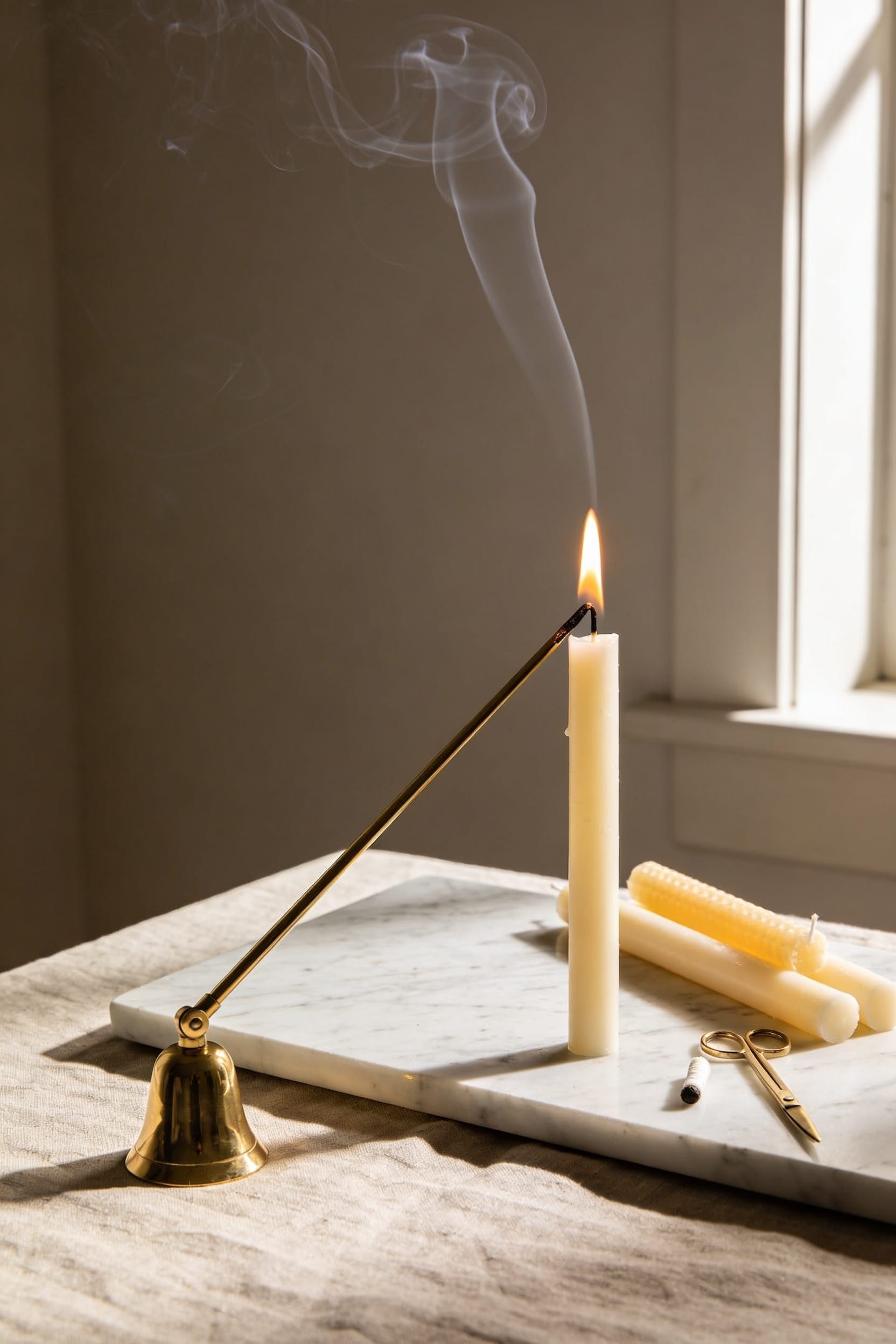
How to Use a Candle Snuffer for a Smoke-Free, Clean Extinguish

I hold the snuffer by its handle, approach my candle from the side, and position the bell-shaped dome just above the flame. I hover there briefly, then lower it over the wick for about three to ten seconds until the flame suffocates. Lift straight up and you’re done—minimal smoke, zero soot, and your walls stay pristine. It’s genuinely that simple, though there’s definitely more to master.
Key Takeaways
- Approach the candle from the side and position the snuffer bell just above the flame before lowering it.
- Lower the dome over the wick for three to ten seconds to smother the flame without oxygen.
- Lift the snuffer straight up after extinguishing to prevent smoke and soot from settling on surfaces.
- Match the snuffer bell size to your candle’s flame for optimal fit and complete extinguishing.
- Wipe the snuffer with a damp cloth after each use to remove wax and prevent contamination.
How to Snuff a Candle (5 Simple Steps)
All right, here’s the thing—if you’ve been blowing out your candles like you’re extinguishing birthday cake, we need to talk. Using a candle snuffer is actually ridiculously simple, and I’m genuinely baffled why more people don’t do it.
Here’s your steady approach: hold snuffer by the handle and approach your candle from the side—not from above, which is basically asking for a wax explosion. Position the bell-shaped dome just above the flame and hover there for a second. Lower it over the wick for about three to ten seconds until oxygen gets cut off and your flame dies. Lift straight up and away. Done. No smoke, no soot, no ruined wax pool. Your candle—and your air quality—will thank you.
Why Snuffing Beats Blowing Your Candles Out
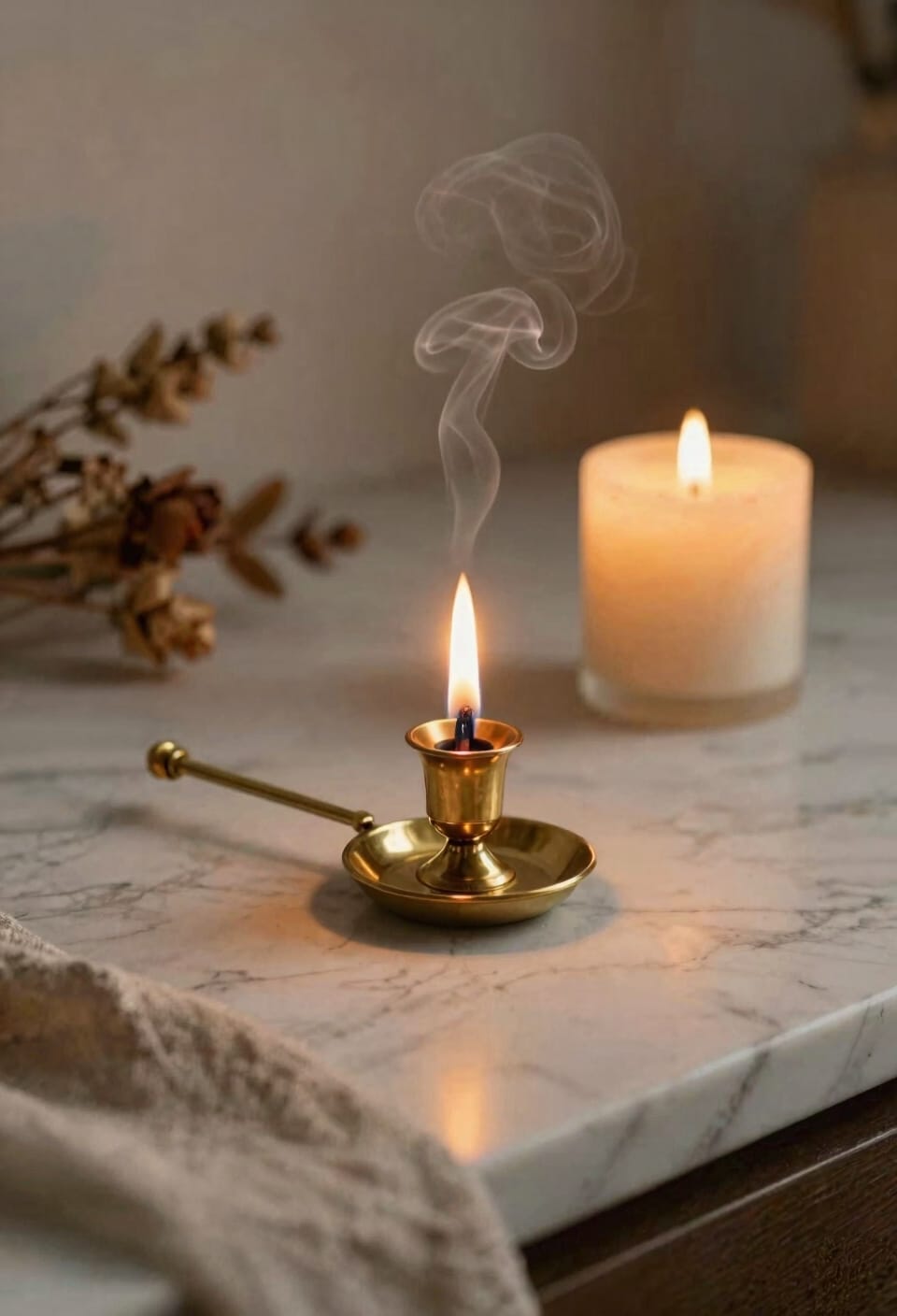
When you blow out a candle, you’re effectively creating a tiny wax volcano—hot air forces particles upward, smoke billows into your room, and soot settles everywhere like unwanted dust bunnies. Not ideal, right?
A snuffer does the exact opposite. By smothering the flame with a bell-shaped dome, you’re depriving it of oxygen without any forceful air movement. No smoke. No splatter. No soot coating your walls or ceiling like some kind of indoor pollution art project.
Here’s the thing: blowing also disrupts your wick and compromises scent preservation. That smoky smell? That’s not the fragrance you paid for. With a snuffer, you keep the clean air in your home and the scent integrity of your candle intact. Your lungs—and your walls—will thank you.
Stop Making These Common Snuffing Mistakes
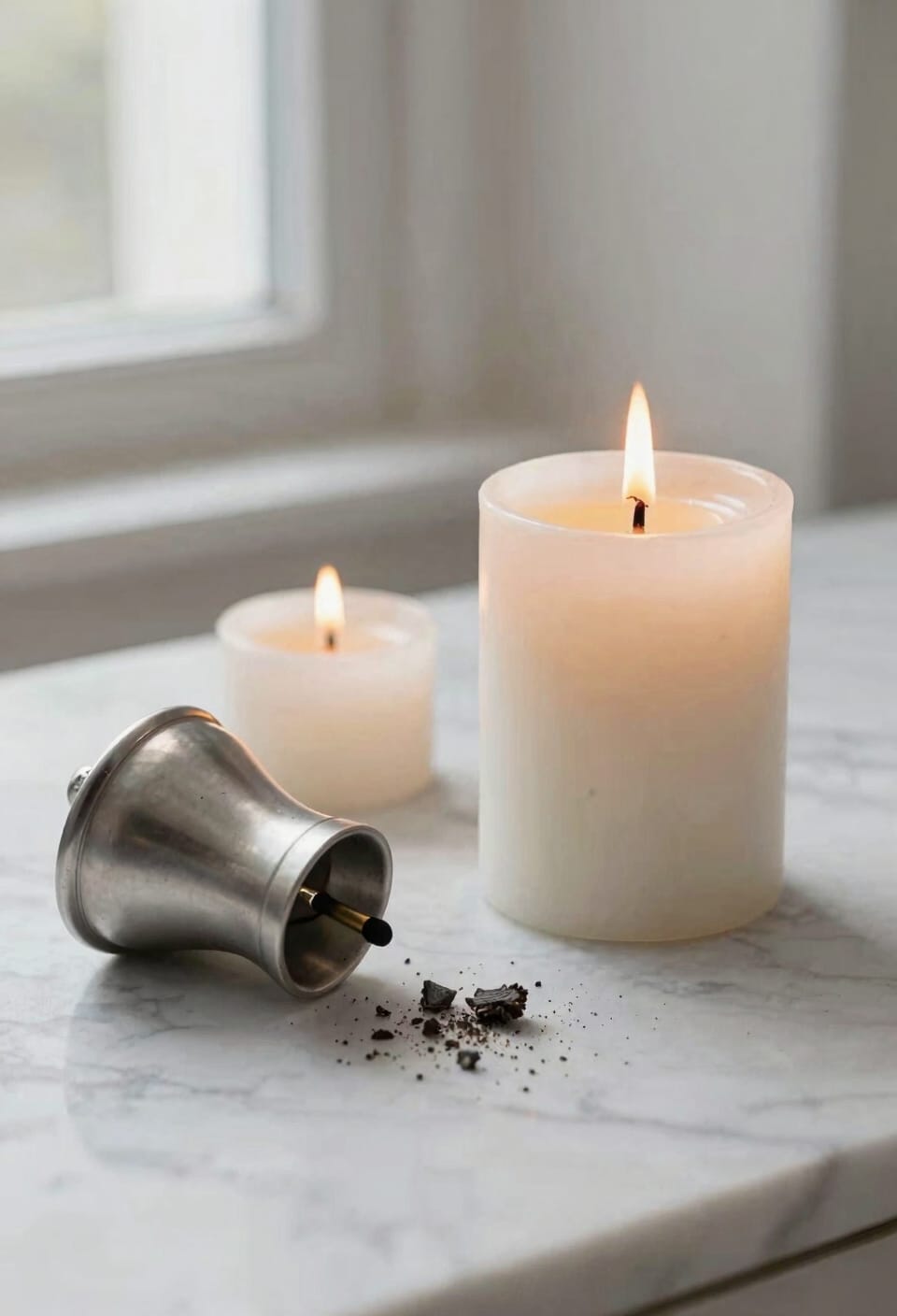
Even if you’ve nailed the basic snuffing technique, it’s shockingly easy to slip into habits that’ll wreck your candle—and honestly, I’ve done every single one of these mistakes myself. The biggest culprit? Dipping that snuffer bell straight into the wax pool. You’re introducing debris and damaging the wick faster than you can say “tunneling.” Then there’s approaching from above, which risks burns and uneven extinguishing. Using angled approaches or undersized snuffers for larger flames creates lingering embers and smoke. I’ve also learned the hard way that failing to clean your snuffer between uses causes wax contamination—that residue transfers right back to your next candle. Just grab a damp cloth after each use and save yourself the frustration.
Pick the Right Snuffer Size for Your Candles
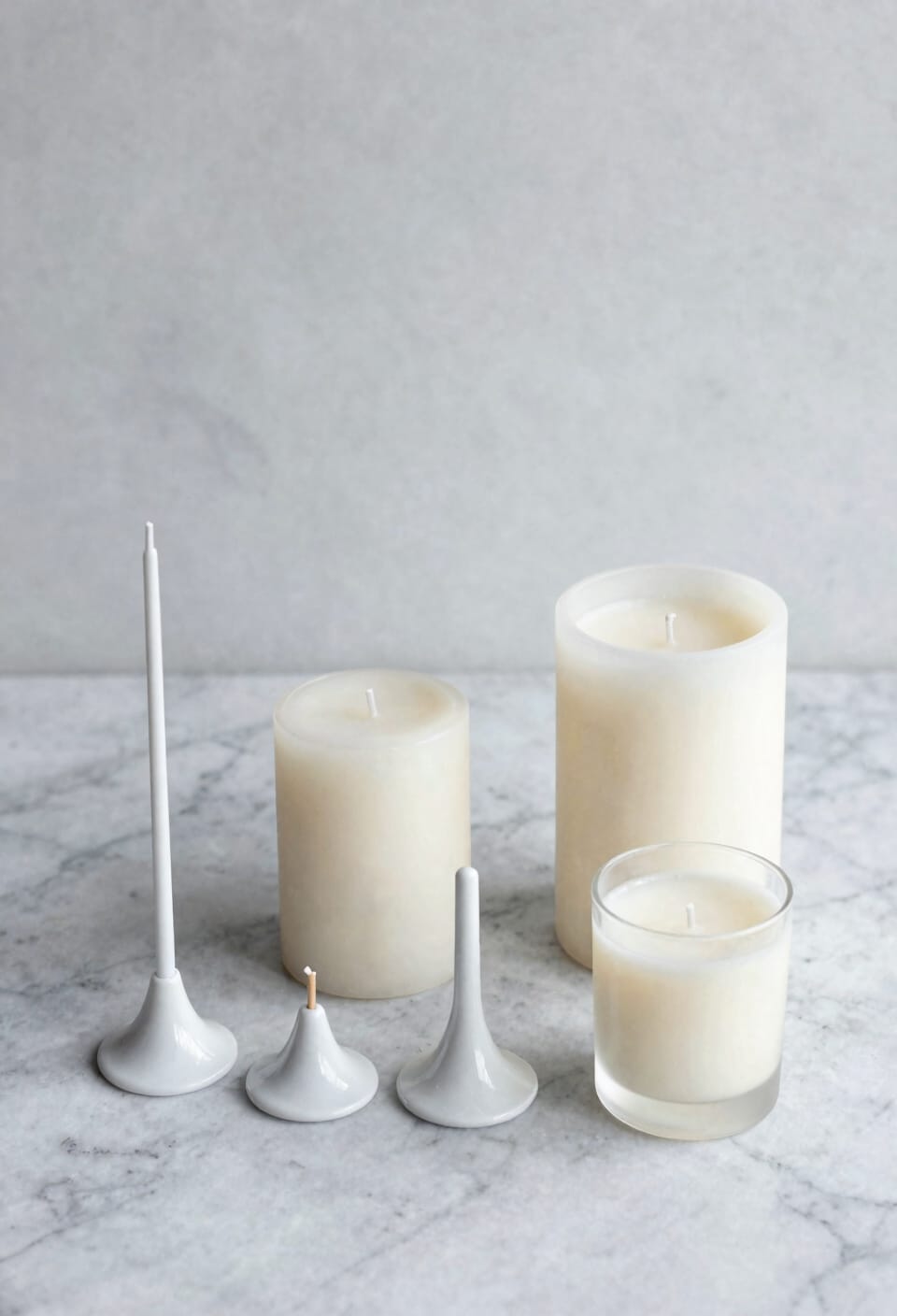
Now here’s something I wish someone had told me years ago: you can’t use the same snuffer for every candle you own and expect great results. I learned this the hard way when I tried using a small snuffer on a pillar candle—that thick, chunky three-wick situation—and basically just waved it around like I was blessing the flame. The bell needs to match flame dimensions for ideal fit. Think about handle comfort too; you want something that feels natural in your grip without straining to reach into a deep jar. A snuffer that’s too large suffocates nearby candles. Too small and you’re hovering forever, looking ridiculous while smoke creeps out anyway. Measure your candles first, then size accordingly.
Keep Your Snuffer Clean and Long-Lasting
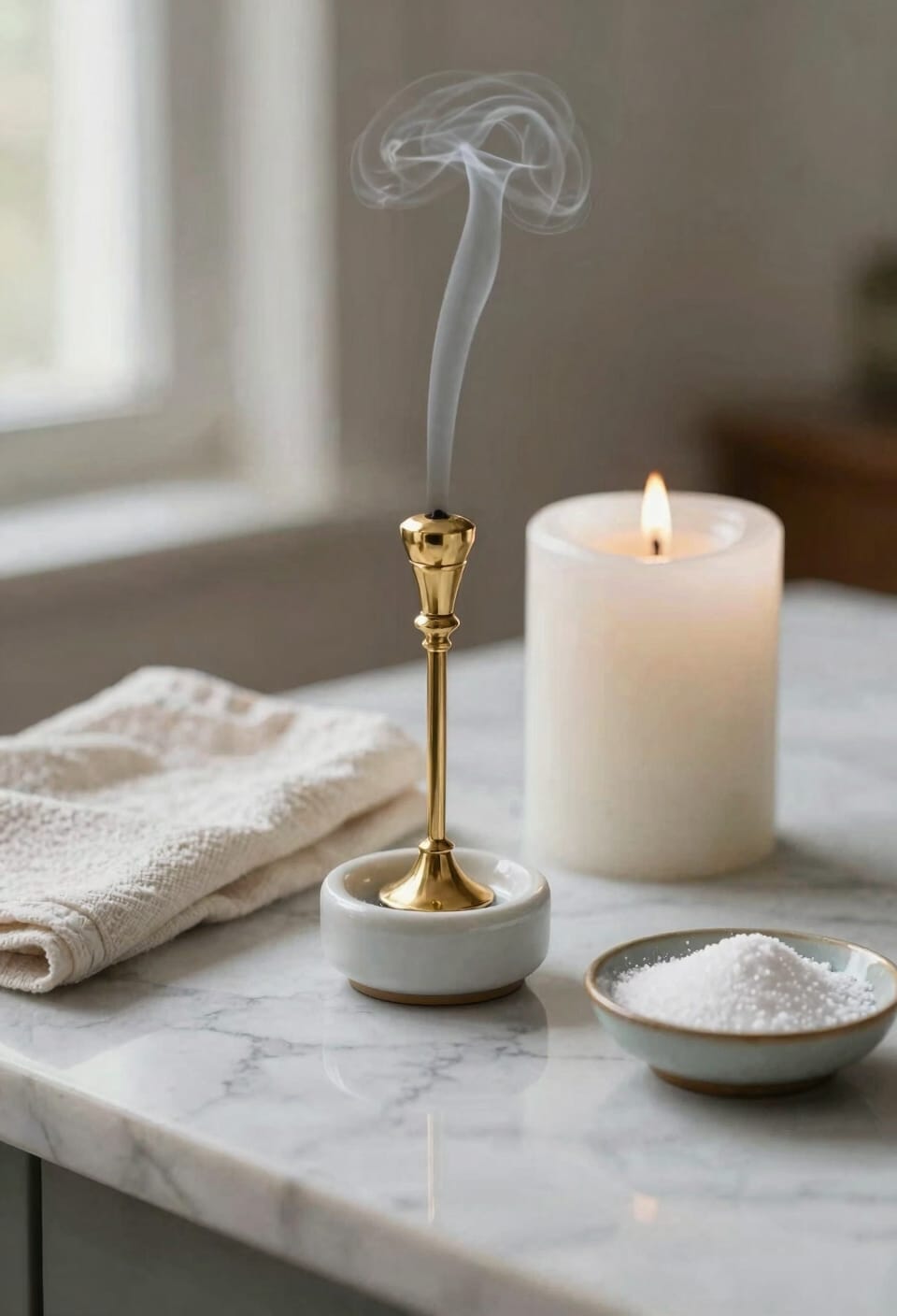
Most people treat their snuffer like a single-use kitchen gadget—pull it out, use it, shove it back in a drawer—and then wonder why it’s leaving black streaks on their candles. Don’t be that person. Routine maintenance takes literally two minutes and makes all the difference. After each use, wipe your snuffer with a damp cloth to remove wax or soot buildup. For stubborn residue, soak the bell portion in boiling water, chip away dried wax, then dry thoroughly. Clean before using it again to prevent transferring gunk onto your next candle. Store your snuffer in a cool, dry spot—not buried under kitchen towels where it collects dust. Regular care extends its lifespan and keeps your candles pristine.
Snuffer or Wick Dipper: What Actually Works Better?
Envision this: you’re standing over a flickering candle at 10 p.m., and you’ve got two tools in your hand—a snuffer and a wick dipper—and you’re genuinely unsure which one won’t sabotage your candle’s future.
Here’s the thing: both work, but differently. A snuffer smothers flame with zero contact—no mess, no wicks maintenance hassle, pure scent retention. A wick dipper dunks your wick into the wax pool, bending it down to extinguish the flame while prepping it perfectly for your next burn.
I prefer the snuffer for its hands-off approach. But if you’re serious about wicks maintenance and want your candle burning evenly every single time, the dipper’s your secret weapon. Pick whichever matches your vibe—just stop blowing them out like birthday candles.
Fix Lingering Smoke and Stubborn Flames
You’ve probably noticed that sometimes when you lift your snuffer away, a thin wisp of smoke curls up from the wax pool like the candle’s staging a tiny protest—and occasionally, you’ll lower the dome only to find the flame stubbornly flickering back to life the moment you lift it again. Here’s the thing: you’re dealing with incomplete ember suppression. Hold the dome down for the full 10 seconds—I know it feels longer, but patience matters. If smoke persists, you’ve got lingering embers that need oxygen deprivation time. For stubborn flames, hover slightly longer or angle your approach to make certain the bell covers the entire flame zone. These smoke traps happen when your timing’s off, not your technique. Practice makes perfect, and honestly, your candles will thank you.
Frequently Asked Questions
Can I Use a Candle Snuffer on Scented Candles Without Affecting Their Fragrance?
Yes, I’m confident you can use a snuffer on scented candles while preserving their fragrance. By avoiding smoke through proper snuffer technique and maintaining wick trimming, you’ll protect the scent’s integrity without smoky interference.
What’s the Best Way to Store a Candle Snuffer When Not in Use?
I’d store your snuffer in a protective sleeve to shield it from dust and damage. You’ve got storage options like a drawer, shelf, or decorative holder—just keep it clean and accessible for your next candle session.
Are Candle Snuffers Safe to Use on Floating Candles or Water Bowls?
I’d recommend caution with floating wicks in water bowls. While you can use a snuffer, you’ll want to approach carefully from the side to avoid water splashing. Water safety matters—keep the snuffer dry during use.
How Often Should I Replace My Candle Snuffer for Optimal Performance?
I’d recommend replacing your snuffer when it shows wear or damage affecting performance. With proper cleaning after each use, you’ll extend its snuffer lifespan markedly. Most quality snuffers last years before replacement frequency becomes necessary.
Can a Candle Snuffer Work on Gel or Specialty Wax Candles?
Yes, I’ve found candle snuffers work excellently on gel candles and specialty wicks. You’ll get the same smoke-free extinguishing because the oxygen-deprivation method works universally across wax types when you’re using proper technique.
Conclusion
Look, you’ve basically got a million reasons to snuff instead of blow—cleaner flames, less smoke, zero wax spattering everywhere. I’m talking about the difference between a graceful candle death and what looks like a tiny explosion happened in your living room. Grab the right snuffer, keep it clean, and you’re golden. Your candles—and your lungs—will thank you endlessly.