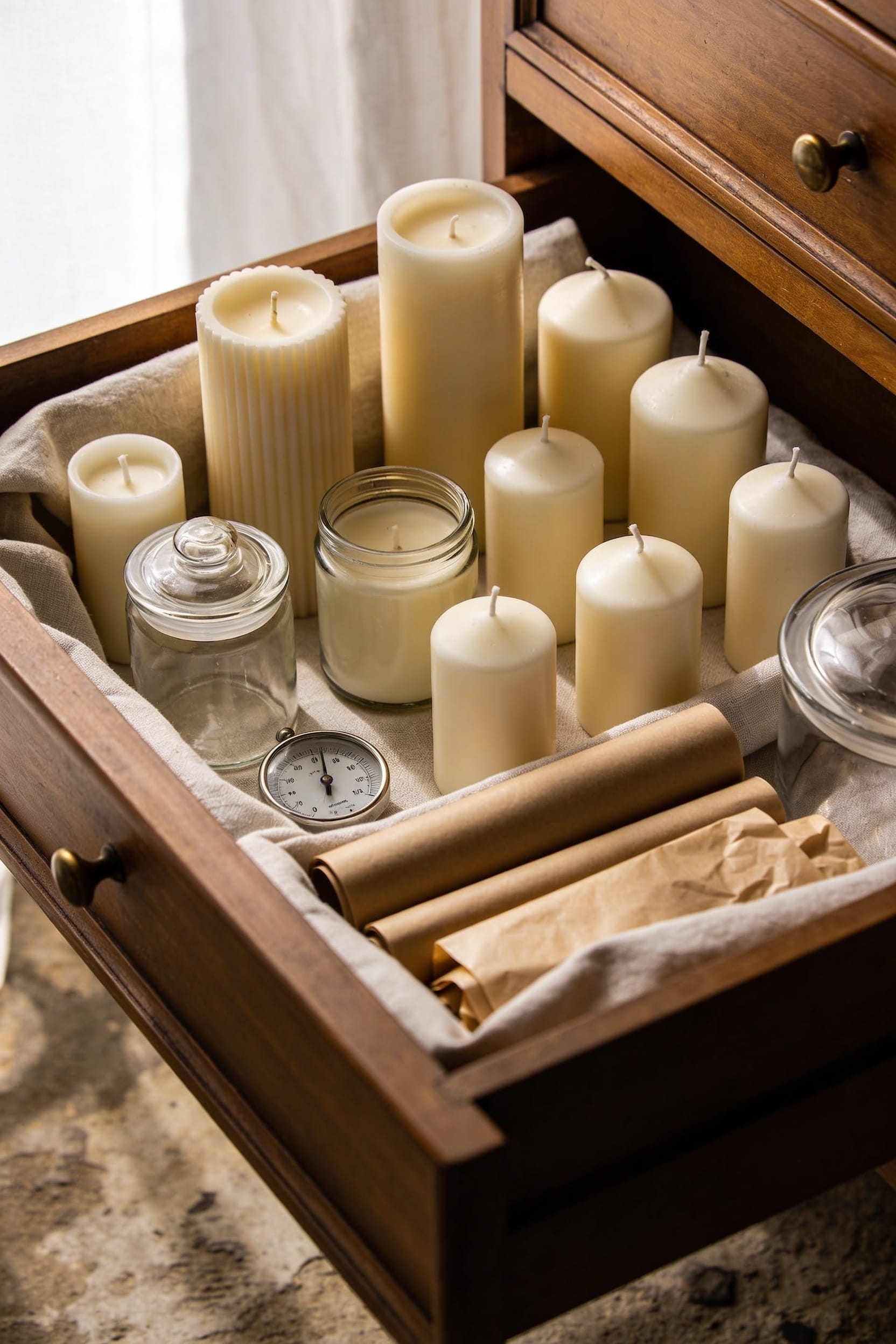

All right, here’s the thing: I store my candles in cool, dark interior closets between 60–75°F, lids on tight to lock in fragrance and block dust. I wrap long-term keepers in acid-free tissue—regular paper transfers dyes and weakens scent—then seal them in airtight containers positioned upright. I rotate them monthly to rebalance fragrance, inspect for warping or discoloration, and keep everything away from radiators and artificial light. One year’s your sweet spot for peak scent retention, though there’s more nuance to preventing that chalky, faded disappointment.
Key Takeaways
- Store candles upright in cool, dark spaces between 60–75°F to prevent warping and fragrance fading.
- Replace lids immediately after burning and use airtight containers to block dust and preserve scent.
- Wrap long-term candles in acid-free tissue before storage to prevent dye transfer and deterioration.
- Rotate stored candles monthly and flip positions to maintain consistent fragrance and prevent settling issues.
- Inspect monthly for discoloration, warping, wick damage, or seal leaks indicating compromised storage conditions.
Prepare Your Candles Before Storage
Before you tuck those candles away, you’ve got to do a little prep work—and I promise it takes about five minutes and makes a genuinely massive difference in how they’ll burn when you finally light them again. Start by trimming your wick to a quarter inch. That’s the sweet spot for preventing soot and uneven flames later. Next, do a quick scent testing by getting your nose close to the wax—you’re checking that nothing’s gone weird or faded. Let the wax pool cool completely if you’ve recently burned it; rushing this causes uneven settling that’ll haunt you. Finally, wipe away any dust or debris from the surface. These small acts of wick maintenance and attention protect your candle’s entire future performance.
Choose a Cool, Dark Storage Location
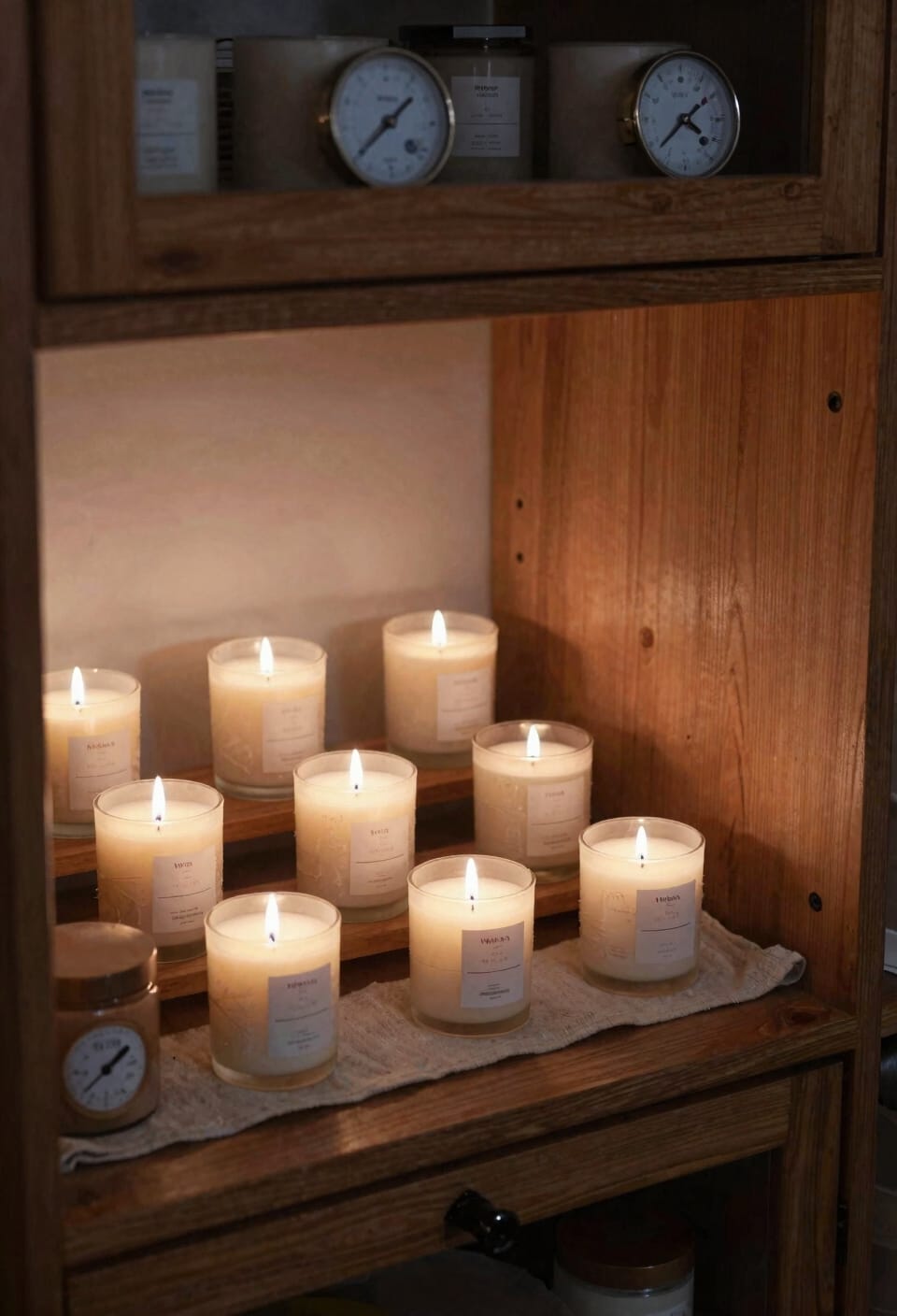
Now that your candles are prepped and ready, it’s time to find them a proper home—and I’m not talking about your attic or garage, where temperature swings wildly like a mood ring on a hot day. You’ll want a cool, dry, dark spot that stays consistently temperate. Think inside a bedroom closet or kitchen cabinet, somewhere you’d store chocolate you didn’t want to melt. Avoid basements where humidity creeps in and ruins everything. Block artificial lighting too—harsh indoor light actually weakens fragrance over time, which seems unfair but it’s true. Skip anywhere near radiators, heaters, or vents. Your candles will thank you by looking gorgeous and smelling like they’re supposed to when you finally light them up.
Cover and Position Candles Properly
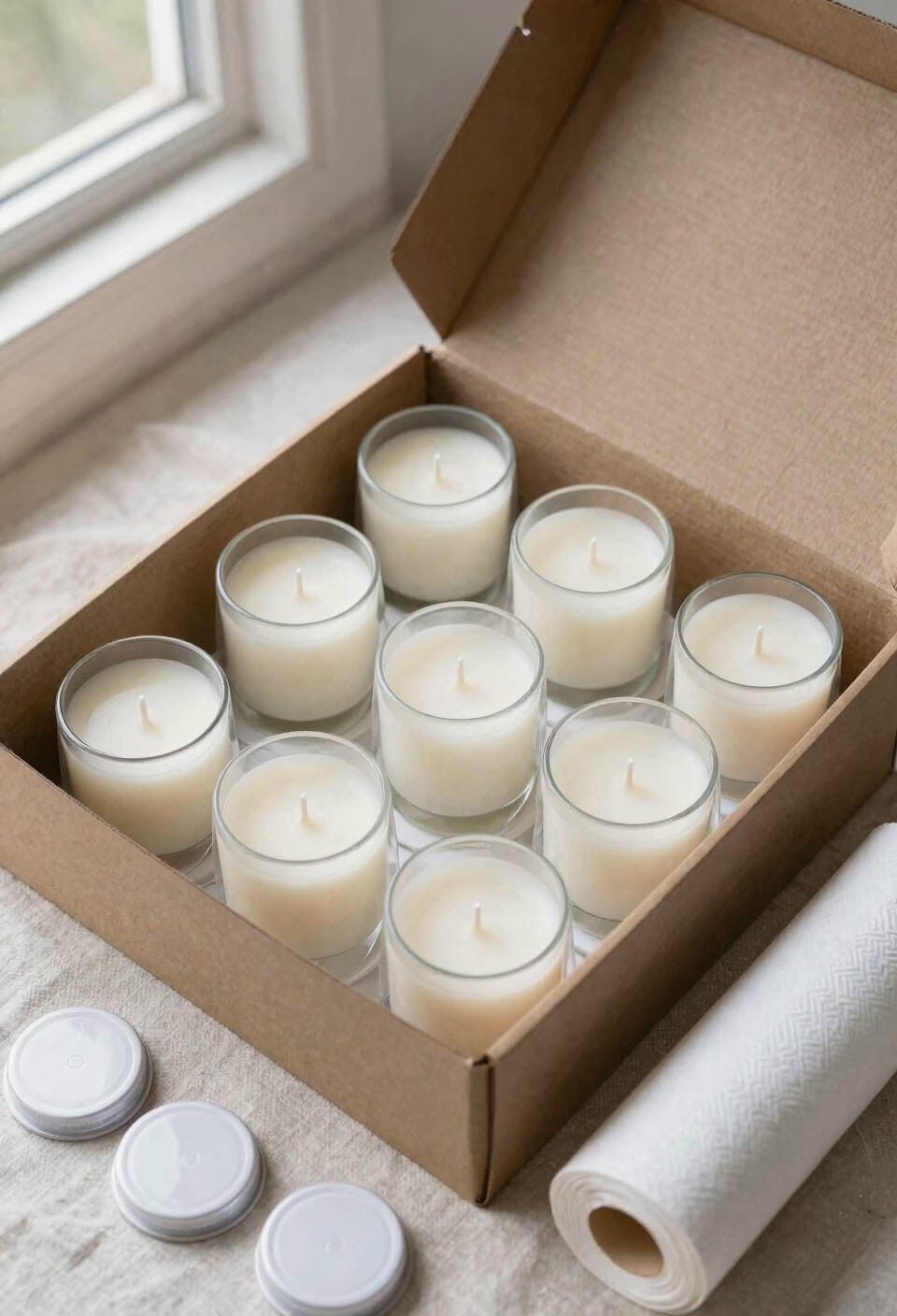
Once you’ve got your candles nestled in that perfect cool, dark spot, you’re only halfway there—because where they sit and how you cover them makes a real difference in whether they’ll look and smell amazing months from now.
All right, lid etiquette matters more than you’d think. Slap that cover on immediately after burning—I’m talking within minutes. This blocks dust, debris, and prevents your fragrance from evaporating into the ether. For your stacking strategy, store candles upright to avoid warping. Use acid-free tissue between layers if you’re going vertical. Keep those wicks centered and trimmed to a quarter-inch before storage. Your future self will thank you when that candle burns like it’s brand new.
Prevent Wax Damage With Temperature Stability
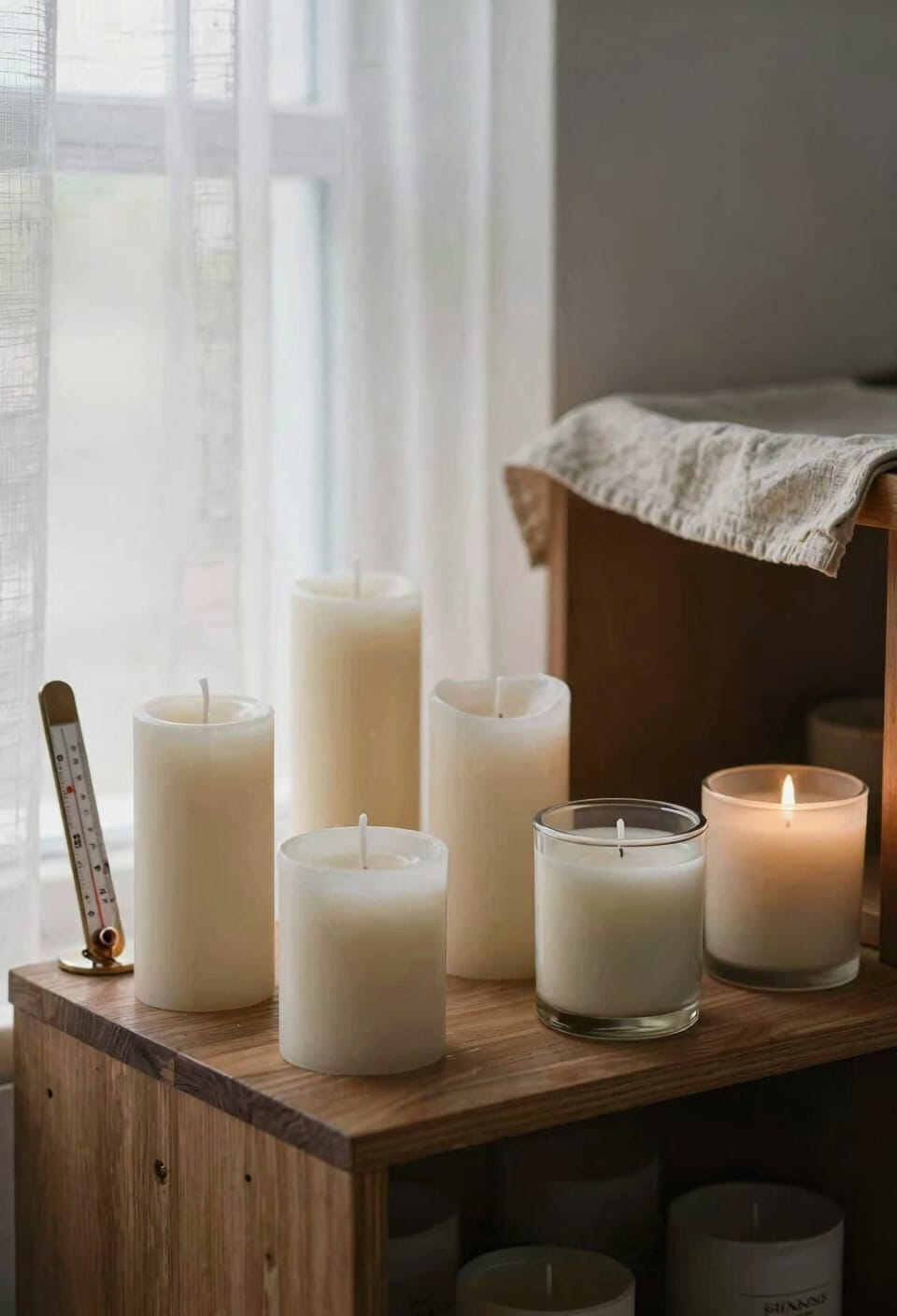
Temperature swings are basically the arch-nemesis of a well-kept candle—they’ll soften your wax, cause it to settle unevenly, and mess with the fragrance you paid good money for. Here’s the thing: wax is temperamental stuff. It expands and contracts like it’s got its own mood swings, which is why temperature regulation matters so much.
You’ll want to store candles in spaces that stay consistently cool and stable. Think closets, cabinets, or interior shelves—not garages or attics where temperatures bounce around like a toddler on a trampoline. Thermal insulation from your storage container helps too. Avoid radiators, vents, and direct sunlight that’ll basically cook your candles into lumpy disappointments. Keep them between 60–75°F if you can manage it. Steady wins this race.
Use Airtight Containers for Long-Term Storage
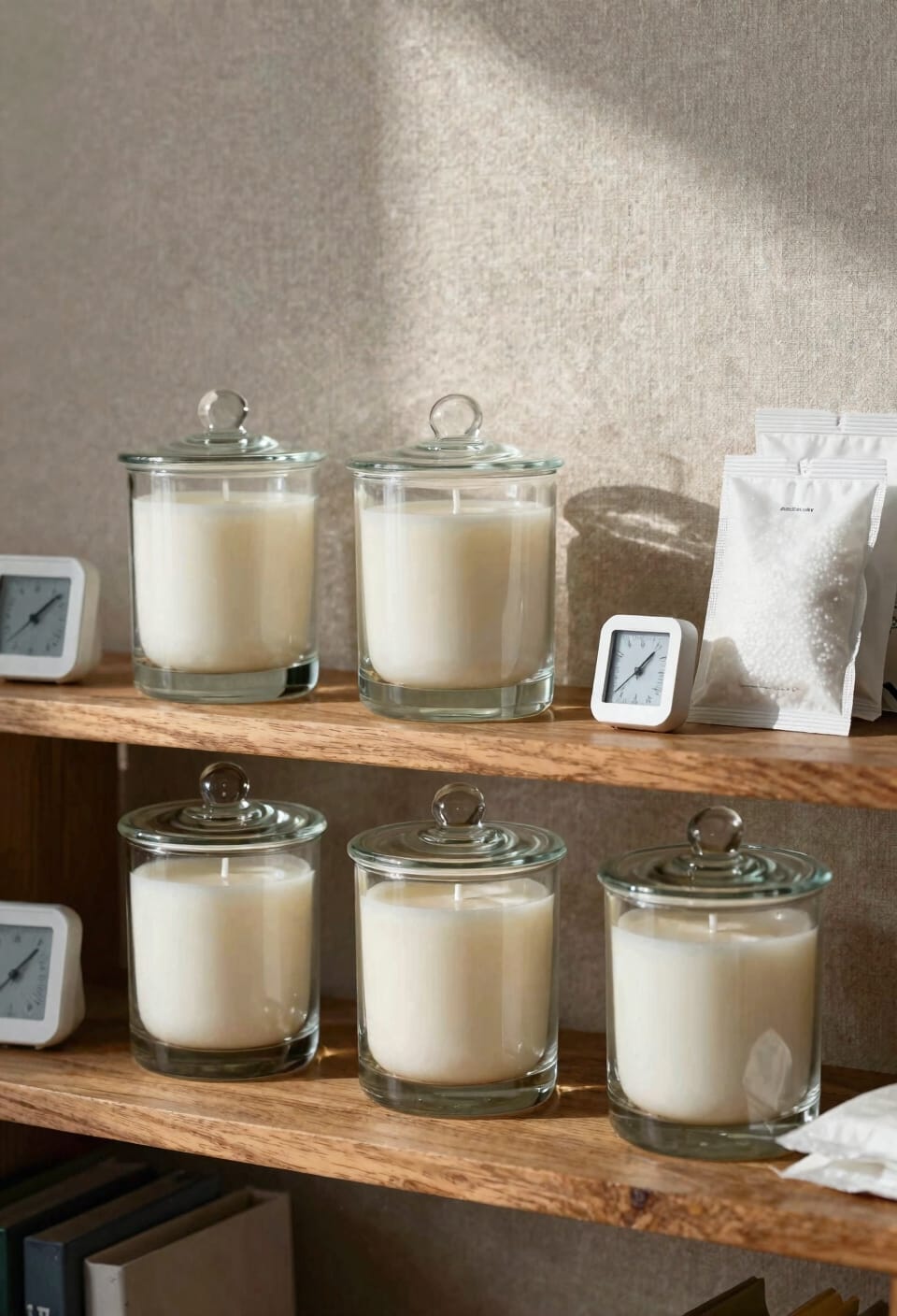
Beyond keeping your candles in a stable temperature zone, there’s another layer of protection that’ll genuinely extend their lifespan: airtight containers. Here’s the thing—sealed jars act as moisture barriers, preventing humidity from warping your wax or dulling that expensive fragrance you paid for. I’m talking glass containers with tight-fitting lids, plastic storage boxes, or even your candle’s original packaging if it seals properly. When you lock out air and moisture, you’re essentially pausing deterioration. Store these sealed containers vertically in a cool closet or cabinet, and you’ve created an environment where your candles can basically hibernate. Your future self will thank you when you burn a candle six months later and it smells exactly like you remember.
Wrap Long-Term Candles in Acid-Free Tissue
Protecting your candles with acid-free tissue paper might sound like overkill—I get it—but here’s the thing: regular tissue or newspaper can actually transfer acids and dyes onto your wax over time, which messes with both appearance and scent. Acid-free benefits are real. Think of archival wrapping as insurance for your investment.
When you wrap long-term candles, you’re creating a buffer against environmental nasties. Acid-free tissue won’t degrade your wax or interact with fragrance oils, keeping everything pristine during storage. Layer it gently around the candle, then pop it into an airtight container or your original packaging.
It takes maybe thirty seconds per candle. Your future self—the one who pulls out that forgotten candle in six months—will thank you.
Store Candles Within One Year for Best Results
Candles are made from organic materials—wax, fragrance oils, and wicks—and they don’t have an indefinite shelf life. I know that sounds disappointing, but here’s the thing: your stash will degrade over time. I’m talking about that expiration timeline we don’t love discussing. Most candles perform best within one year of purchase, which honestly isn’t that long when you’ve got twelve half-burned pillars hiding in your closet. Pay attention to freshness indicators like dulled fragrance throw, discolored wax, or a wick that won’t stay centered. If your candle smells faint or looks off, it’s probably past its prime. Store them strategically during that year, and you’ll avoid the frustration of lighting something that barely scents your room. Trust me, I’ve learned this the hard way.
Maintain Your Stored Candles With Regular Rotation
If you’re stashing candles away for more than a few weeks, you’ll want to rotate them occasionally—and I don’t mean like a rotisserie chicken, though that mental image is pretty funny. Rotating your candles monthly guarantees even scent rebalancing throughout the wax, preventing fragrance from settling unevenly or fading in one spot. Think of it like shuffling a deck of cards—you’re just keeping things distributed fairly. When you rotate, you’re also giving each candle a chance to rest in different positions, which helps maintain consistent cold throw (that’s the unlit scent you smell when you walk by). Pull them out, flip their positions in your storage container, and you’re golden. Your future self will thank you when every candle burns beautifully.
Inspect Candles Periodically for Signs of Damage
All right, here’s where a lot of people drop the ball: you’ve got to actually look at your candles every so often, especially if they’re sitting in storage for months at a time. Check for discoloration, warping, or any crusty buildup on the wax surface—that’s often wick corrosion, which happens when metal or debris oxidizes. Inspect the wick itself too. If it’s bent, darkened, or crumbly, your candle won’t burn properly when you finally light it. Watch for scent leakage around the container’s edges or seams; that means your seal’s compromised and the fragrance has already started escaping. A quick monthly scan takes thirty seconds and saves you from burning a dud.
Frequently Asked Questions
Can I Store Scented Candles Near Other Fragranced Products Without Scent Interference?
I’d advise against it. Storing scented candles near other fragranced products risks scent layering and compromises product compatibility. I recommend isolating them in separate, covered containers to preserve each product’s individual fragrance profile intact.
What Is the Ideal Temperature Range for Storing Candles Long-Term?
I’d recommend storing your candles between 60-70°F in a stable climate. Cool temperatures prevent melting, while consistent conditions preserve both scent potency and wax integrity. Fluctuations damage fragrance and shape.
Should I Store Pillar Candles Differently Than Container Candles?
Yes, I’d store them differently. Pillar care requires upright positioning to prevent warping, while unmolded storage keeps them vertical on flat surfaces. Container candles need their original packaging or covers for protection.
How Do I Restore a Candle’s Scent if It Has Faded During Storage?
I’ve found that once a candle’s scent fades, you can’t truly restore it. However, I recommend fragrance layering—pairing it with complementary scents—or exploring re-scenting techniques like adding fragrance oils to the wax surface.
Can I Store Candles in the Refrigerator or Freezer to Extend Shelf Life?
I don’t recommend storing candles in your fridge or freezer. These fridge myths and freezer risks cause condensation damage, wax cracking, and fragrance alteration. Instead, I’d suggest cool, dark, dry closets for peak preservation.
Related Guides
Keep the momentum going with Candle Storage Ideas: How to Keep Your Candles Fresh & Safe, How to Clean a Wax Warmer: Quick & Easy Methods That Work, and How to Remove Wax From a Candle Holder Without Damaging It.
Conclusion
Look, I’ve basically turned my closet into a candle mausoleum—acid-free tissue, temperature-controlled darkness, the whole nine yards. You’d think I’m preserving ancient artifacts instead of scented wax. But honestly? It’s worth it. Your candles’ll thank you by smelling like actual lavender instead of disappointment. Store ’em right, rotate ’em religiously, and you’ll never burn through regret again.