As an Amazon Associate, we earn from qualifying purchases. Some links on this site are affiliate links at no extra cost to you. Our recommendations are based on thorough research and editorial judgment.

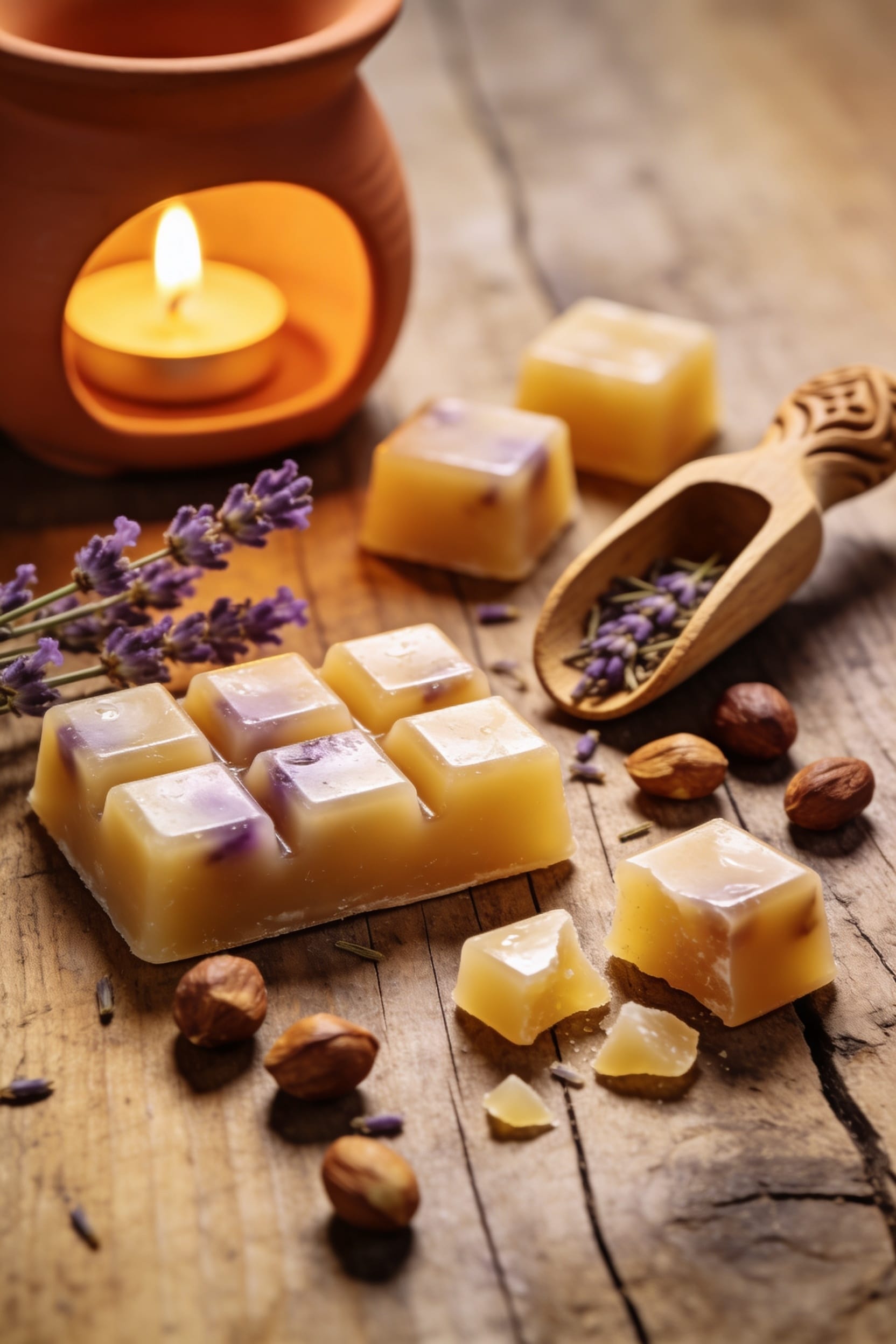
Wax Tarts vs. Wax Melts: Are They the Same Thing?

Functionally? They’re identical—both are scented wax chunks you heat in a warmer to release fragrance. But here’s the thing: tarts come poured into silicone molds as larger pieces you can break apart for custom intensity, while melts are pre-portioned into ~1 oz cubes for grab-and-go convenience. Tarts typically use harder wax formulations that hold fragrance longer across multiple melt cycles, whereas melts are softer for easier handling. Your choice really hinges on whether you want flexibility or simplicity, and which warmer you’re actually using.
Key Takeaways
- Tarts and melts are functionally identical scented wax products that heat in warmers to release fragrance through the same mechanism.
- Tarts use harder wax formulations poured into molds for durability and higher fragrance loads, while melts use softer wax for easier portioning.
- Tarts typically last longer per use and offer customizable scent intensity through breaking, whereas melts provide pre-portioned ~1 oz cubes for convenience.
- Warmer compatibility matters: tarts require warmers rated for their harder wax, as melts-specific warmers may overheat and damage tart performance.
- Tarts generally offer better long-term value with stronger scent throw and longevity, while melts suit users prioritizing grab-and-go convenience and scent layering.
Wax Tarts and Melts Are Basically the Same
When you start poking around the wax warmer aisle, you’ll notice the labels say “tarts,” “melts,” “cubes,” sometimes even “wickless wax”—and honestly, you shouldn’t stress about the terminology because they’re fundamentally the same product with different marketing departments. All right, here’s the thing: whether the package says “tart” or “melt,” you’re buying scented wax chunks designed to heat in a warmer and release fragrance. The scent terminology might vary between brands, but the actual product inside is nearly identical. Customer perception drives most of the naming confusion. One company calls them tarts, another calls them melts, and suddenly you think they’re different things. They’re not. Both melt the same way, both deliver scent the same way, and both work in the same warmers. Don’t overthink it.
What Makes Them Different: Shape, Size, and Portions
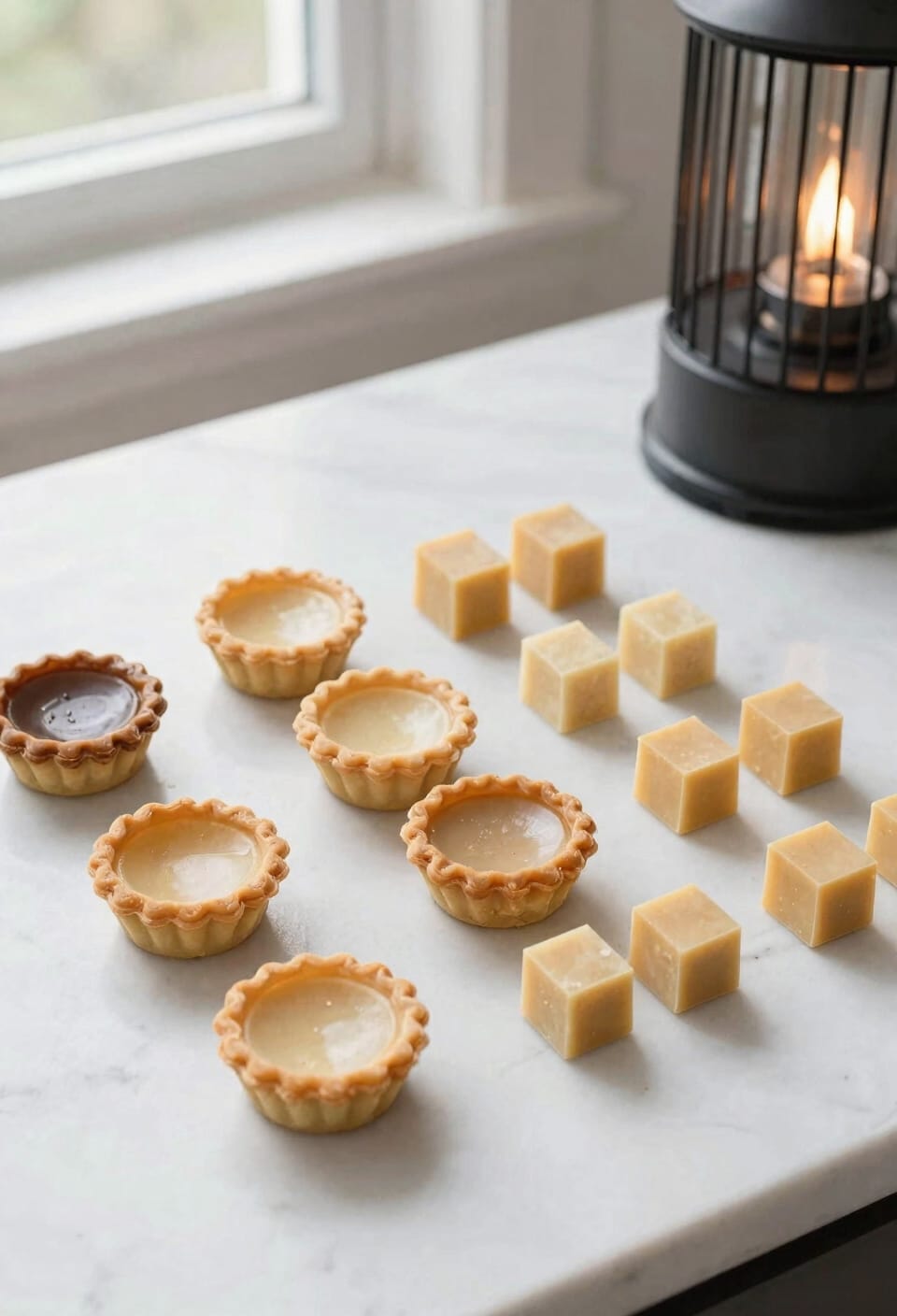
All right, here’s where things get interesting—because while wax tarts and melts are basically the same product, their shape and size actually matter more than you’d think. Wax tarts come poured into silicone molds in larger, moldable shapes, while melts arrive pre-broken into bite-sized cubes or fun shapes like bears. This difference affects portion control big time. With melts, you’re grabbing one 1 oz cube per warmer session—straightforward and predictable. Tarts give you flexibility since you can break them apart as needed. The mold durability of silicone means tarts hold their form through storage and handling better. Really, it comes down to convenience. You want grab-and-go simplicity, or do you prefer customizing your scent intensity?
Why Formulation Affects Your Purchase Decision
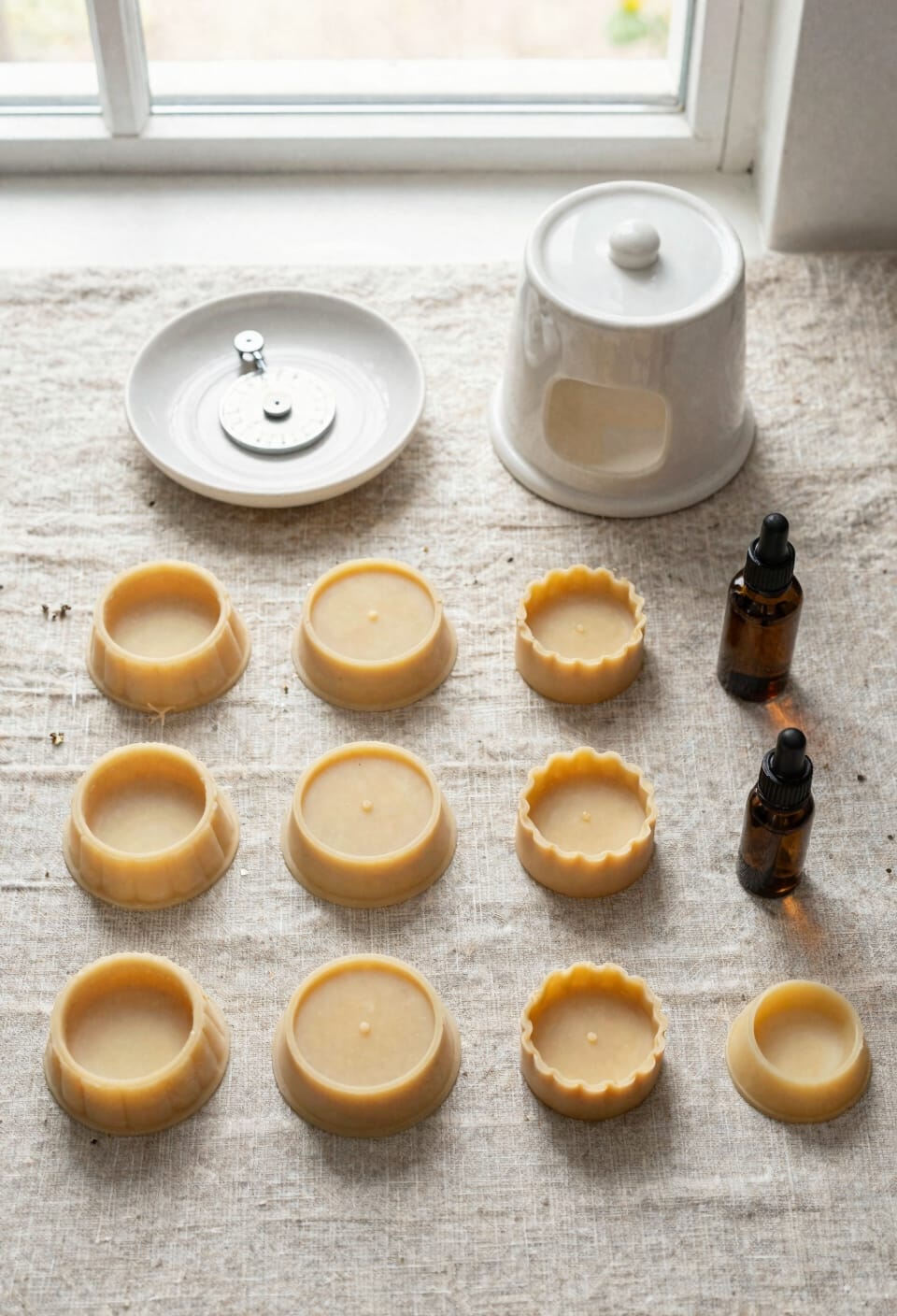
Because the wax formulation in tarts versus melts is fundamentally different, it’s going to shape what you actually buy and how happy you’ll be with your choice. Tarts use a harder wax blend designed to hold up in warmers without breaking down too quickly, which means better fragrance retention over multiple melt cycles. Melts, though, are formulated softer for easier portioning—you break off what you need. Here’s the thing: if you’re after longer-lasting scent throw and don’t mind committing to one warmer setup, tarts win. But if you want flexibility and grab-and-go convenience, melts fit your lifestyle better. Your wax hardness preference really does matter when you’re picking between them.
How to Select the Right Warmer
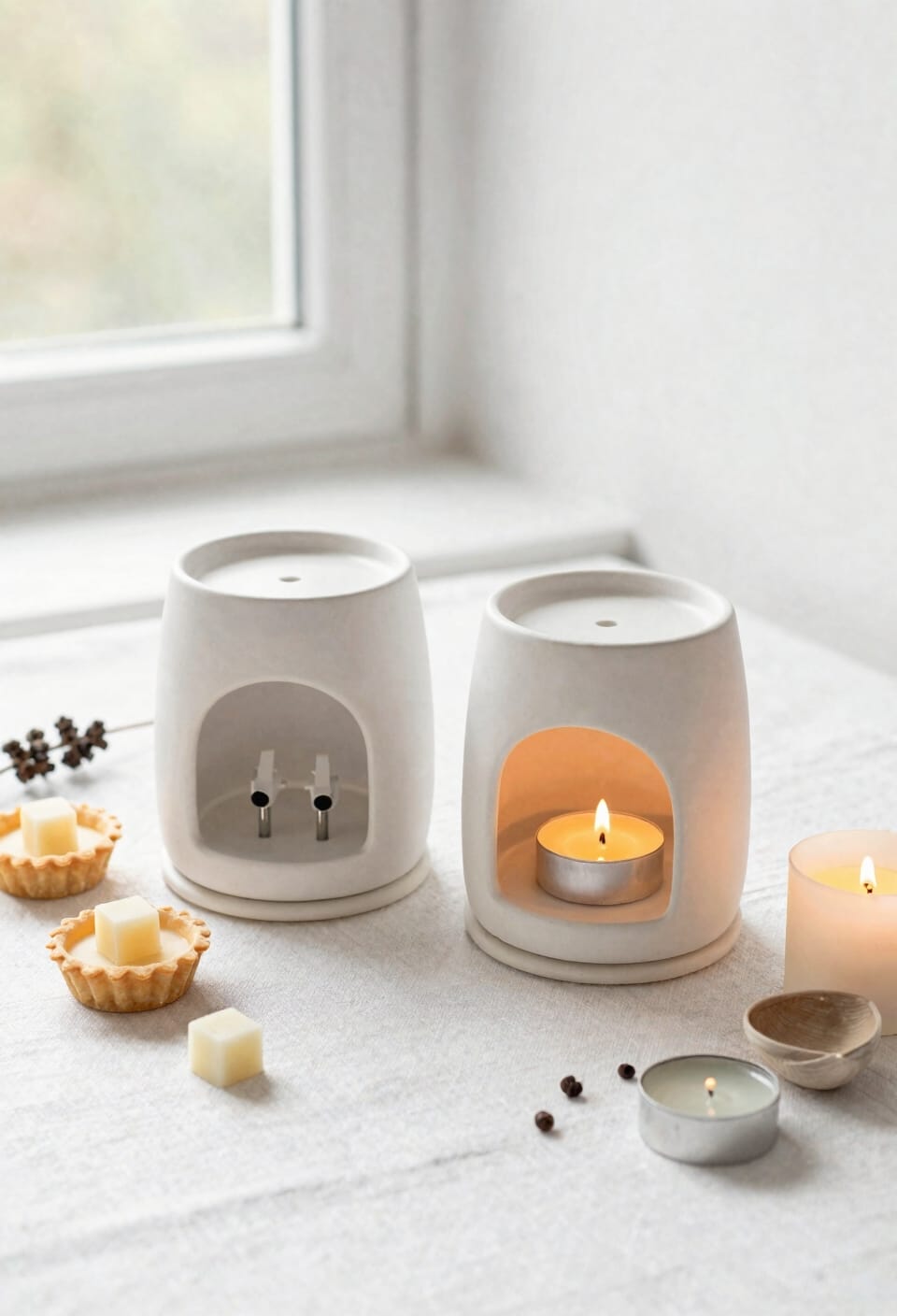
Now that you’ve decided between tarts and melts, your warmer choice is going to make or break your whole experience—and I say that as someone who’s made this mistake before. You’ll want a warmer specifically designed for wax products, not some generic heat source that’ll cook your fragrance into oblivion. Material compatibility matters here: ceramic dishes handle temperature swings better than plastic, which can warp or crack. Check your warmer placement too—keep it away from drafts and pet chaos. Read the product instructions because different warmers have size limits. A warmer rated for melts might overheat tarts. I learned this the hard way when my wax pooled into an unusable mess. Get the right match, and you’ll actually enjoy this thing.
Scent Strength and Real Performance Compared
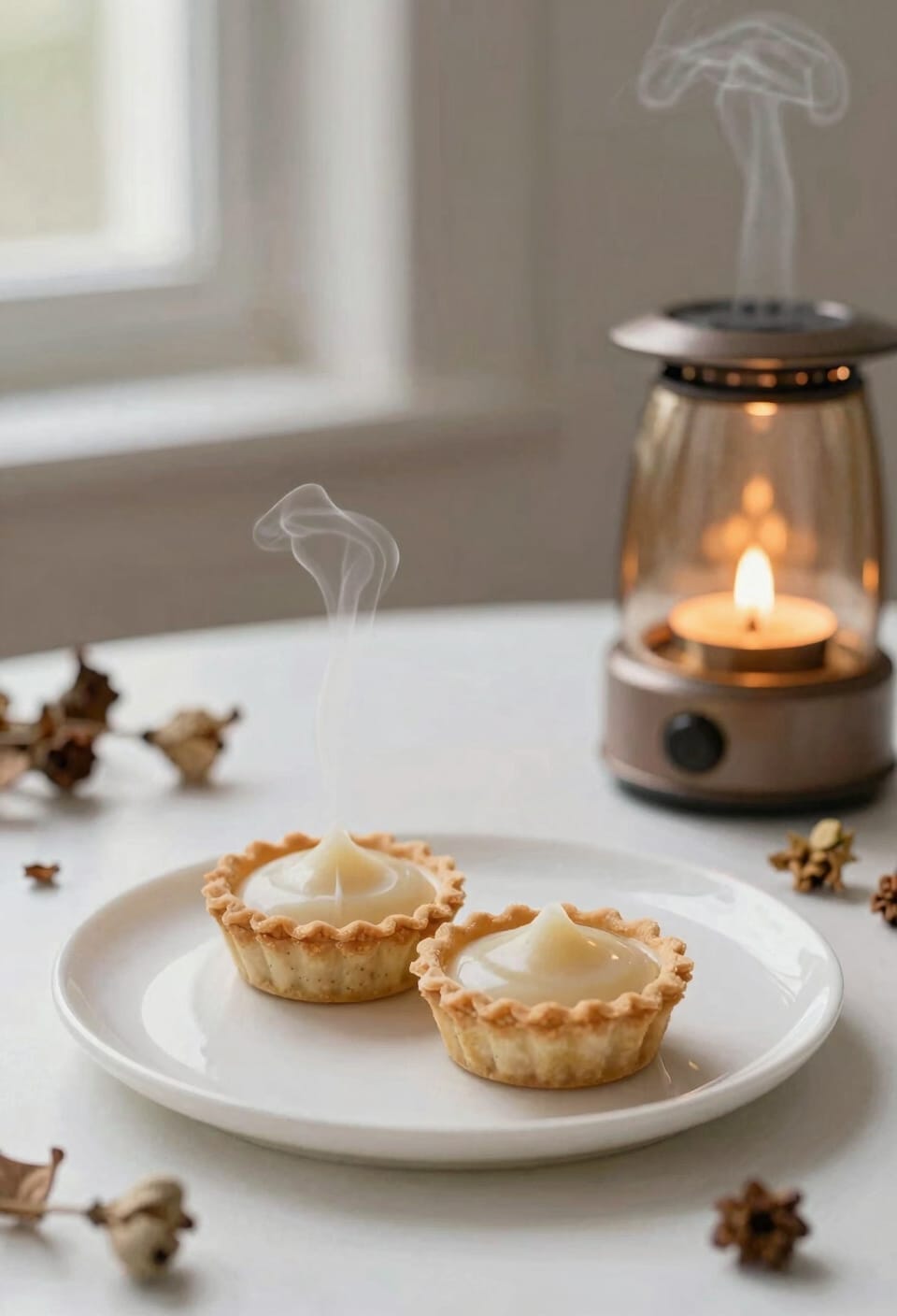
Once you’ve got the right warmer in place, here’s where things get real: scent strength and how long that fragrance actually sticks around. I’ll be honest—scent longevity varies wildly between products and honestly, between batches too. Wax tarts generally pack more fragrance saturation than melts because they’re formulated with higher fragrance loads. That means stronger throw distance throughout your room, which is exactly what you want. Before buying, do a cold sniff test at the store. That’s smelling the product without heat, which gives you a baseline. Some melts fade after two hours; solid tarts can go four or five. It depends on your warmer’s temperature, room size, and frankly, how nose-blind you’ve become to your favorite scents.
What Most People Get Wrong About Wax Products
The biggest mistake I see? People believe misleading labels that treat wax tarts and melts like completely different products when they’re honestly not. You’re also buying into safety myths—like thinking all warmers work the same way or that any wax product is interchangeable. Here’s the thing: most folks don’t realize their warmer might be too hot for certain formulations, which actually ruins the scent throw you paid for. You’ll also hear people swear that one type lasts longer than the other, but that’s usually about fragrance load, not the product itself. Stop overthinking it. Read your actual product instructions instead of guessing. Your nose—and wallet—will thank you.
Cost Breakdown: Which Saves You Money
When you’re standing in the aisle comparing a $3 pack of wax melts to a $25 candle, it’s tempting to think you’re getting the deal of the century—but here’s where most people’s math falls apart. Let’s do a real budget comparison. That cheap wax melt pack? You’ll burn through it in maybe two weeks if you’re using your warmer daily. A quality candle costs more upfront but actually lasts longer per dollar spent. Here’s the thing: wax melts win on entry price, but candles typically offer better long-term cost efficiency. You’re not just paying for wax—you’re paying for burn time. Melt one cube, get three to five hours of scent. Do the math, and suddenly that pricier candle doesn’t look so bad anymore.
Production Methods Explained (and Why They Matter)
Now that you know wax melts are cheaper upfront but candles might win the long game, you’re probably wondering how these products actually get made—and honestly, that matters more than you’d think. Here’s the thing: production methods directly affect quality and performance.
I melt wax in microwave bursts, watching those melt temperatures carefully so nothing scorches. Once it’s liquid, I add shaved dye blocks, then fragrance oils in short bursts. The pour techniques matter enormously here—you want steady hands and proper mold placement to avoid air pockets.
After pouring into silicone molds, everything hardens for 24 hours before popping out. That specific formulation with higher fragrance load? That’s what separates a mediocre melt from one that actually scents your room.
Choose the Right Product for Your Needs
Most people grab whatever’s cheapest without thinking about whether wax melts or tarts actually match their lifestyle, and that’s how you end up with a warmer collecting dust in your closet. All right, here’s what matters: if you love scent layering—combining multiple fragrances in one session—wax melts’ smaller 1 oz cubes give you that flexibility. Tarts work better if you want convenience and bold throw without fussing. Consider your budget too. Melts cost less upfront, making them ideal seasonal gifts that won’t break the bank. Think about your warmer type as well. Some warmers only work with specific sizes, so check before buying. Match the product to how you actually live, not just the price tag staring back at you.
Frequently Asked Questions
Can I Use Wax Tarts in a Warmer Designed for Container Candles?
I wouldn’t recommend it. Wax tarts have harder formulation than container wax, so warmer compatibility matters. You’ll need a warmer designed specifically for wax composition like tarts to avoid overheating or damage.
How Long Does Scent Last From a Single Wax Melt or Tart?
I’d say a single melt lasts 6-8 hours typically. For instance, if you’re using throwback fragrances, scent throw depends on your wax composition and fragrance longevity. Higher quality formulations maintain stronger fragrance output longer.
Are Wax Melts Safe Around Pets and Children in the Home?
I’d say wax melts are generally safe when you’re thoughtful about pet safety and childproofing products. Keep warmers out of reach, use flameless electric models, and supervise pets to prevent accidental ingestion or burns.
What’s the Shelf Life of Unused Wax Tarts and Melts Before Use?
I’ll tell you something that might surprise you: your wax tarts and melts can last years! Here’s what I’ve found—when you store them in cool, dark conditions using quality packaging materials, they’ll stay fresh, fragrant, and ready whenever you need them.
Can I Mix Fragrance Scents by Combining Multiple Melts in One Warmer?
Yes, I’d recommend fragrance layering by combining melts for custom scents. You’ll want to test scent compatibility first—start with complementary fragrances like vanilla and lavender, adjusting quantities until you’ve achieved your ideal blend.
Conclusion
Look, I’ve literally melted a million wax tarts and melts at this point, and here’s what matters: they’re basically identical twins separated at birth. The real difference? How you portion them and what fits your warmer. Pick whichever costs less, smells stronger to your nose, and doesn’t make you want to tear your hair out replacing it every five seconds. You’ve got this.