As an Amazon Associate, we earn from qualifying purchases. Some links on this site are affiliate links at no extra cost to you. Our recommendations are based on thorough research and editorial judgment.

How Do Reed Diffusers Work? The Science of Passive Fragrance

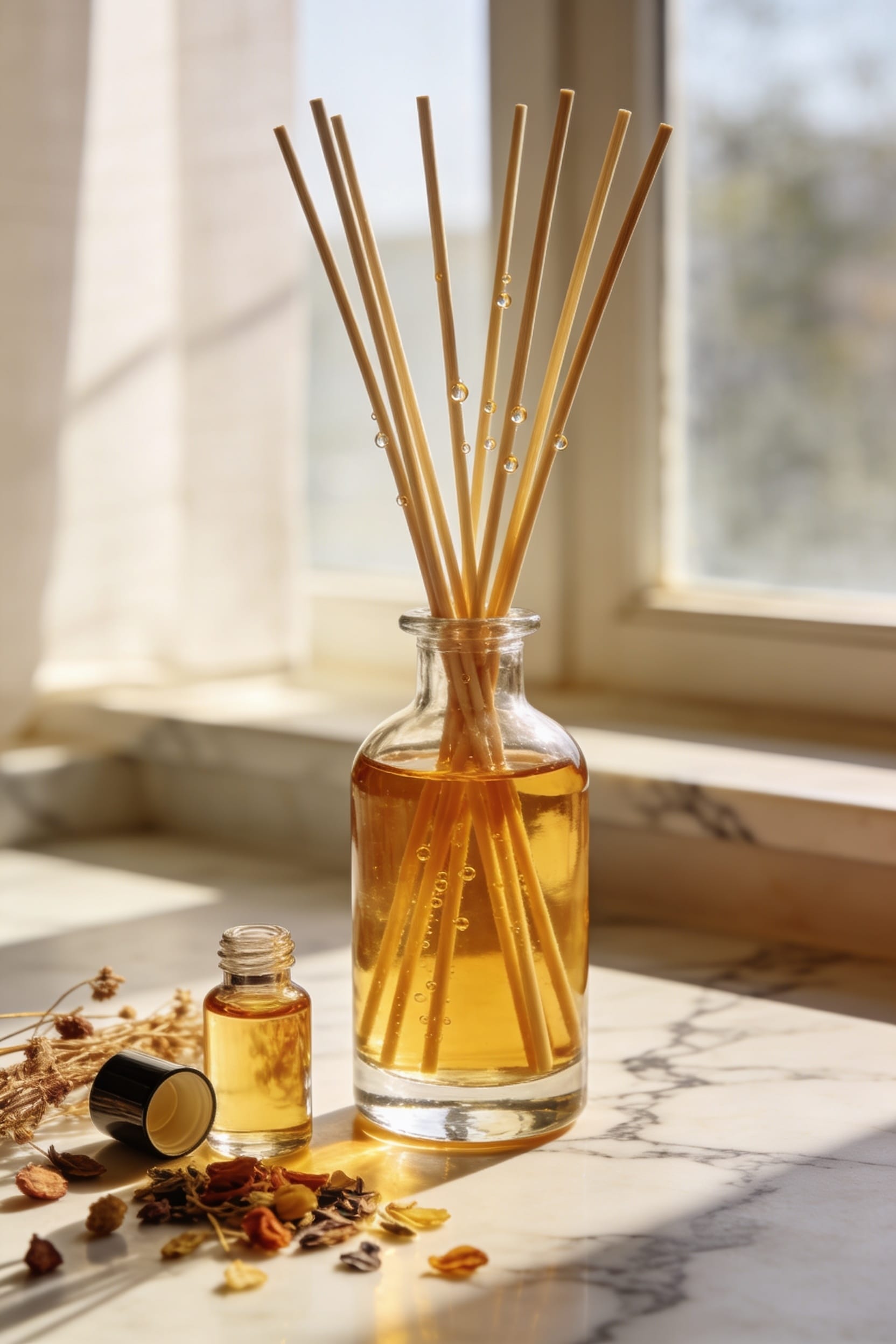
reed diffusers work through capillary action, where microscopic channels inside the reed pull fragrant oil upward against gravity—same physics that lets plant roots drink water from soil. Once the oil reaches the exposed tip, it evaporates passively into your room without any flame or electricity. The reed material’s porosity matters hugely; higher-quality rattan and bamboo create better pathways for oil transport. Temperature, humidity, and airflow all tweak how fast you’ll smell that scent. Flip your reeds every few days to keep them performing, and you’ve basically got a maintenance-free fragrance system that outperforms candles and sprays combined—but the real optimization gets more interesting.
Key Takeaways
- Microscopic channels in reeds use capillary action to draw fragrant oil upward through adhesion and cohesion forces.
- Oil evaporates at the reed tip, releasing scent molecules passively into the air without external energy sources.
- Reed porosity and pore distribution determine oil transport efficiency and overall diffuser performance and longevity.
- Oil viscosity must balance flow through microchannels with evaporation rates to maintain consistent fragrance release.
- Temperature, humidity, airflow, and reed count influence scent intensity; maintenance like flipping reeds sustains optimal diffusion.
How Capillary Action Pulls Oil Up the Reed
Drawing fragrance oil up through a thin reed without any pump or electricity involved might seem like magic, but it’s actually just physics doing what physics does best. Here’s the thing: reeds are packed with tiny channels—we’re talking microchannel geometry so small you’d need a microscope to see it properly. Oil molecules are naturally attracted to the reed’s surface through surface chemistry, meaning they stick to the material itself. That adhesive force, combined with the cohesive bonds between oil molecules, creates an upward pull that defies gravity. The reed effectively becomes a microscopic straw. Liquid travels up those interconnected tubes against gravity’s protests, saturating the entire fiber length. It’s relentless, passive, and honestly kind of brilliant.
Why Evaporation at the Reed Tip Releases Scent
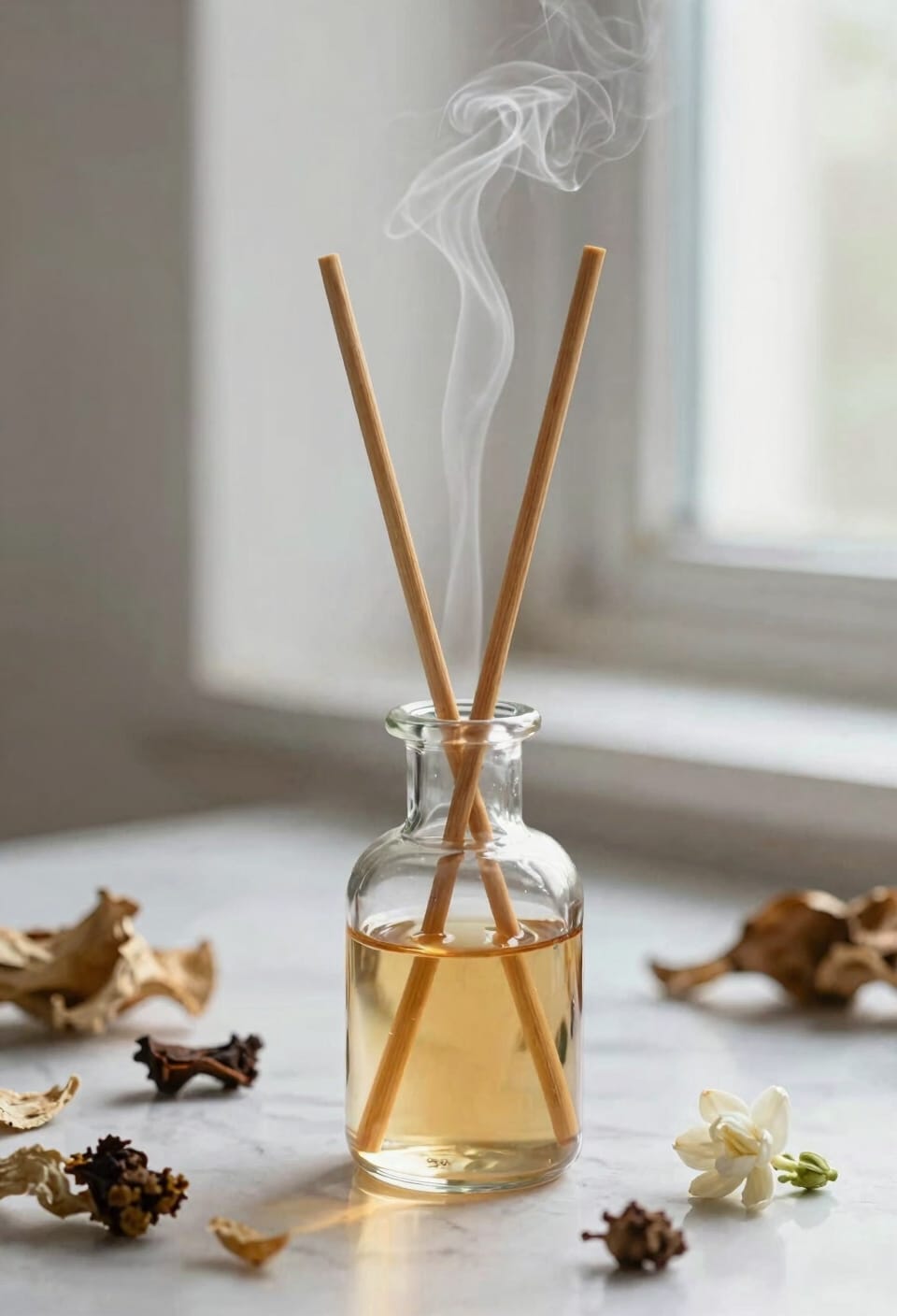
Once that oil reaches the top of the reed, here’s where things get interesting—it’s not just sitting there looking pretty. The fragrance molecules undergo molecular volatilization, which is just fancy talk for “turning into invisible scent particles that float into your room.” You’ve got surface tension working at the reed’s exposed end, creating this delicate balance where oil molecules break free and evaporate into the air. That’s your actual scent release happening. The warmer your room, the faster this happens—which is why your diffuser works overtime in summer. It’s continuous, passive, and honestly kind of elegant. No flames needed, no electricity required. Just physics doing what it does best, delivering fragrance without any fuss from you.
Why Reed Material and Porosity Matter Most
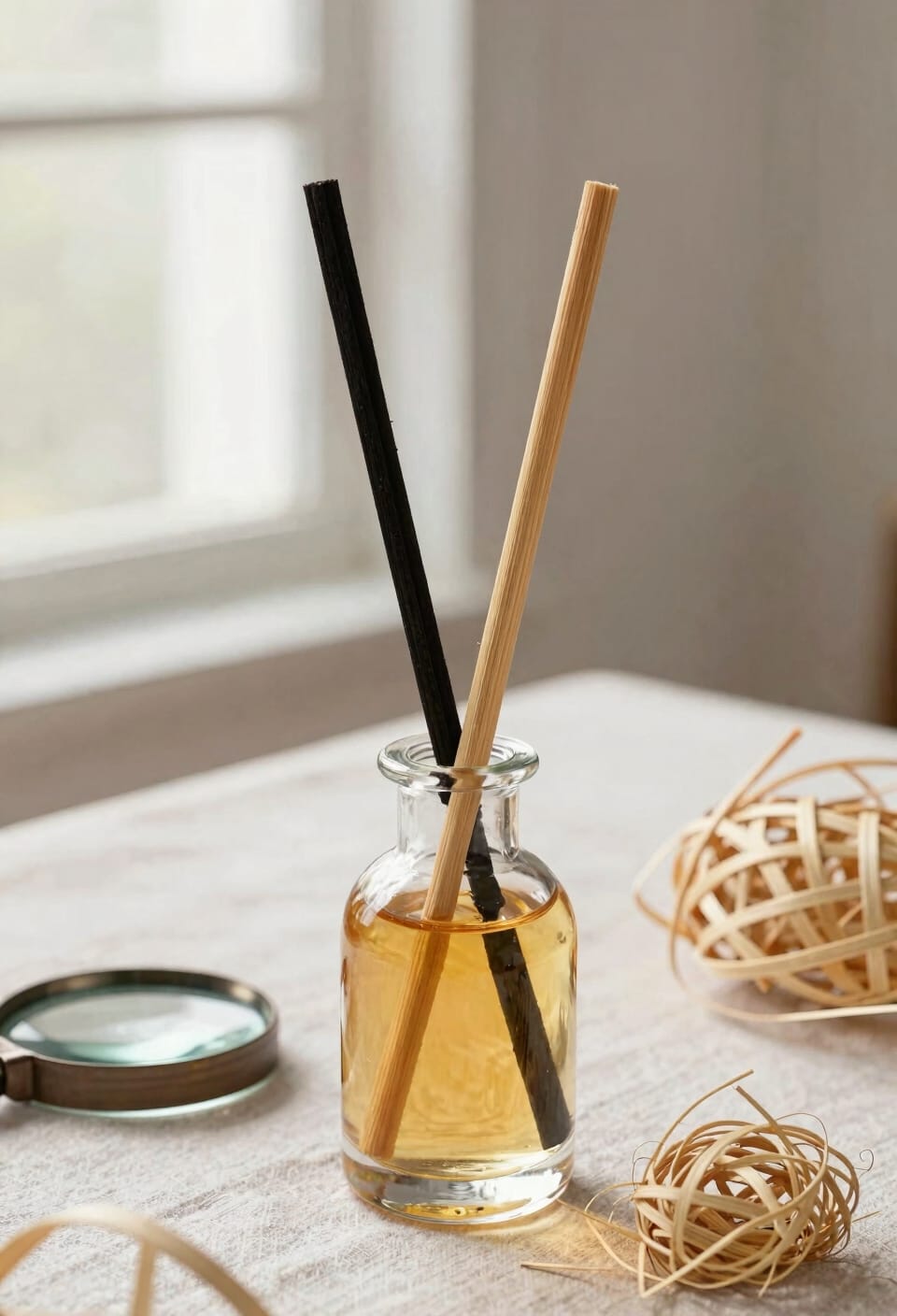
Now that you understand how those fragrance molecules escape into your room, we need to talk about what actually makes that magic happen—and it all comes down to what your reeds are made of and how full of tiny holes they are. High-quality rattan and bamboo reeds work best because they’ve got excellent fiber density paired with ideal pore distribution—basically, they’re engineered by nature to pull liquids upward. Think of it like this: a dense, well-pored reed is a highway for oil molecules. Low-quality reeds? They’re more like dirt roads with dead ends. More pores mean better capillary action, faster oil travel, and stronger scent throw. That’s why upgrading your reeds makes such a noticeable difference.
Getting Oil Viscosity Right (So Reeds Don’t Clog)
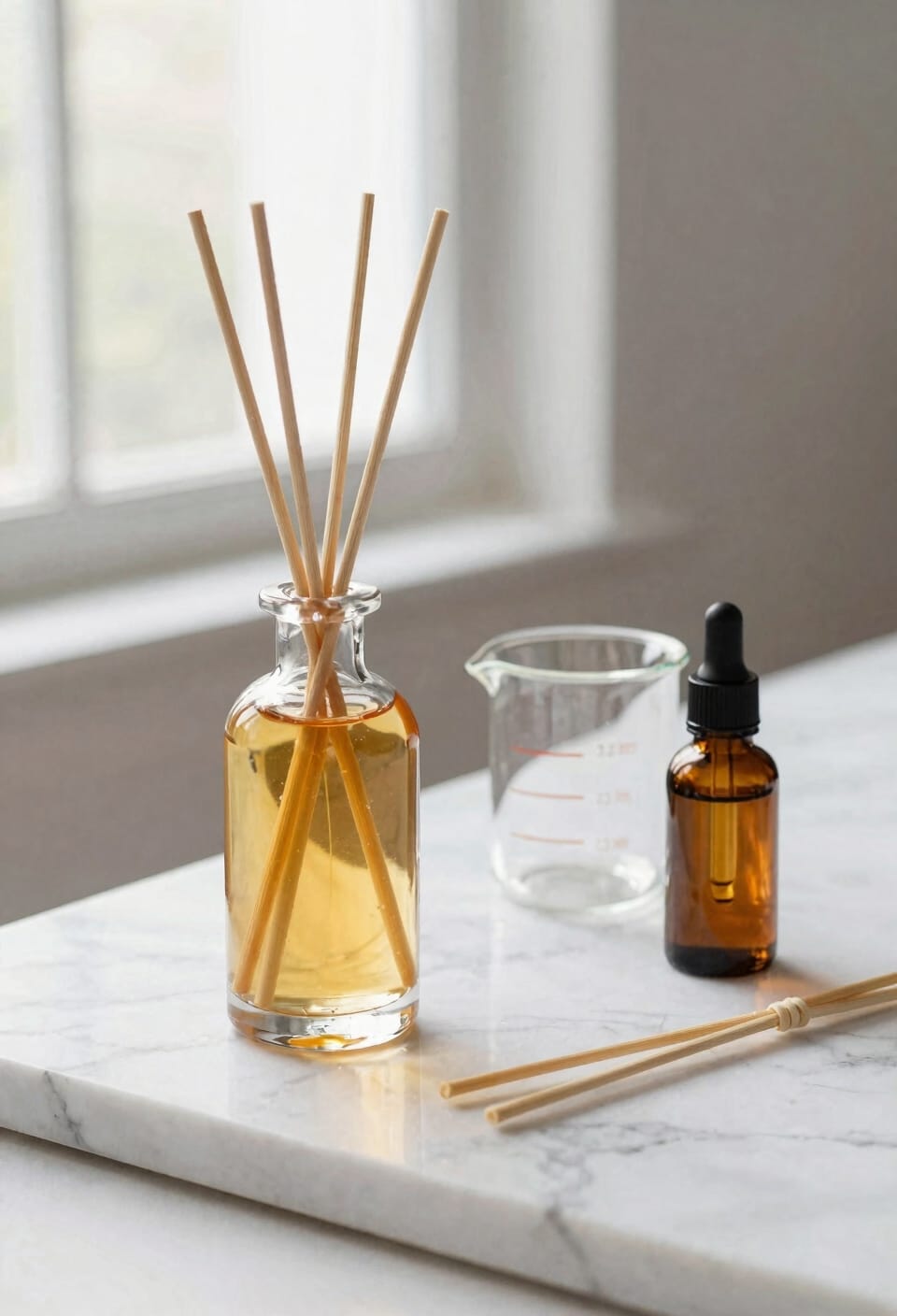
You’ve got the perfect reeds now, but here’s where a lot of diffuser owners trip themselves up: they grab whatever fragrance oil is cheapest or prettiest, without thinking about whether it’ll actually flow through those microscopic channels you just learned about. Here’s the thing: viscosity testing matters. Oil that’s too thick? It’ll clog your reeds faster than you can say “wasted money.” Too thin, and it evaporates before doing any real work. The trick is solvent selection—manufacturers blend fragrance with carriers like dipropylene glycol to hit that sweet spot. You want something that travels upward steadily without racing to the air. Get this balance right, and your diffuser runs clean for months. Get it wrong, and you’re stuck with useless sticks.
How Temperature, Humidity, and Airflow Affect Scent Strength
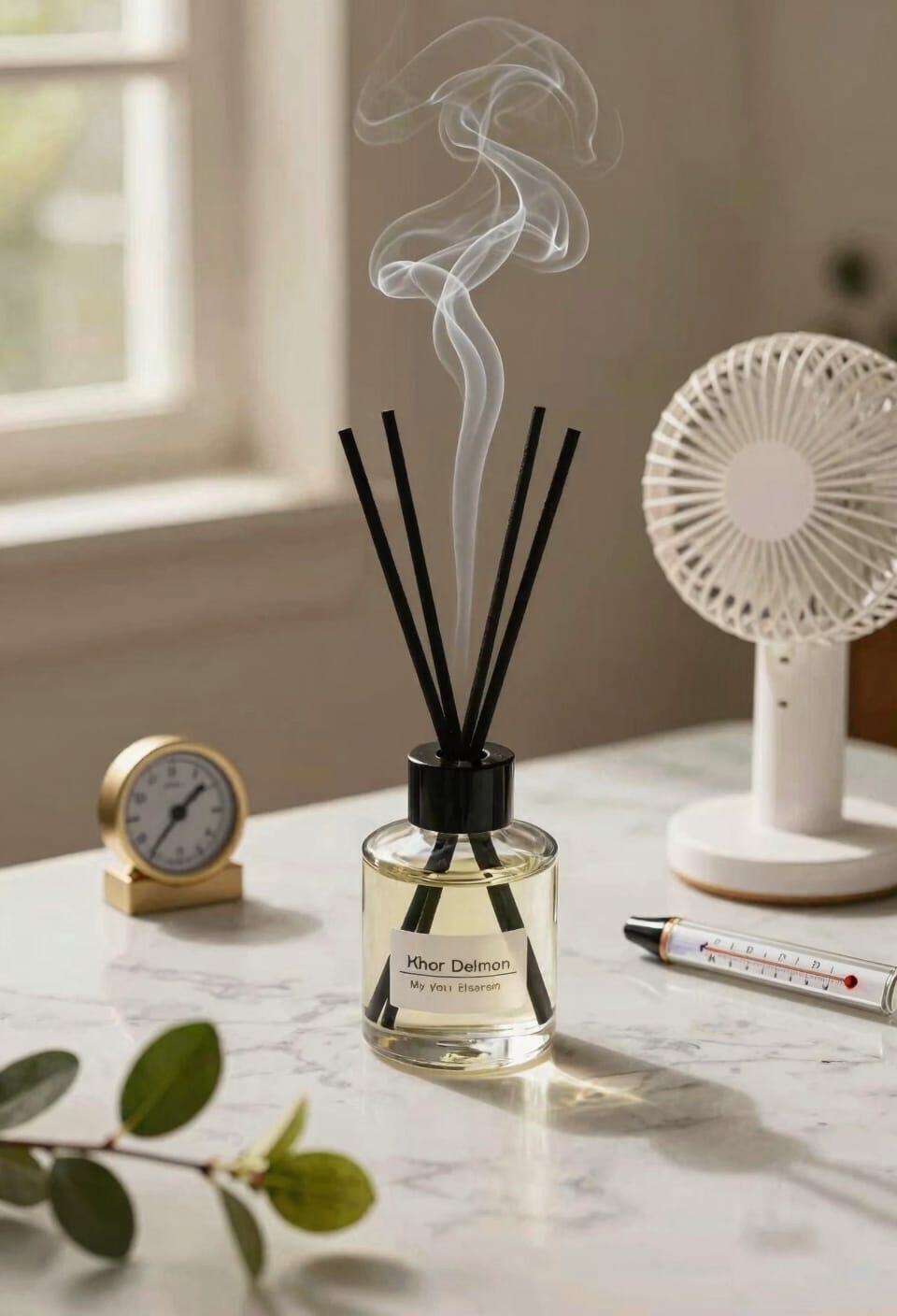
All right, here’s where things get interesting: you can have the perfect reed setup and nail your oil viscosity, but if your room’s environment is working against you, you’re basically fighting physics—and physics always wins. Temperature’s your biggest player. Heat accelerates evaporation, cranking up scent throw, while cold basically puts your diffuser in hibernation. Humidity? It’s the silent saboteur—moisture in the air slows fragrance release considerably. Then there’s airflow and seasonal variations. Draft patterns from vents or open windows either amplify your scent or scatter it uselessly. Position your diffuser away from direct sunlight and HVAC streams. The sweet spot? Stable, moderate temperature with gentle air circulation. You’ve got this.
How Many Reeds Do You Actually Need?
So you’ve dialed in your room conditions—temperature’s steady, humidity’s reasonable, airflow’s gentle—and now you’re standing in front of your diffuser wondering if those four reeds you stuck in are actually doing anything or just sitting there like little wooden decorations.
Here’s the thing: ideal reed counts depend directly on room size guidelines. For small spaces under 150 square feet, three to four reeds work fine. Medium rooms need six to eight. Larger areas benefit from ten or more. More reeds increase evaporation surface area, which means stronger scent throw—but they’ll also drain your bottle faster. Think of it like this: you’re balancing fragrance intensity against longevity. Fewer reeds give you subtlety; more reeds give you presence. Flip them every few days to maintain that sweet spot.
Flipping Reeds and Maintaining Peak Performance
Flipping your reeds regularly is honestly the single most important thing you can do to keep your diffuser working at peak performance, and I say that as someone who’s definitely forgotten to do it and watched my scent throw drop from “wow, this room smells amazing” to “is this even on?” within a week. When you flip them, you’re essentially revitalizing the saturated ends that’ve stopped evaporating efficiently. I’d recommend doing seasonal rotation every couple weeks—it’s literally a ten-second task. For maximum longevity, consider basic reed sterilization by rinsing them under warm water occasionally, which removes dust buildup that blocks those microscopic channels. Flip, rotate, rinse when needed. That’s it. Your nose will thank you.
Why Reed Diffusers Beat Candles and Sprays
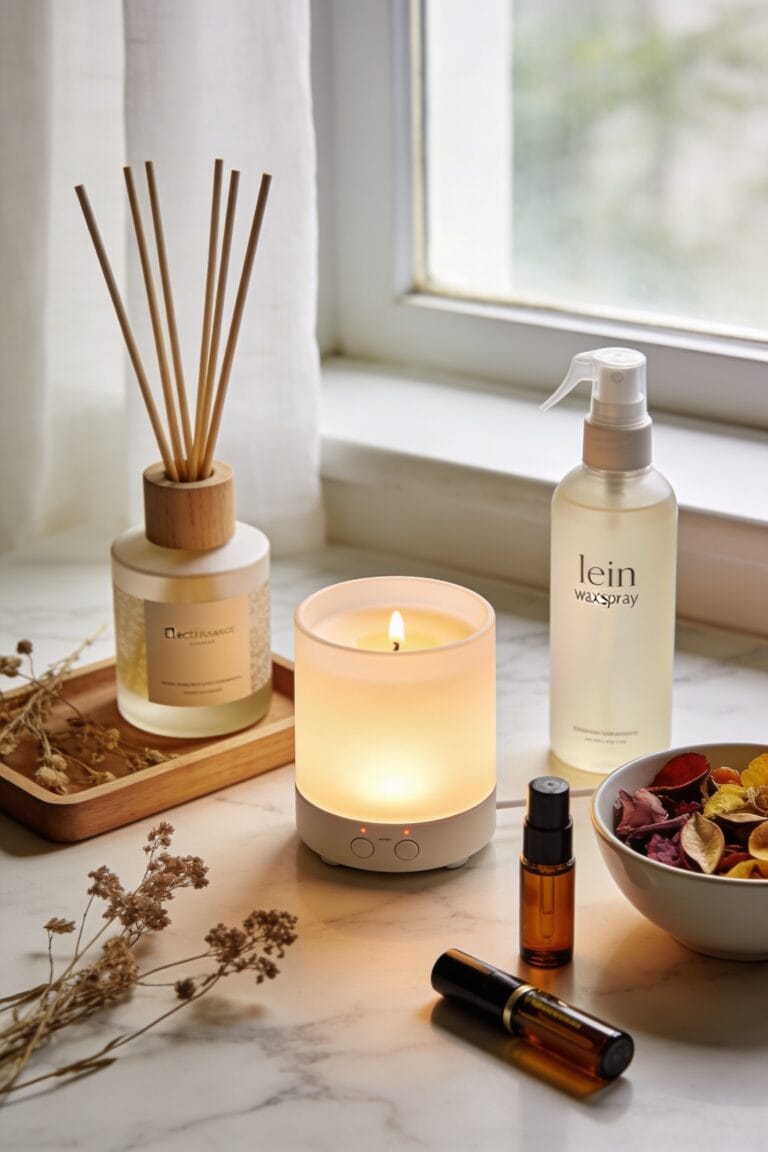
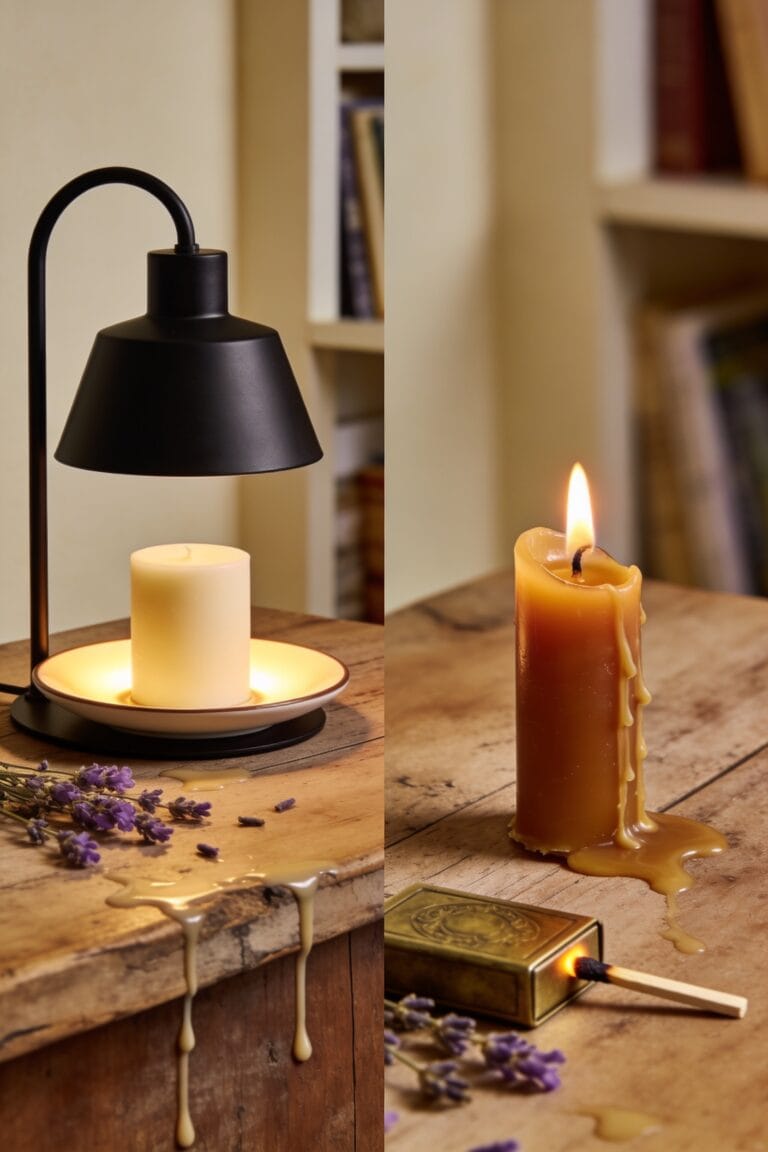
Now, here’s where reed diffusers really shine: they’re working for you 24/7 without requiring any of the fussing that comes with candles and sprays. You won’t deal with open flames or sudden scent fade when your spray bottle runs dry. Reed diffusers offer a longer lasting solution—we’re talking months versus weeks. They’re a safer alternative for households with pets or kids since there’s no fire hazard. No trimming wicks, no monitoring burn time, no guilt about tunneling wax. Just flip your reeds occasionally for a quick room refresh whenever you need it. That’s the beauty of passive diffusion: consistent, effortless fragrance without the drama.
Frequently Asked Questions
How Long Does a Single Bottle of Reed Diffuser Fragrance Typically Last?
I’d say you’re looking at one to six months of typical longevity per bottle. However, seasonal variation matters—warmer months accelerate evaporation, while cooler seasons extend your diffuser’s life considerably. Regular reed flipping helps maximize it.
Can You Use Regular Essential Oils in Reed Diffusers, or Specialized Formulations?
I’ll tell you straight: pure essential oils are like pouring syrup through a straw—they’re too thick. You’ll need specialized formulations with carrier oils for proper reed diffuser compatibility and effective essential oil use.
What’s the Best Room Size for Optimal Scent Throw From Diffusers?
I’d recommend small rooms for peak scent throw—they’re ideal for reed diffusers. Large rooms dilute fragrance concentration, so you’ll need multiple diffusers or increased reed count to achieve comparable scent saturation effectively.
Are Reed Diffusers Safe Around Pets, Children, and Individuals With Sensitivities?
Like a gentle breeze rather than a forceful gust, reed diffusers offer mild fragrance. I’d recommend monitoring child exposure and pet safety closely. They’re generally safer than alternatives, though scent sensitivity and air quality matter—ensure good ventilation always.
Can You Refill Diffuser Bottles With Different Fragrance Oils Without Replacing Reeds?
I’d recommend replacing your reeds when refilling with different fragrance oils. Old reeds retain previous scents, causing unwanted scent layering. Fresh reeds guarantee pure fragrance and peak maintenance performance.
Conclusion
Here’s the thing: reed diffusers aren’t magic—they’re just smart physics working quietly in your corner. I love that a simple reed can deliver consistent fragrance for months without batteries or flames. Research shows reed diffusers release scent up to 40% more steadily than sprays, which means you’re actually getting better value. Now you know what’s happening inside that elegant bottle, so you can stop second-guessing yourself and just enjoy the aroma.