As an Amazon Associate, we earn from qualifying purchases. Some links on this site are affiliate links at no extra cost to you. Our recommendations are based on thorough research and editorial judgment.

How Does a Candle Warmer Lamp Work? (No Flame, Full Scent)

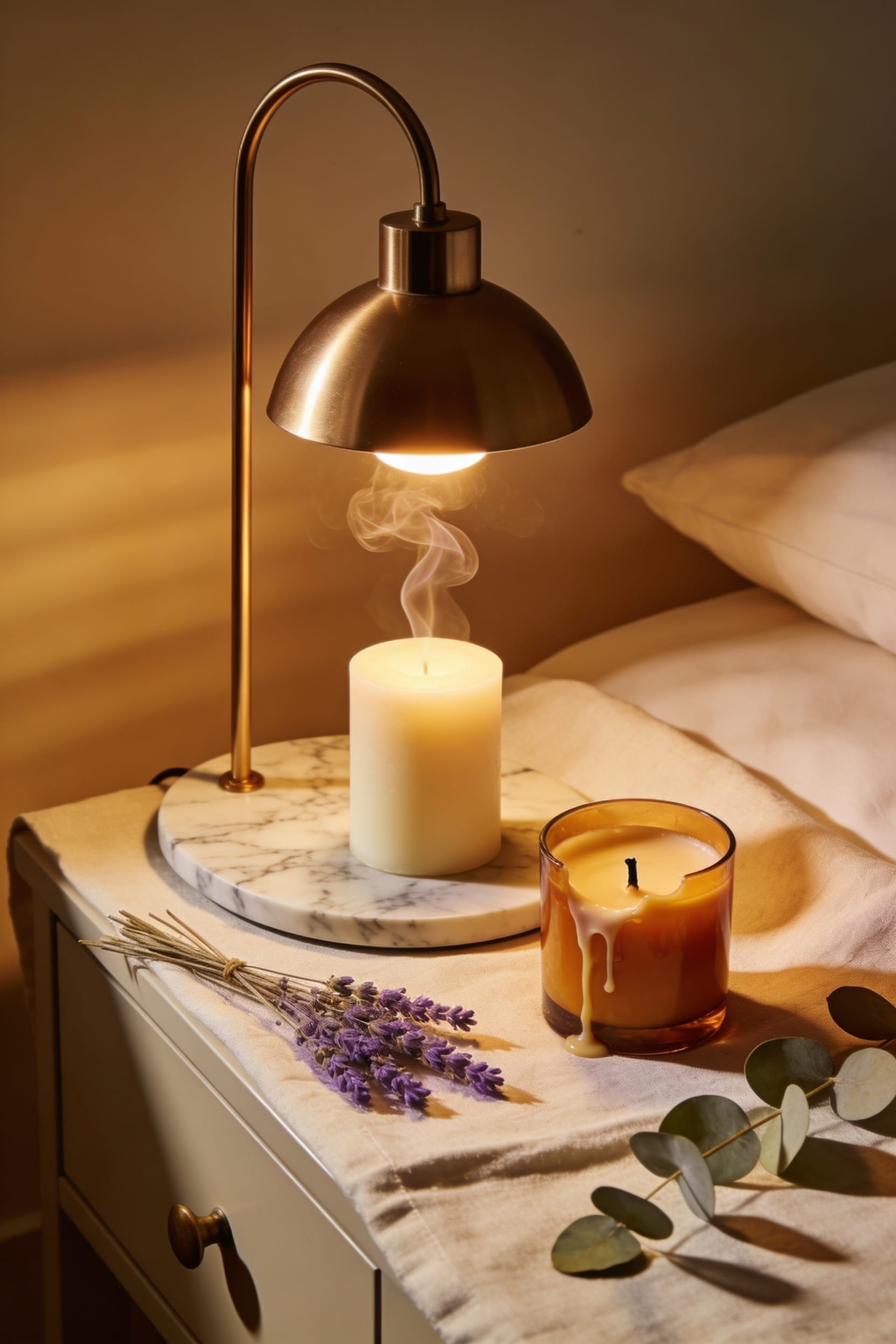
A candle warmer lamp uses a low-watt bulb (usually 25–40 watts) positioned above your candle to gently melt the wax surface without any flame. This creates a wide pool of liquid wax that releases fragrance smoothly and consistently into your room. You’ll get roughly double the scent life compared to burning, plus you’re dodging soot, smoke, and the whole “did I leave that lit?” anxiety. The trade-off? Wax stays permanently soft and you might hit scent fatigue faster than you’d expect.
Key Takeaways
- Candle warmer lamps use low-watt bulbs (25–40 watts) positioned above candles to gently melt wax without any flame.
- Top-down designs melt only the surface creating a wide liquid wax pool, while bottom-up designs heat from underneath.
- Gradual melting releases fragrance molecules smoothly and consistently, extending scent longevity to roughly double compared to burning.
- Sessions should not exceed 3–4 hours; warmers run cool to touch and eliminate risks of open flame, soot, and smoke.
- Place warmers on stable, heat-resistant surfaces away from flammables and humid areas; check bulbs monthly for dimming or damage.
What Is a Candle Warmer Lamp?
If you’ve ever watched a candle tunnel—that’s when wax burns down the middle and leaves a thick wall of unmelted wax clinging to the sides like it’s mad at you—you’ve probably wondered if there’s a better way. Enter the candle warmer lamp, an electronic device that melts your wax without any flame whatsoever. Think of it as a bedside lamp that’s actually useful. A low-watt bulb sits above your candle, gently heating the top layer into a wide pool of liquid wax. You get the ambient lighting you want, plus the scent psychology that makes your room feel intentional and inviting—except the fragrance lasts longer and you’re not wasting half the candle. It’s basically what burning a candle should’ve been all along.
Top-Down vs. Bottom-Up: Which Type Should You Choose?
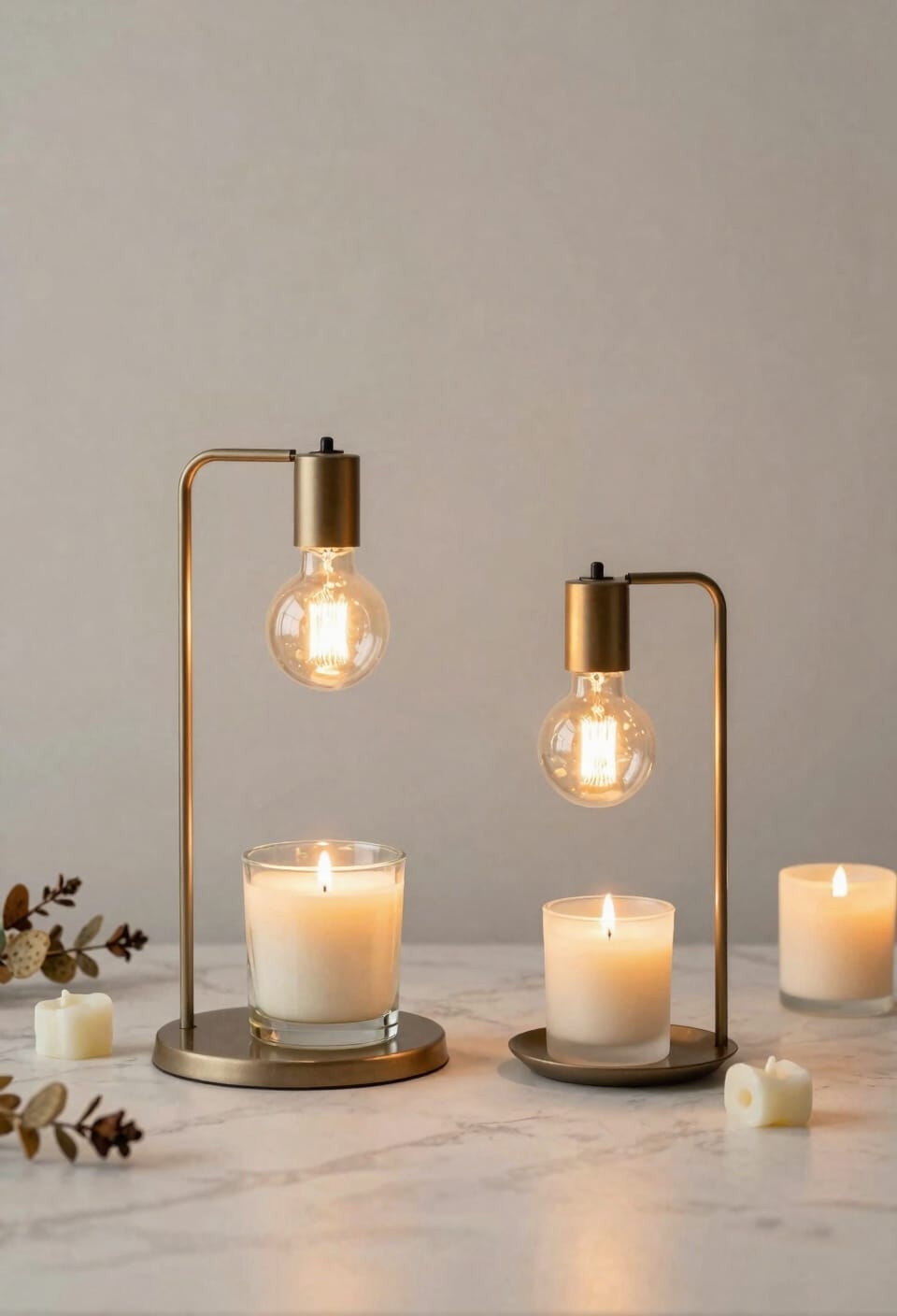
When you’re standing in the candle aisle (or scrolling through yet another home goods website at midnight), you’ll notice there’s more than one way to warm a candle without lighting it on fire—and I mean that literally. Top-down warmers work like lamps, melting only your candle’s surface for gradual scent diffusion. Bottom-up devices? They’re basically hot plates that melt the entire candle from underneath, perfect for smaller containers. I’d lean toward top-down for most situations—they’re gentler on your wax and require less device maintenance since you’re not dealing with full melts. Plus, you get longer fragrance throw. Bottom-up works if you want faster, complete melting, but honestly, top-down gives you that controlled, even experience that keeps your candle lasting longer.
How the Bulb Melts Wax Without Burning It
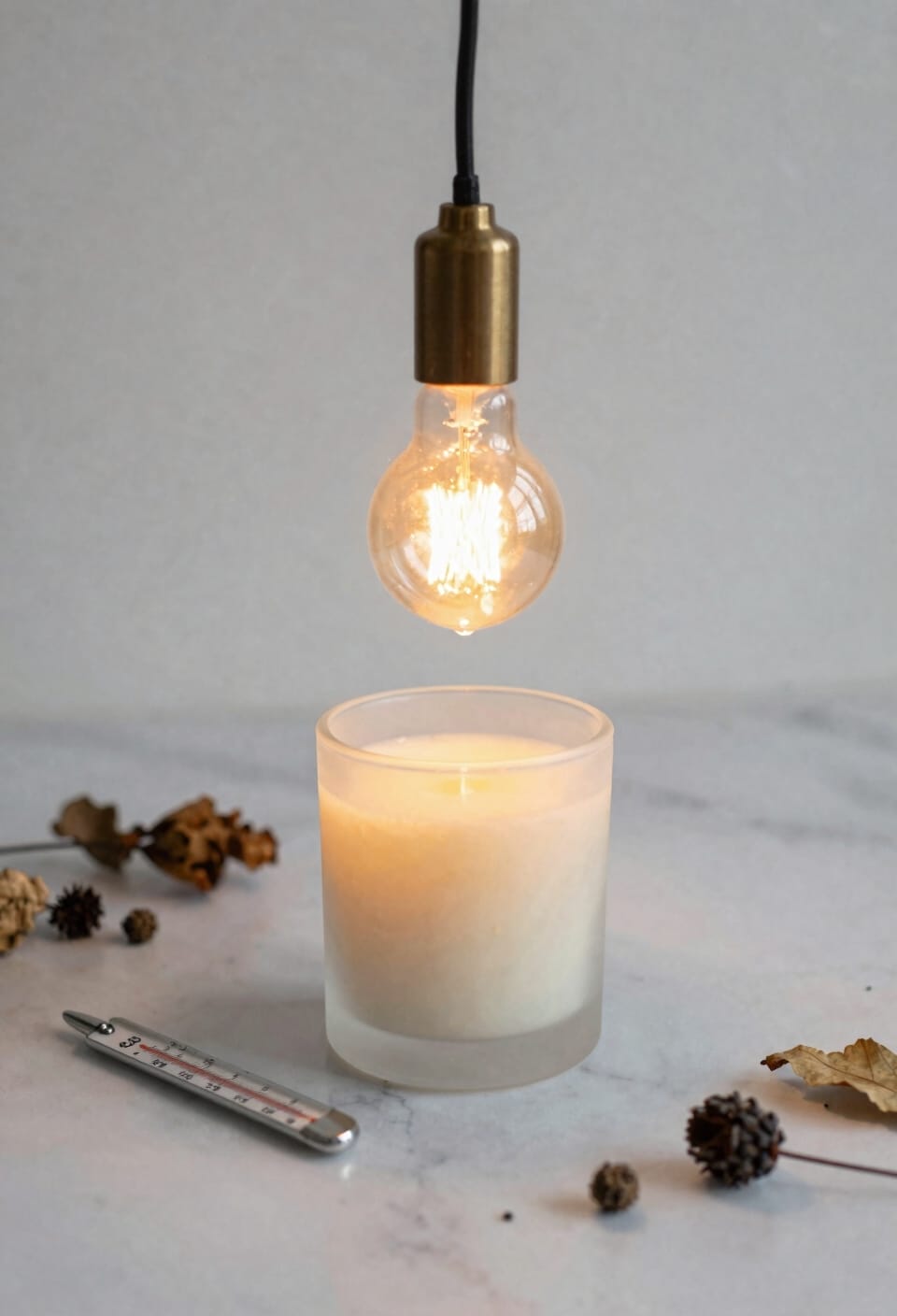
Now that you’ve settled on a top-down warmer, you’re probably wondering what actually stops the bulb from torching your candle like some kind of tiny, wax-destroying sun. Here’s the thing: it’s all about controlled heat transfer. Your warmer uses a low-watt halogen or warming bulb—we’re talking 25 to 40 watts—that melts wax gently from above without reaching the ignition point. The bulb sits far enough away that it creates a steady, even warmth rather than intense heat. This matters because scent chemistry relies on gradual melting. When wax liquefies slowly, fragrance molecules release smoothly and consistently. You get that beautiful pool of liquid without any flame risk. The whole setup’s basically a temperature goldilocks situation: hot enough to melt, cool enough to keep your candle safe.
Creating a Full Wax Pool for Better Scent Release
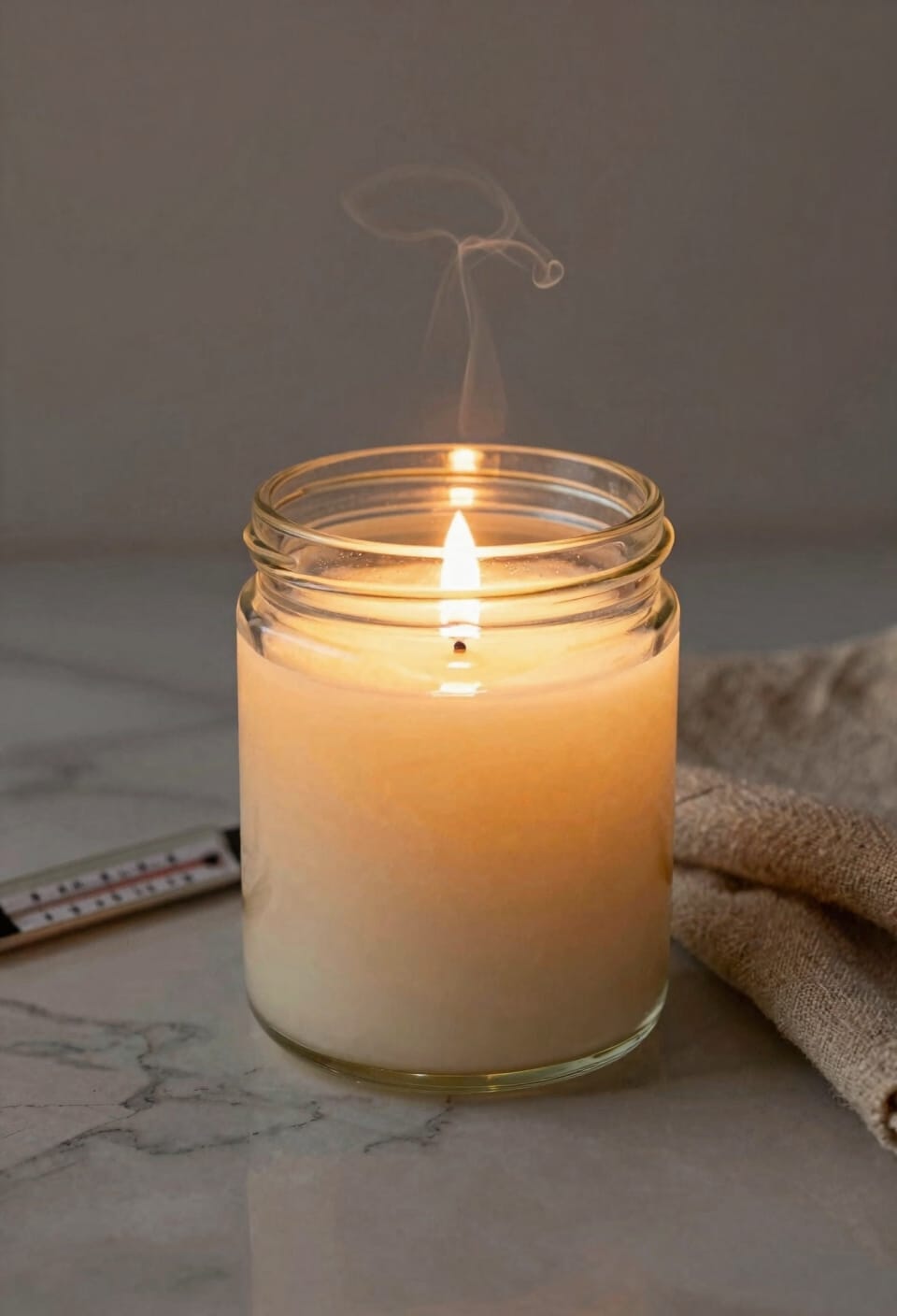
That full pool of melted wax you’re after isn’t just pretty to look at—it’s the secret to actually getting the scent throw you paid for. Here’s the thing: when your warmer lamp heats the candle evenly from the top, it creates what I call wax pooling, where that entire surface layer liquefies uniformly. This matters because you’re not stuck with tunneling, that annoying situation where only the center melts and the sides stay solid. An even pool means better scent layering—the fragrance releases more consistently and stronger throughout. You’ll notice the aroma building gradually instead of fading randomly. That’s your warmer doing its job right, letting you actually enjoy what you’re burning.
How Long Does Candle Warmer Scent Actually Last?
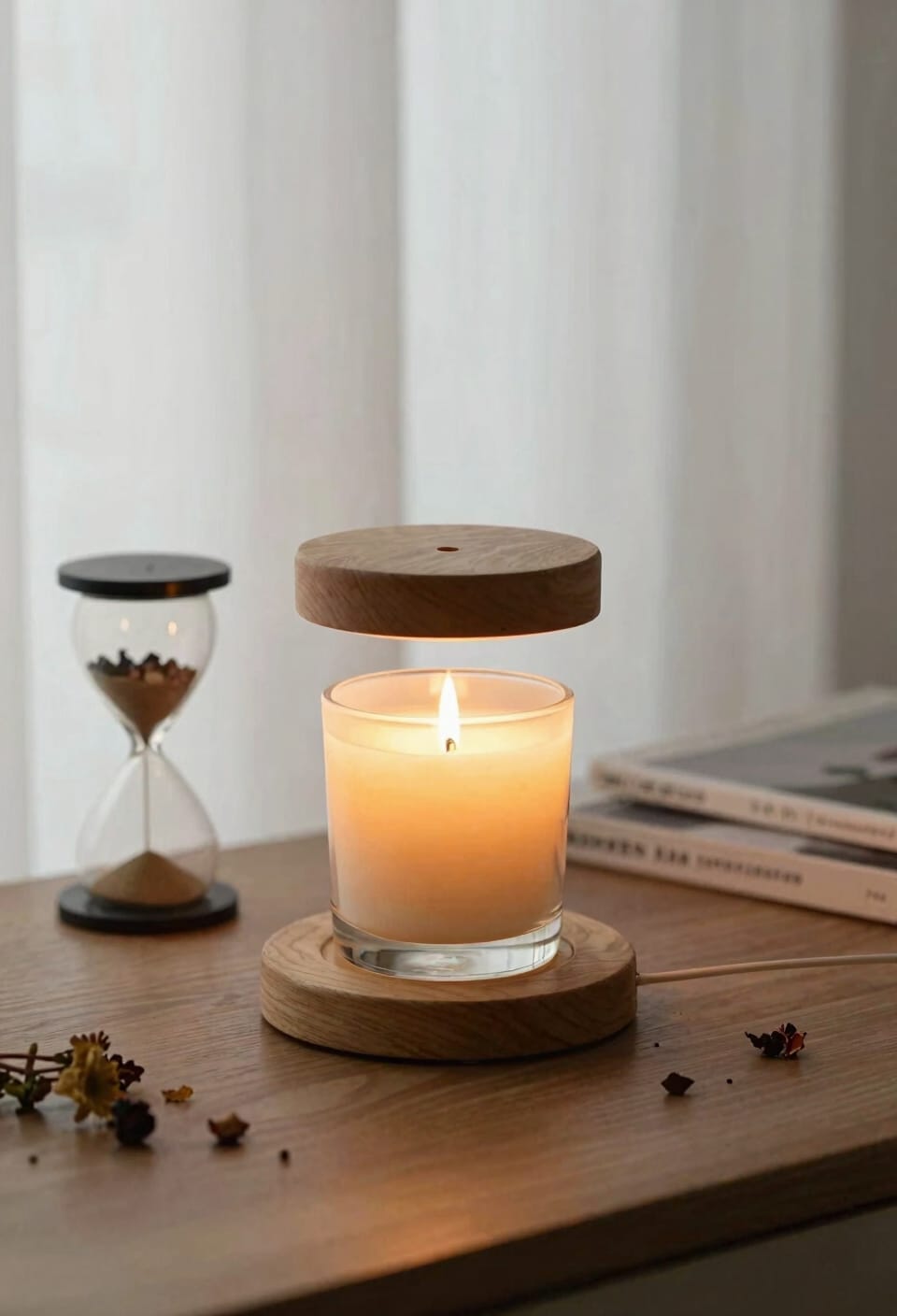
Because you’re investing time and money into a candle, you deserve to know exactly how long that warmer’s going to keep your room smelling good—and the answer might surprise you. Here’s the thing: scent longevity with a warmer typically doubles what you’d get from burning. You’re looking at sustained fragrance throw for weeks, not days, thanks to layer preservation—that melted wax pool releases scent steadily without the rapid burn-off of a flame. The catch? Once the top layer’s fragrance fades, you’ll need to pour off that spent wax to access fresher layers beneath. It’s not set-it-and-forget-it forever. But honestly, the trade-off is worth it. You’re getting cleaner air and markedly longer scent life without the soot mess.
How to Set Up and Use Your Candle Warmer
Setting up your candle warmer is pleasantly simple—plug it in, grab your favorite candle, and you’re basically done—but there’s a difference between just turning it on and actually using it right. Start with positioning guidance: place your jarred candle directly under the lamp, adjusting the neck if needed for a snug fit. Turn it on and let it work for 3–4 hours max per session. Here’s the thing—you’ll want a maintenance checklist handy. Once the top layer’s fragrance fades, carefully pour off that melted wax (save it—seriously, reuse it). Check your bulb wattage matches the manufacturer’s specs. Let everything cool completely between sessions. Follow these steps, and you’ll get consistent scent without the stress of wondering if you’re accidentally tunneling your candle into oblivion.
Safety Advantages Over Burning
When you’re weighing a candle warmer against the traditional flame, the safety difference isn’t subtle—it’s actually pretty hard to ignore. You’re eliminating fire risk entirely, which means no more anxiety about whether you blew out that candle before leaving the room. No open flame also means zero soot and smoke, so your air quality stays pristine instead of getting gradually grimier. Here’s the thing: warmer lamps run cool to the touch and shut off automatically on timers, making them perfect for unattended operation. You can leave one running safely while you’re at work or sleeping. That’s not a small thing when you’re genuinely worried about candle safety. It’s honestly one of the best reasons to make the switch.
When Candle Warmers Fall Short (And How to Adapt)
All right, so here’s the thing: candle warmers are genuinely fantastic at what they do, but they’re not magic wands, and pretending otherwise will leave you disappointed. You’ll hit scent fatigue—that nose-numbing effect where you stop smelling anything even though fragrance’s still releasing—faster with consistent warmth than with flame. The wax texture changes too; it stays perpetually soft rather than solidifying between burns, which some people find off-putting. Ambient humidity matters more than you’d think, affecting how evenly that pool melts. And if you’re eyeing battery operation models, understand they’re underpowered for serious melting. Here’s my honest take: warmers excel at safety and efficiency, but occasionally you’ll crave that real flame’s intensity. Adapt by rotating candles, taking breaks, or frankly, lighting one up sometimes.
Safety Tips and Best Practices for Continuous Use
Now that you know where candle warmers fall short, let’s talk about keeping yourself and your space safe while you’re using them—because a device that runs on electricity and generates heat deserves respect, even if it looks like a cute little lamp.
Follow placement guidelines strictly: keep your warmer on a stable, heat-resistant surface away from curtains, papers, and anything flammable. Never leave it running unattended for longer than 4 hours, and always let it cool completely between sessions.
Stick to a maintenance schedule by checking your bulb monthly—a dimming bulb means it’s time to replace it. Keep the lamp’s exterior dust-free and never use it near water or humid areas. These simple habits keep your candle experience safe, efficient, and genuinely enjoyable.
Frequently Asked Questions
Can I Use a Candle Warmer Lamp With Any Type of Scented Candle Jar?
I’d say yes, you can use most jarred candles with a warmer lamp. Glass compatibility isn’t an issue with standard jars, though wax viscosity matters—softer waxes melt faster, while denser blends need longer heating times.
How Much Does It Cost to Run a Candle Warmer Lamp Compared to Burning Candles?
I’d say a candle warmer lamp’s energy cost depends on wattage and usage hours, but the lifecycle cost proves lower since you’ll use more wax efficiently, extending your candle’s lifespan considerably.
What Wattage Bulb Should I Use for My Specific Candle Warmer Model?
I’d verify your warmer’s manual first—most don’t support all bulbs equally. Your manufacturer specifies exact wattage for bulb compatibility and wattage optimization. Using wrong specs risks poor melting or overheating your candle.
Can I Leave My Candle Warmer on Overnight or Unattended for Extended Periods?
I wouldn’t recommend leaving your warmer on overnight. While they’re safer than flames for fire safety, the knowledge suggests operating them 3-4 hours maximum per session. You’ll also save energy by following manufacturer guidelines rather than running them unattended continuously.
How Do I Remove and Dispose of Melted Wax From My Candle Warmer Safely?
I’d recommend letting the wax cool slightly, then use a plastic scraper or wooden spoon as your cleaning tool. Pour the melted wax into a disposable container or paper towel for safe disposal methods without damaging your warmer.
Conclusion
Look, here’s the thing: I’ve learned that candle warmers aren’t magic bullets—they’re more like the reliable friend who shows up without the drama. You’ll get better scent throw, longer-lasting wax, and zero fire hazard. But they’re not a replacement for good candle hygiene. Trim those wicks, watch for tunneling, and you’ve basically won the candle game. Your nose (and your furniture) will thank you.