As an Amazon Associate, we earn from qualifying purchases. Some links on this site are affiliate links at no extra cost to you. Our recommendations are based on thorough research and editorial judgment.

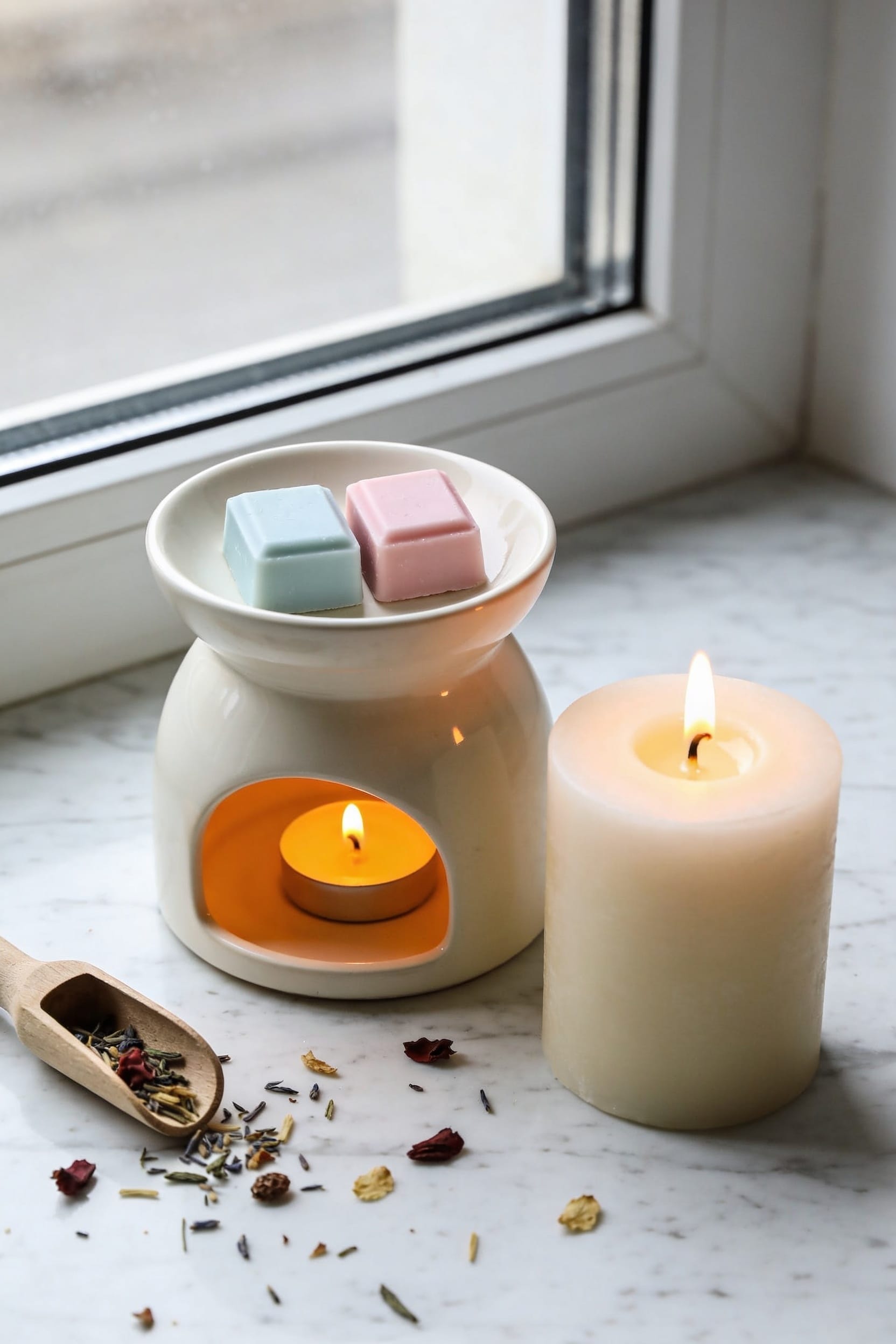
Wax Melts vs. Candles: Which Is Better for Scent, Safety & Value?

wax melts win on scent longevity and cost-per-hour since they melt gradually and last longer than candles, plus they’re flameless so they’re safer around kids or pets. Candles fill rooms faster and give you that cozy glow, but the fragrance fades quicker due to combustion. Neither’s risk-free—both release particles—so crack a window either way. The real answer depends on whether you want sustained scent or ambiance, which is exactly why keeping both on hand makes sense for different situations.
Key Takeaways
- Wax melts deliver longer-lasting fragrance through gradual release, while candles fill rooms quickly but fade faster.
- Wax melts eliminate fire hazards, though scented varieties release nanoparticles; candles emit soot and potentially carcinogenic compounds.
- Wax melts cost less per hour of use and produce less waste than single-use candles.
- Candles provide flickering ambiance and visual appeal; melts suit minimalist spaces and safety-conscious households.
- Ventilation remains essential for both options; unscented melts offer the safest air quality choice overall.
How to Choose Between Wax Melts & Candles
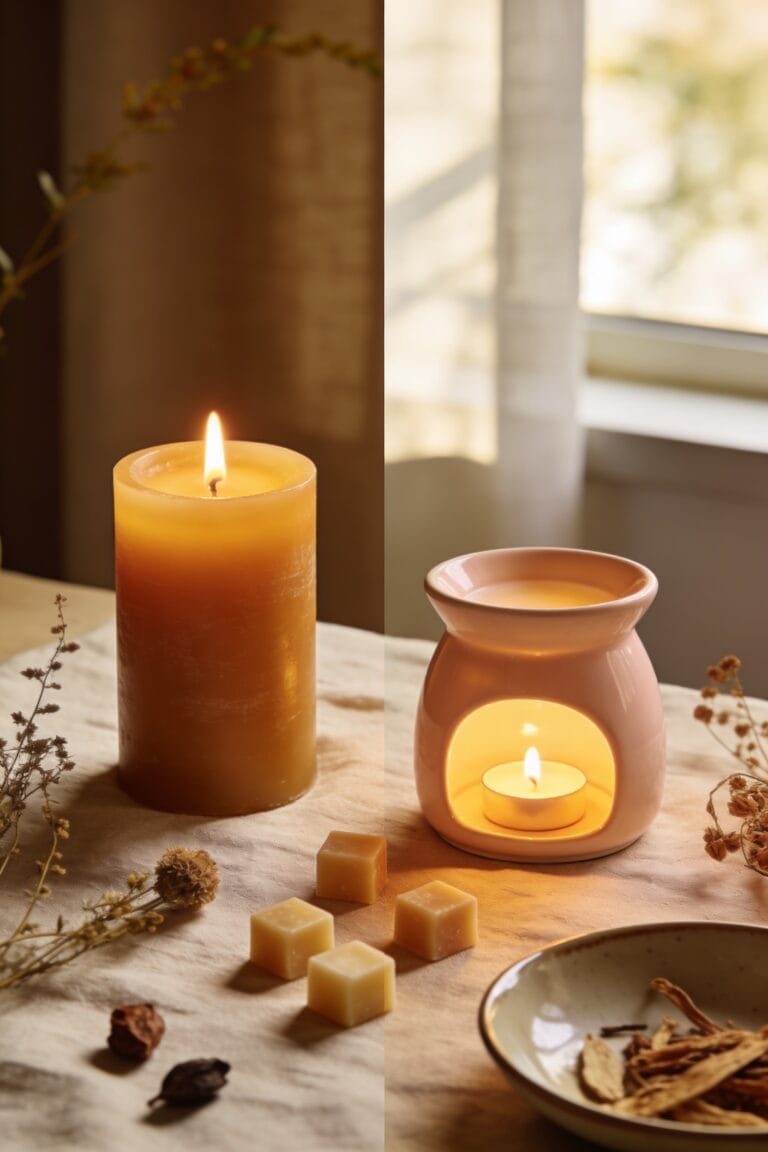
Choosing between wax melts and candles comes down to what matters most to you—and I don’t just mean which one smells like vanilla cake. Here’s the thing: if you’re after consistent, long-lasting fragrance, wax melts win. They release scent gradually, so you’ll enjoy potent aroma for hours. Want to experiment? Scent layering with melts lets you mix fragrances without commitment. Now, if ambiance matters—that flickering glow, the ritual of lighting something—candles deliver what melts can’t. Consider your priorities. Safety-conscious? Melts eliminate open flame risk. Budget-focused? They’re cheaper per hour of fragrance. Seasonal scents rotate better with melts since you’re not stuck with half-burned candles come spring. You’ll find your answer by honestly weighing convenience, safety, scent throw, and how much you enjoy the visual spectacle of actual fire.
Recommended Products

LUXURY DESIGN: Hand-blown glass vessel featuring sophisticated marble-like patterns in refined colors, making each piece uniquely beautiful

Quality - We produce our Lavender essential oil using pure, natural, and raw ingredients.

MASSIVE 8" × 14" LUXURY CANDLE – 300 OZ OF NATURAL COCONUT SOY WAX Make a statement with this Classic Big Ass Candle—our largest candle. This luxury candle delivers bold presence, elegant style, and room-filling fragrance. Perfect as a centerpiece for living rooms, great rooms, and upscale spaces.
Which Throws Scent Longer: Wax Melts or Candles?
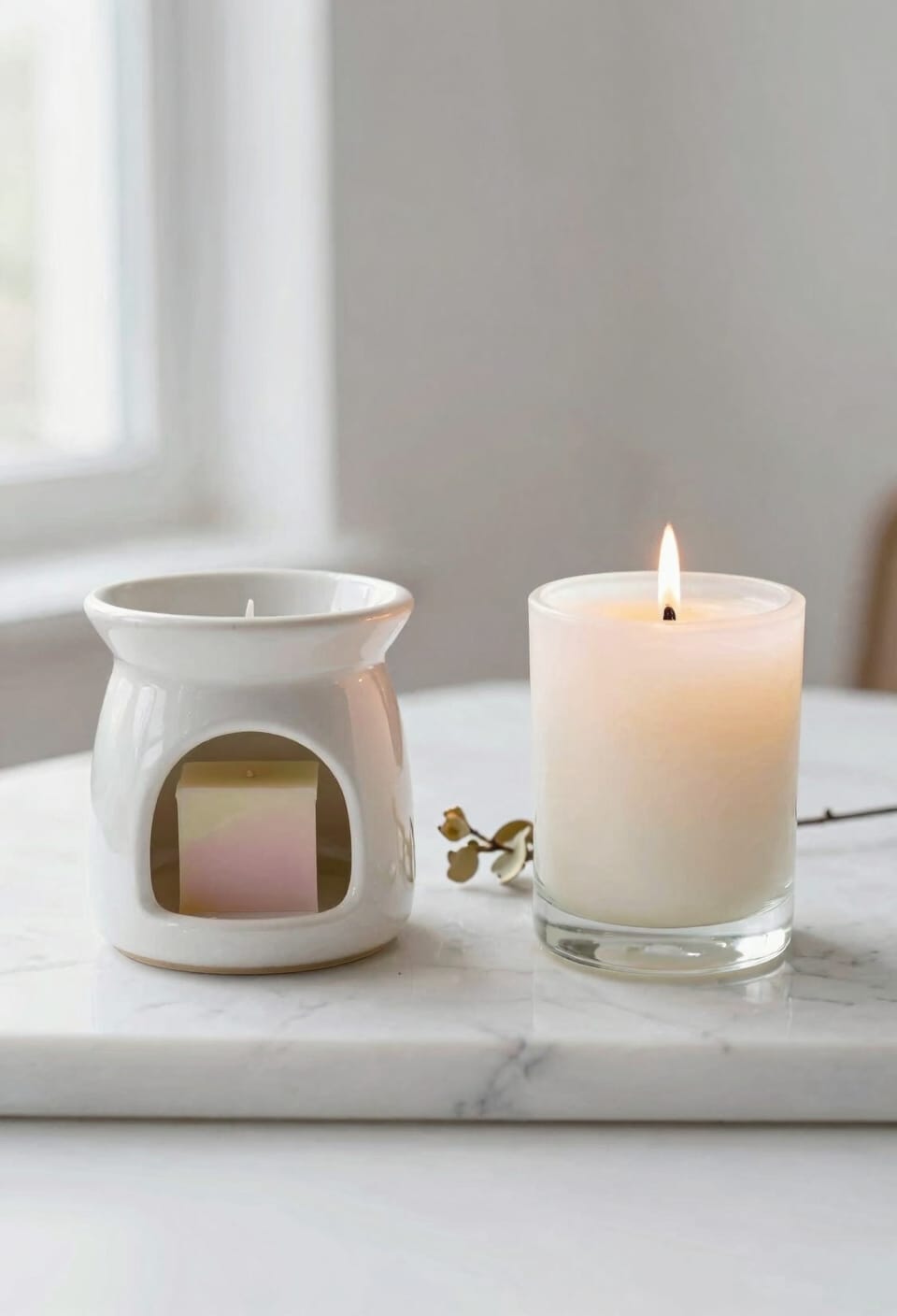
When you’re standing in front of your wax warmer or lighting a candle, you’re probably wondering which one’s actually going to make your room smell incredible for longer—and I’ve got news that might surprise you. Wax melts win this round. Here’s the thing: scent longevity depends on fragrance diffusion, and melts release aroma gradually through their slow melting process. You’re getting consistent, sustained scent throw that lasts way longer than what a candle offers. Candles give you that quick room fill, sure, but the smell fades faster because combustion burns through everything quickly. With melts, a single piece keeps your space smelling fresh for hours. The fragrance load packed into quality wax melts—especially soy varieties—is designed for extended performance. Bottom line: if you want your scent to stick around, melts are your answer.
Recommended Products

100% Pure Beeswax Candle: Hand-poured from naturally filtered beeswax for a rich, golden glow. These clean burning candles are free from paraffin, soy, and synthetic fragrances. Each 1-wick dripless pillar candle features natural cotton candle wicks and pure candle wax for a long-lasting burn and warm, cozy candle light.

SCENT - Chamomile Lavender features lavender with warm & enveloping bergamot. Calming chamomile melts into a heart of eucalyptus to create a feeling of well-being. Smoky patchouli is enhanced by hints of sage & rosemary for a quiet, relaxing finish.
![VINEVIDA [128oz] Birthday Cake Fragrance Oil for Soap Making Scents for Candle Making, Perfume Oils, Soy Candles, Bath Bombs, Slime, Car Freshies, Car Spray, Lotion, Linen Spray, Laundry, Kitchen](https://m.media-amazon.com/images/I/31z0YuAiwQL._SL500_.jpg)
HIGHEST QUALITY - Our scents and fragrances are skin-safe (when diluted) MADE IN THE USA using pure, natural, and raw ingredients. All VINEVIDA products are vegan, free of phthalates, parabens, and other potentially dangerous chemicals.
Wax Melts & Nanoparticles vs. Candle Soot: Which Is Safer?
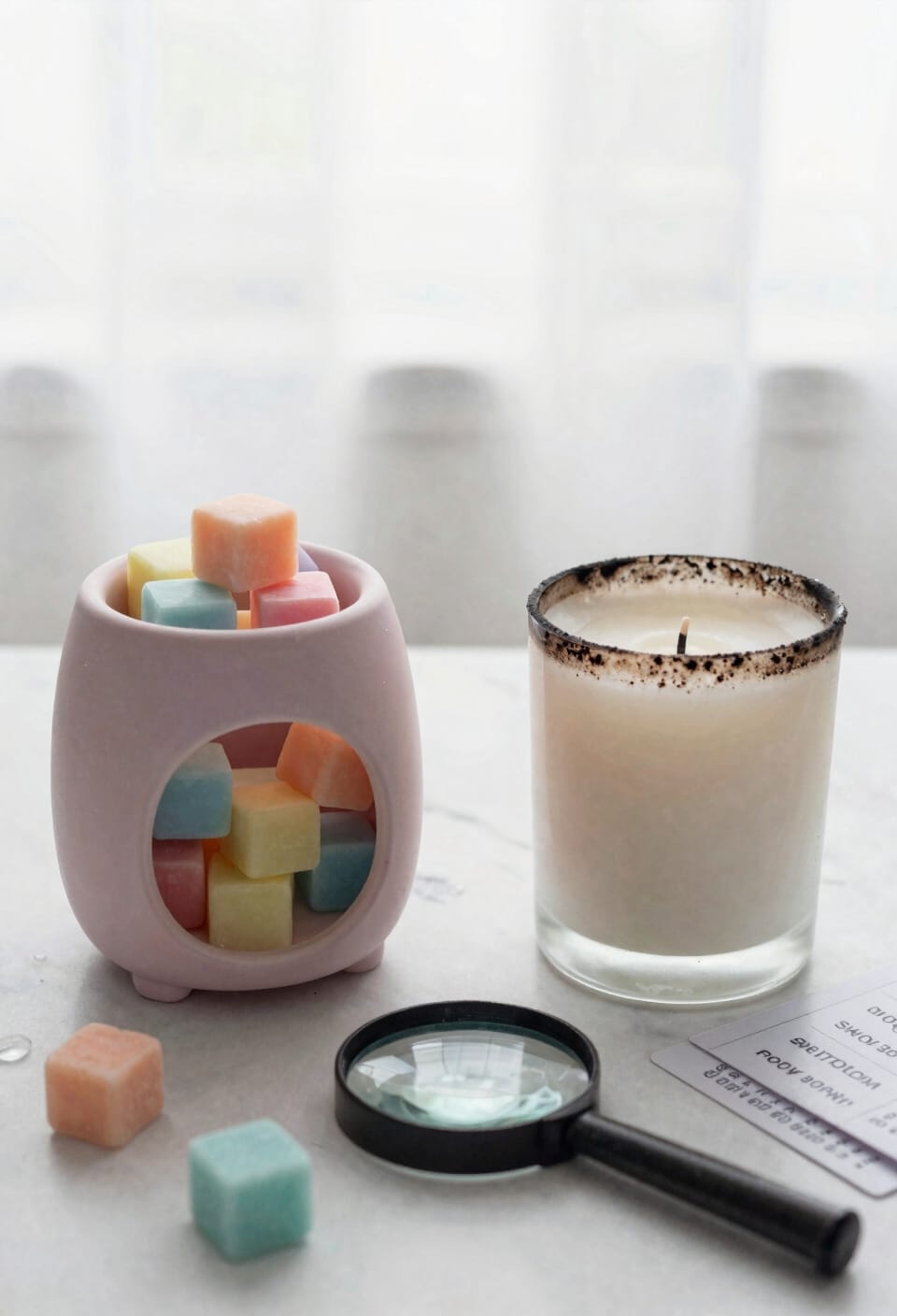
Since both wax melts and candles release particles into your air, you’re probably thinking one’s got to be the safer bet—and I’d love to give you a simple answer, but the truth’s a bit messier than that. Scented wax melts produce nanoparticles (tiny molecules that float through the air and into your lungs) through a chemical reaction between fragrance oils and ozone. Candles release soot, carcinogens, and heavy metals from burning. Both create respiratory concerns at similar particle concentrations. Here’s the thing: your best defense isn’t choosing one over the other—it’s using ventilation strategies to manage whatever you burn. Crack a window, run a fan, or pick unscented wax melts if you want zero nanoparticle pathways. Neither option’s risk-free, but informed choices beat ignorance.
Recommended Products

Wickless candles made with our own blend of several different waxes, primarily soy. Amber Woods is a beautiful musky scent of oak moss and amber.

NATURAL SOY WAX BEADS - Best candle making supplies make the best soy candles and melts! These safe, ethically produced, microwavable and paraffin-free soy wax beads are smooth and creamy in appearance, perfect for tarts, tealights and melts.

Long-Lasting Fragrance: Each wax melt delivers up to 8 hours of consistent, room-filling scent.
Cost Per Hour: Do Wax Melts or Candles Save Money?
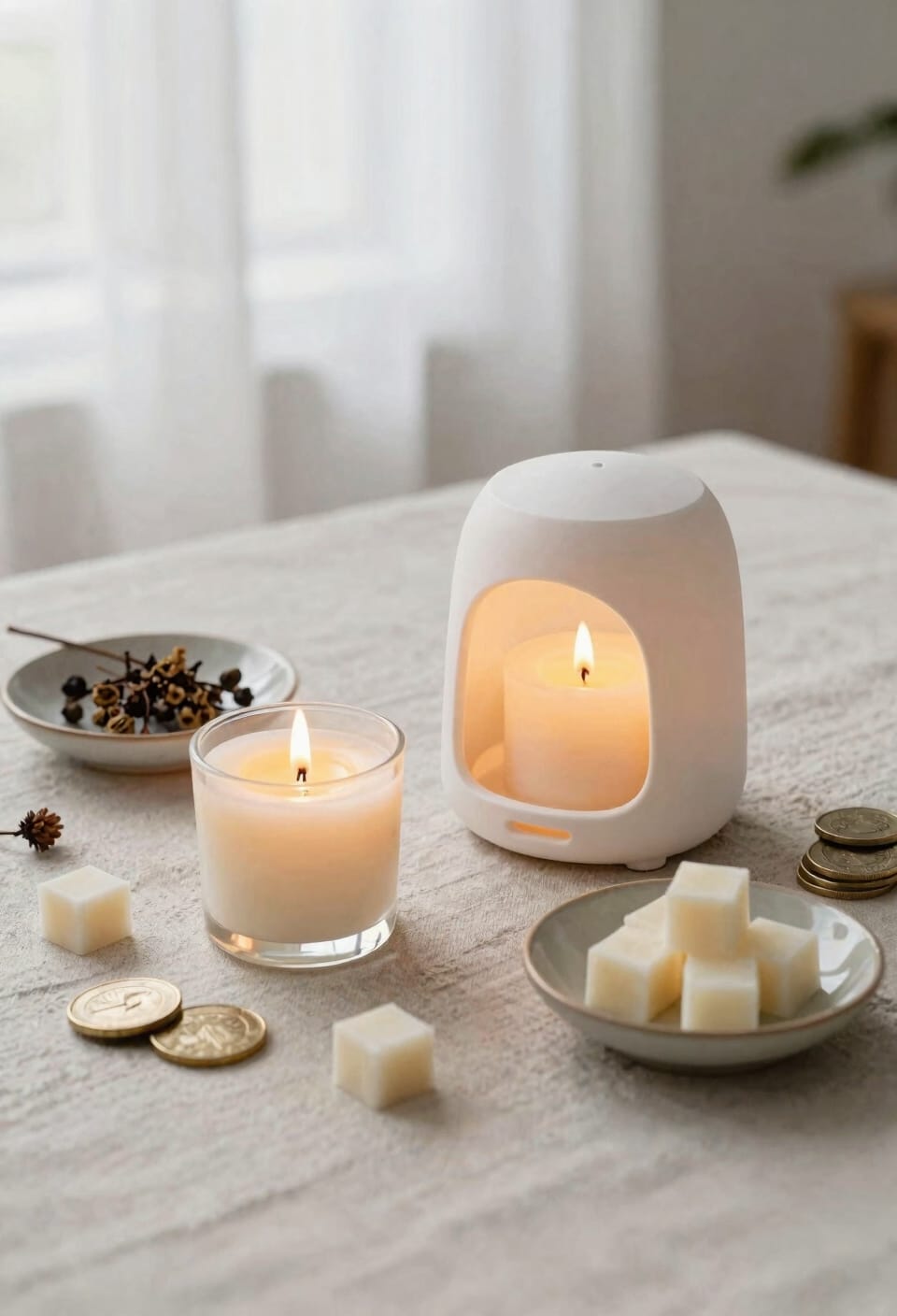
Look, let’s talk about what actually comes out of your wallet when you’re burning through scent all year. Here’s the thing: wax melts win on cost per hour, hands down. A single melt piece gives you hours of fragrance, and they’re reusable across multiple sessions—you’re not tossing out unusable wax like you do with candles once the wick burns out. Soy wax melts cost less upfront with superior material durability and longer burn times than standard candles. Now, seasonal pricing fluctuates for both, but wax melts hold their value better. You’re basically getting more fragrance for fewer dollars. Candles look pretty in your living room, sure, but they’re the financial equivalent of upgrading to premium gas when regular works fine.
Recommended Products

All-In-One Starter Kit – Everything you need to dive into candle making! Our Hearth and Harbor soy candle wax for candle making includes 45 lbs of smooth soy wax flakes, 100 cotton wicks, 100 adhesive stickers, and 2 centering tools. Perfect for beginners or seasoned DIYers.

CANDLE MAKING SUPPLY KIT: 50lbs soy wax, 500 cotton wicks, 500 glue stickers, 10 metal wick holders. Includes Everything you need to make your own candles.
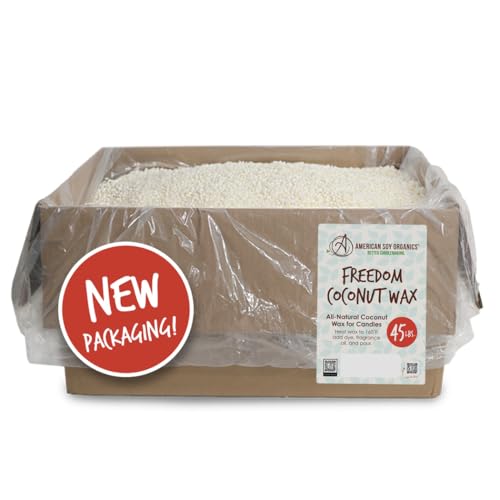
NATURAL COCONUT SOY WAX BEADS - Best candle making supplies make the best natural candles! Our safe, ethically produced, microwavable and paraffin-free coconut wax beads are smooth and creamy in appearance, perfect for candles, tealights and wax melts.
Ambiance: Flickering Light vs. Minimalist Design
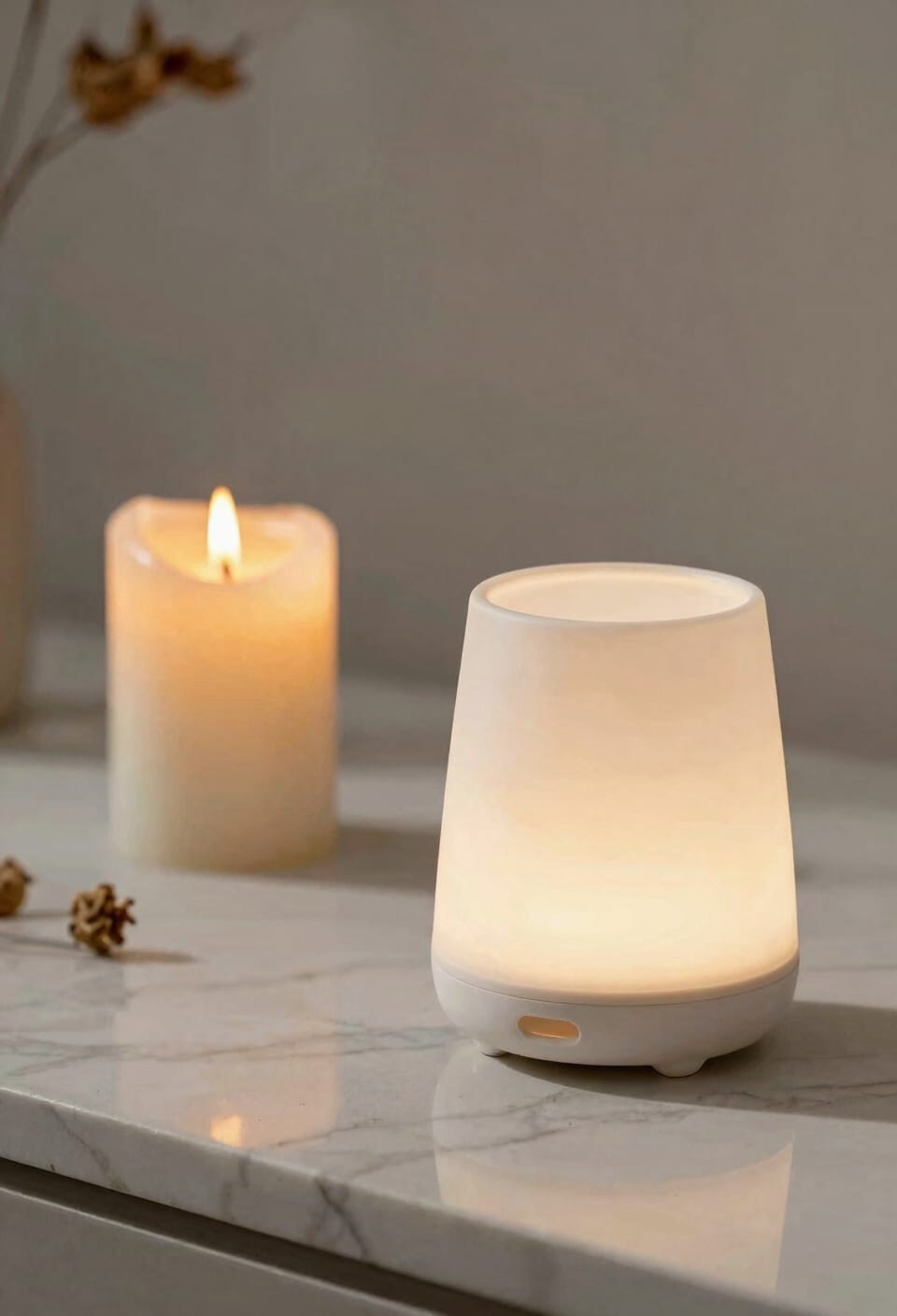
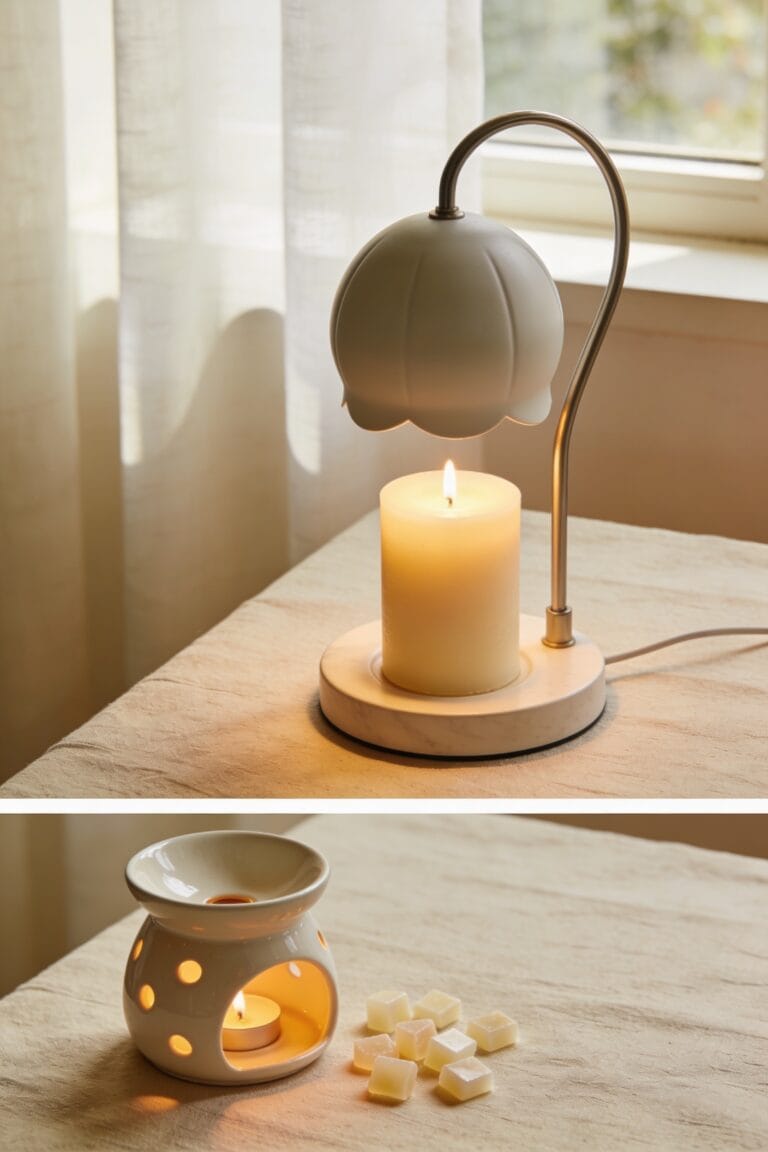
As you’re deciding between candles and wax melts, you’re really choosing between two totally different moods—and that matters more than you might think. Candles give you that flickering glow, the one that makes your room feel genuinely calm and intentional. There’s something about real flame that just hits different, you know? Wax melts, though? They’re the minimalist’s dream. A warmer with clean lines adds decor cohesion without any fire risk or flickering distraction. Your ambient lighting stays steady and modern. If you’re after cozy ritual and traditional vibes, candles win. But if your aesthetic leans contemporary and you want safety plus style, wax melts deliver it. Neither’s wrong—it’s about what mood you’re actually after.
Health Risks of Wax Melts & Candles: What the Data Shows
While the aesthetic difference between a flickering candle and a sleek wax warmer might feel like the main decision, there’s actually something more important lurking underneath—and it’s about what you’re breathing in. Here’s the thing: both options carry health trade-offs you should know about. Scented candles—especially paraffin ones—release soot and carcinogens similar to diesel fumes. About 30% contain lead-laden wicks. Wax melts avoid open flames, but scented versions produce nanoparticles through terpene reactions that penetrate your respiratory tissues and potentially enter your bloodstream. These particles pose particular risks for vulnerable populations like kids and people with asthma. Unscented wax melts dodge this problem entirely. Your indoor air quality matters, so choose wisely based on your household’s specific needs.
Are Wax Melts or Candles Better for the Environment?
Once you zoom out from the personal health stuff we just covered, there’s another layer to take into account: what happens to the planet when you burn through your fragrant products. Here’s the thing: wax melts win this round. Soy and coconut wax melts use renewable resources and skip the combustion emissions that candles release. Since melting doesn’t involve burning, you’re avoiding soot and pollutants entirely. Paraffin candles? They’re basically petroleum byproducts, and they create waste in ways wax melts don’t. The fragrance lifecycle matters too—wax melts release scent gradually without the air quality toll that comes with an open flame. Now, both still need scrutiny around sustainable sourcing and VOC emissions from fragrances, but environmentally speaking, wax melts edge out traditional candles.
When to Use Wax Melts vs. Candles
Now that you know wax melts are gentler on the planet, here’s the practical question: which one should you actually reach for? I’d grab wax melts for quick gatherings—they’re flameless, safer around guests, and you won’t stress about supervision. They’re perfect for late night lounging too, since you can turn them off whenever without worrying about soot buildup. Candles, though? They’re your move when you want that flickering ambiance and ritual of lighting something. They fill rooms faster if you’re impatient like me. The real answer: keep both on hand. Use wax melts for everyday scenting and safety-conscious situations. Light candles when you want the full experience—the glow, the moment, the whole vibe. Match the tool to what you actually need.
Recommended Products
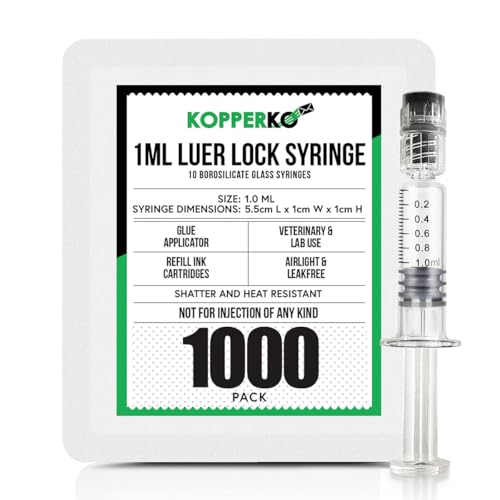
Versatile Use 1ml Glass Syringe for Liquid: This 1000 pack of 1ml syringes is ideal for various applications such as glue application with super glue, refilling ink cartridges, oil extraction, measuring, and as a pet medicine syringe

USER-FRIENDLY, SAFE, & WAX-FREE: The 3 inch in diameter candle protector is safe and easy to hold, designed to snugly fit 1/2" diameter candles, providing a secure grip and preventing candle shifting during use. This design protects hands from hot wax drips, reducing the risk of burns, making it ideal for use in crowded or communal settings. Perfect for church candles, vigil candles, and memorial candles.

Our candles are highly scented using a unique blend of premium essential oil fragrances, which ensures a memorable fragrance experience.
Frequently Asked Questions
Can Unscented Wax Melts Eliminate Health Risks Associated With Scented Products?
Yes, I’d say unscented benefits are significant—they’ll eliminate the nanoparticle health perceptions you’d face with scented products. You’re avoiding respiratory risks entirely by choosing unscented wax melts instead.
What Specific Fragrance Loads Maximize Wax Melt Performance and Scent Longevity?
I’ve found that ideal fragrance loadings between 8-12% maximize your wax melt’s throw longevity. Through testing, I’ve discovered higher concentrations don’t guarantee better performance—they actually accelerate scent fade. I’d recommend this sweet spot for consistent, extended aroma.
How Do Lead-Containing Candle Wicks Compare to Wax Warmer Safety Standards?
I’d say lead wicks in candles pose serious health risks you’ll want to avoid. About 30% of scented candles contain them, while wax warmers don’t require burn tests—they’re inherently safer since there’s no combustion involved.
Are Soy or Coconut Wax Melts More Environmentally Sustainable Long-Term?
I’d say coconut wax edges out soy for long-term sustainability because of its superior biodegradability. While soy sustainability relies on renewable crops, coconut’s faster decomposition means it’s genuinely better for our environment over time.
Do Wax Warmers Require Electricity, and What Are the Energy Costs?
Most wax warmers are electricity’s faithful companion, though I’ll tell you plug-in options dominate the market. You’ve got battery alternatives too, but they’re pricier and drain quickly compared to standard electric models.
Conclusion
Look, here’s what I’ve learned: candles flicker and fill a room, but they’re smoky commitments. Wax melts? They’re quiet efficiency—no flame, no soot, just pure scent. You’ll spend less per hour with melts, though you’ll miss that cozy glow. Candles win ambiance; melts win safety and value. Pick candles when you want theater. Choose melts when you want smart fragrance. Honestly, I use both—they’re not enemies, they’re different tools for different moods.